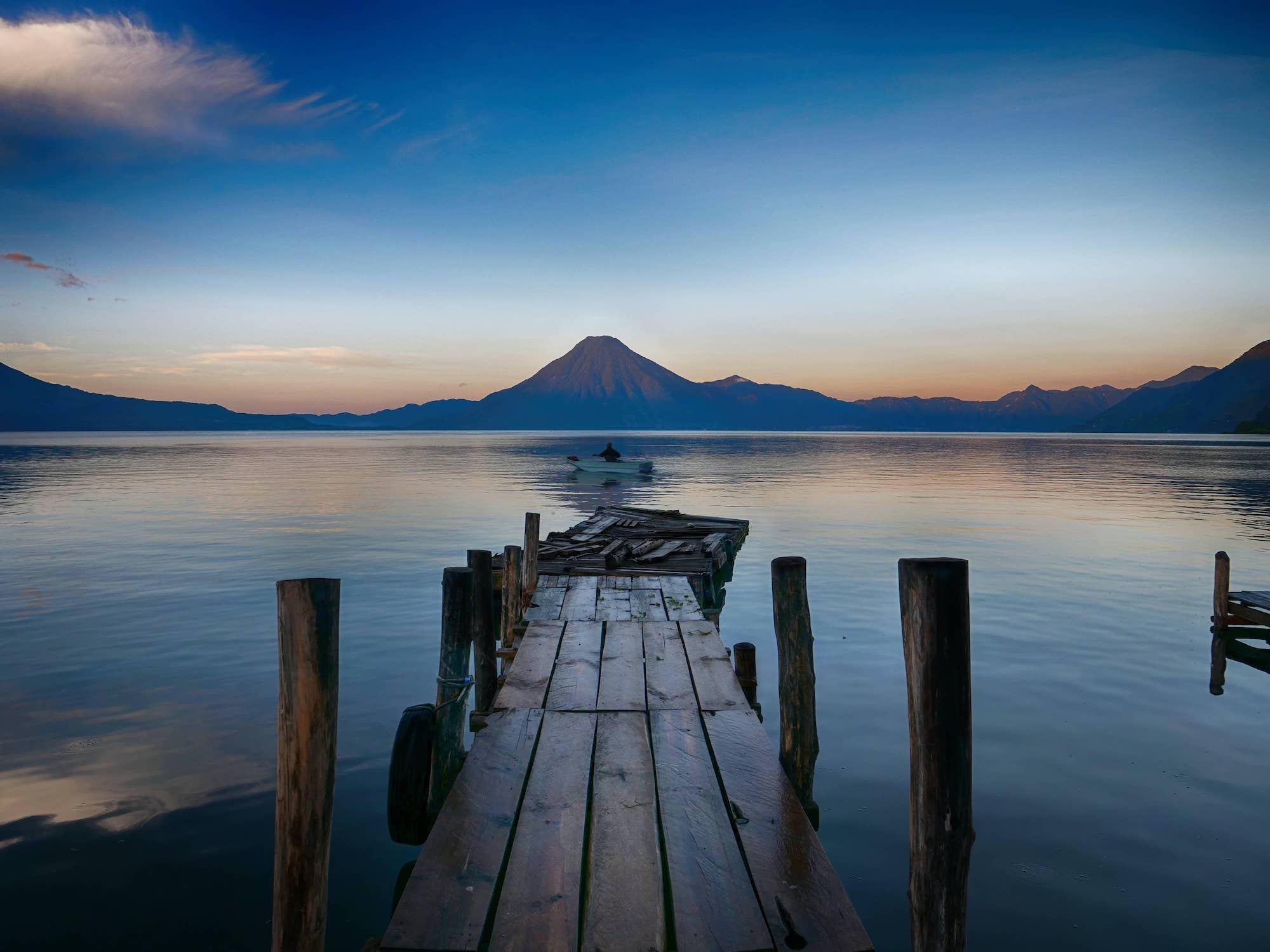
History of Lake Atitlán: origin and legacy

History of Lake Atitlán: origin and legacy

The history of Lake Atitlán is one of the most fascinating in Guatemala, marked by volcanic eruptions, ancestral cultures, and a profound spiritual connection with nature. Located in the department of Sololá, this lake was formed thousands of years ago after a massive volcanic eruption that created its impressive caldera. Since pre-Hispanic times, the lake has been inhabited by Mayan peoples such as the Tz'utujil and Kaqchikel, who considered it a sacred place.

Today, many people seek to learn about the history of Lake Atitlán to understand its cultural, touristic, and natural significance. Beyond its beauty, the lake represents identity, tradition, and resilience. Understanding its past allows us to better appreciate each town that surrounds it and to grasp why it is considered one of the most beautiful lakes in the world.

Origin of Lake Atitlán and its cultural importance

The origin of Lake Atitlán dates back to a massive volcanic eruption approximately 84,000 years ago, which formed a caldera that was later filled with water. Over the centuries, this area became a key center for the Mayan civilization, who developed trade, agriculture, and rituals around the lake. During the colonial era, Atitlán maintained its cultural and strategic importance. Today, its history attracts travelers interested in cultural tourism, education, and authentic experiences in Guatemala. Learning about the lake's past enriches any visit and connects travelers with the essence of the region.

Frequently Asked Questions

How was Lake Atitlán formed?

Lake Atitlán was formed after a massive volcanic eruption that created a giant caldera. Over time, this caldera filled with water from rain and springs. This geological event explains the lake's depth and the presence of the surrounding volcanoes. Understanding how it formed helps us appreciate its natural and scientific importance, as well as its current tourist appeal.

Which Mayan peoples inhabited Lake Atitlán?

The Tz'utujil and Kaqchikel peoples primarily inhabited the shores of Lake Atitlán. These cultures developed advanced agricultural systems, regional trade, and a strong spiritual tradition linked to the lake. Even today, their customs, languages, and traditional clothing remain present in the towns surrounding Atitlán, making it a vibrant center of Mayan culture.

Why is Lake Atitlán considered sacred?

For the Maya, Lake Atitlán was a sacred site associated with the origin of life and the balance between earth and water. Ceremonies and rituals were performed on its shores and nearby volcanoes. This spiritual vision continues to influence the region's cultural identity and attracts travelers interested in history and spirituality.

What was the importance of Lake Atitlán during the colonial era?

During the colonial era, Lake Atitlán was a strategic point for evangelization and trade. Towns were founded around the lake, and churches were built that still stand today. Despite colonization, the indigenous communities preserved much of their cultural identity, making the lake's history unique in Guatemala.

What important historical events have occurred in Atitlán?

In addition to its volcanic origin, Lake Atitlán has witnessed social, cultural, and natural changes, such as the growth of indigenous communities, the arrival of international tourism, and natural events like landslides and rising water levels. Each stage has shaped the relationship between the lake and its inhabitants.

Is it worth knowing the history of Lake Atitlán before visiting it?

Yes, learning about the history of Lake Atitlán enriches the travel experience. It allows for a deeper understanding of the towns, traditions, and landscapes that surround it. Many visitors say that understanding its past transforms a tourist visit into a profound cultural experience.

Where can I learn more about the history of Lake Atitlán?

You can learn more by visiting local museums, participating in cultural tours, or talking with community guides in the lakeside villages. There are also cultural centers and historical tours that explain the origin and evolution of Lake Atitlán in an accessible and educational way.