Atitlán Volcano: Guide to Climbing the Lake's Colossus
21 June 2026 · Diego Monzón
Add us as a preferred source on Google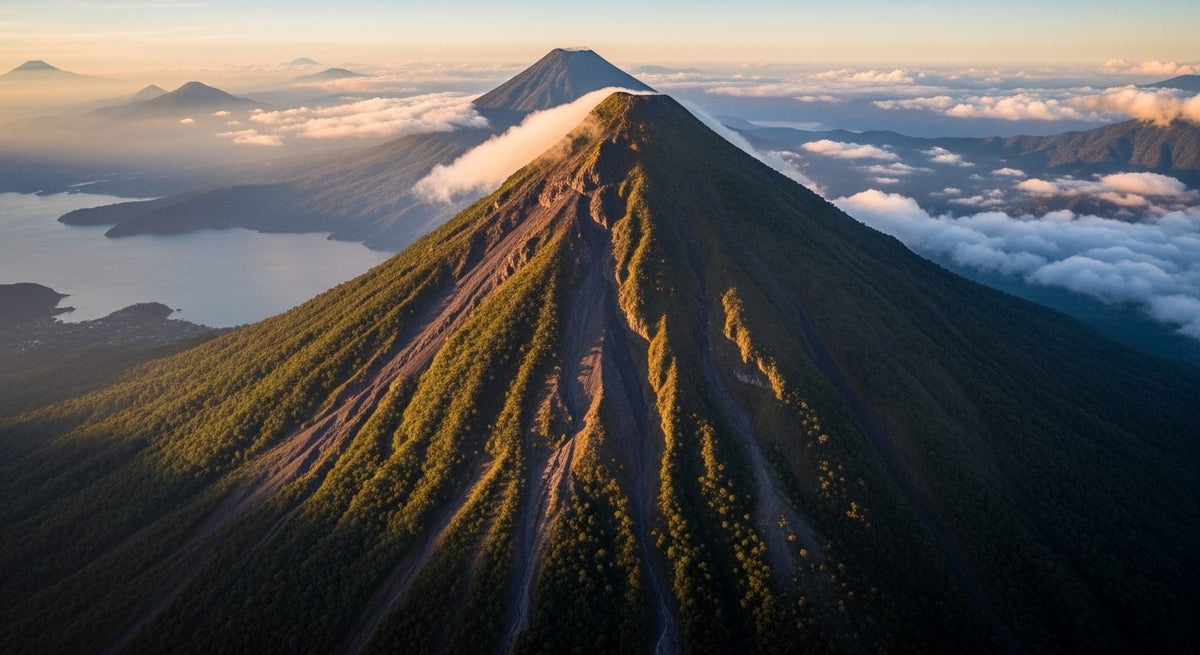
Volcán Atitlán is the silent giant of the lake. Unlike its neighbors—Tolimán and San Pedro—its steep silhouette and frequently cloud-shrouded summit mark it from any point on the lake as the region's most serious challenge. At 3,537 meters (11,604 feet) above sea level, it is the highest of the three volcanoes and, undoubtedly, the most technical and dangerous. Climbing Volcán Atitlán is not a casual adventure hike; it is a real mountain expedition that demands preparation, appropriate gear, and, above all, respect for the mountain.
Volcán Atitlán as seen from the lake
From Panajachel, from the docks of San Pedro La Laguna, or from the shore of Santiago Atitlán, Volcán Atitlán imposes its presence on the south side of the lake. It is the most pronounced cone of the group, with steeper flanks than Tolimán and a summit that is rarely completely clear. Geologically, it is part of the same volcanic complex as Tolimán: both share a base caldera, and at certain times of the year, they appear to merge into a single mass of rock and vegetation.
The volcano formed approximately 85,000 years ago as part of the volcanic system surrounding the Atitlán lake basin. It is an active stratovolcano—though currently dormant—with layers of solidified lava, compressed ash, and loose volcanic rock that make its terrain particularly unstable. This geological instability is one of the main risk factors during the ascent.
Difficulty level: extreme
Let's be clear: Volcán Atitlán is rated as extreme difficulty. This is not adventure marketing hyperbole. The ascent involves:
- Slopes between 45° and 60° in several sections of the route
- Loose volcanic rock terrain with a constant risk of slipping
- Active rockfall zones, especially in the upper section
- Abrupt weather changes with strong wind at the summit
- Prolonged exposure to high altitude with the possibility of altitude sickness
The total excursion time is 8 to 12 hours round trip, depending on the group's physical condition and the day's weather. Most groups start between 3:00 and 4:00 AM to try to reach the summit before the clouds cover it—usually by mid-morning. This mountain is reserved for individuals with previous experience climbing high-altitude volcanoes. If you have never climbed a volcano, Atitlán is not your first choice.
Starting point: San Lucas Tolimán and Finca San Pascual
The most common access to Volcán Atitlán starts from San Lucas Tolimán, a municipality on the southeastern shore of the lake, reachable by boat from Panajachel or Santiago Atitlán. From San Lucas Tolimán, local guides arrange transportation to the trailhead, which typically passes through Finca San Pascual.
Finca San Pascual is the registration point and, in many cases, where the safety briefing with the guide takes place. From there, the actual ascent begins through dense vegetation in the initial sections—cloud forest and high-altitude jungle—which eventually gives way to exposed volcanic rock terrain in the last 600-700 meters (1,968-2,296 feet) of elevation gain before the summit.
It is crucial to arrive in San Lucas Tolimán the night before or coordinate a very early departure from Panajachel by boat. The first boats leave around 5:30 AM, which is already late for many groups. Ideally, you should stay in San Lucas the night before.
Mandatory mountaineering equipment
Volcán Atitlán does not forgive improvisation when it comes to equipment. This is the minimum list to attempt the ascent safely:
Footwear and technical gear
- Technical hiking boots with a stiff sole and good ankle support—not athletic shoes
- Crampons or traction chains during the wet season (May-November), when wet rock is extremely slippery
- Trekking poles for support on unstable terrain
- Technical gloves for scrambling sections at higher altitudes
Clothing and layers
- Thermal layers: summit temperatures can drop below 5°C (41°F) before sunrise
- Windbreaker and rain jacket—even in the dry season, clouds bring cold wind
- Quick-drying shirts, not cotton
- Hat and buff to protect from wind at the summit
Hydration, food, and navigation
- Minimum 3 liters (101 oz) of water per person. There are no water sources on the route
- High-energy food: nuts, bars, fruits, sandwiches. For 8-12 hours of exertion
- Headlamp with spare batteries—early morning departure is mandatory
- GPS or phone with offline maps downloaded. The trail is not well marked
- Basic first-aid kit with bandages, pain relievers, and altitude sickness pills
The guide: indispensable, not optional
On Volcán Atitlán, hiring a certified guide is not a recommendation: it is a non-negotiable safety condition. The trail is in poor condition, not clearly marked in several sections, and orientation in the darkness of dawn—when 80% of groups begin their ascent—is practically impossible without someone who knows the volcano.
The most recommended guides operate from San Lucas Tolimán and have specific experience on Volcán Atitlán, not just volcanoes in general. This detail matters: Atitlán has unique characteristics that differentiate it from the other volcanoes around the lake.
The guide fee is around Q300 to Q500 per person for small groups. For groups of two or three people, the total cost can range between Q600 and Q900. It is significantly more expensive than guides for Volcán San Pedro or Tolimán because the technical difficulty requires more specialized guides and the day is longer.
Best time: a narrow window
The ideal window for climbing Volcán Atitlán is December to February. During these months, the dry season ensures clearer skies, lower probability of rain, and more stable ground. At the summit, the views are extraordinary: the entire lake, the other two volcanoes, and on exceptionally clear days, Volcán de Fuego and Acatenango.
Outside of this window, the outlook changes drastically. Starting in May, clouds cover the summit almost every day before 9:00 AM, meaning most groups reach the highest point with no visibility. More seriously, the wet volcanic terrain becomes extremely slippery, even with crampons. In some years, even within the dry season, weather conditions make the summit inaccessible for consecutive days.
The practical recommendation: consult with your guide the week before your planned date. They have updated information on trail and summit conditions. Once the date is booked, confirm the day before.
Why it's dangerous: the real risks
Volcán Atitlán combines several simultaneous risk factors that place it in a different category from the other volcanoes around the lake:
Unstable volcanic terrain
Loose rock in the upper sections can give way under weight. A miscalculated step can trigger small rock slides that affect those below in the group. This is why group chain discipline—maintaining distance, not scattering—is essential.
Rockfall zones
In the final stretch before the summit, there are active rockfall zones. These are uncontrollable events: they occur spontaneously, especially after recent rains or temperature changes. A helmet is an accessory that some experienced mountaineers include on this route.
Unpredictable weather
Lake Atitlán generates its own microclimates, and the volcano is particularly sensitive to them. A seemingly clear morning can turn into dense fog, strong wind, and rain in a matter of minutes. Hypothermia is a real risk if appropriate clothing is not worn.
Dehydration and extreme fatigue
Twelve hours of high-altitude hiking, with demanding elevation changes, deplete energy and hydration reserves faster than most anticipate. Underestimating the effort is one of the most frequent causes of mountain incidents.
Alternatives if you lack technical experience
If Volcán Atitlán seems too demanding—and that's a completely valid assessment—the lake offers solid alternatives for all levels:
Volcán Tolimán (3,158 m / 10,361 ft)
Tolimán is the middle volcano, literally attached to Atitlán. Its difficulty is moderate-high: a good challenge for active individuals without technical mountaineering experience. The trail's scenery is beautiful, and the lake view from its flanks is spectacular. The ascent time is 5 to 8 hours round trip. It also starts from San Lucas Tolimán.
Volcán San Pedro (3,020 m / 9,908 ft)
Volcán San Pedro is the most accessible and popular of the three. It does not require technical equipment, the trail is well-maintained, and guides are available in the town of San Pedro La Laguna all year round. The ascent takes 3-5 hours round trip. It is the recommended first option for travelers without previous volcano experience. The views from San Pedro's summit—with the entire lake and the other two volcanoes facing each other—are one of Guatemala's most photographed landscapes.
A smart strategy for those who eventually want to attempt Atitlán: start with San Pedro, then Tolimán, and only then plan Atitlán with the necessary physical base and experience.
Technical Equipment for Volcán Atitlán
Volcán Atitlán requires technical mountaineering equipment, not just athletic gear. Here is the essential minimum gear we recommend:

SHULOOK Men's Waterproof Hiking Boots Non-Slip Lightweight Mid Top Ankle Boot
$42.29
Check price on Amazon →
Premium Foldable Hiking Poles by USA Brand - Adjustable Lightweight Trekking Po
$39.33
Check price on Amazon →
Malo'o 45L Waterproof Dry Bag Backpack Heavy Duty Roll Top Fishing Beach Backpac
$58.99
Check price on Amazon →
Energizer PRO-400 Headlamp Rechargeable (2-Pack) IPX4 Water Resistant Recharge
$20.52
Check price on Amazon →
UIQUR Men's Lightweight Rain Jacket Waterproof Windbreaker Packable Rain Coat
$19.67
Check price on Amazon →Frequently Asked Questions
How difficult is it to climb Volcán Atitlán?
Volcán Atitlán (3,537 m / 11,604 ft) is the most technical and dangerous of the three volcanoes on the lake. Difficulty level: extreme. The terrain includes 45-60° slopes, loose volcanic rock, and rockfall zones. Only recommended for mountaineers with previous high-altitude volcano experience. The round trip takes 8-12 hours.
Can you climb Volcán Atitlán without a guide?
Absolutely not. Volcán Atitlán is technically dangerous, and the trail is in poor condition. A certified guide with specific experience on the volcano is required. Guides from San Lucas Tolimán are the most recommended. Price: Q300-Q500 per person for a small group.
When is the best time to climb Volcán Atitlán?
The ideal window is December to February: clear skies, no rain, and lower chance of fog at the summit. Outside this window, clouds cover the summit almost every day, and the terrain becomes extremely slippery. Some years the summit is inaccessible even during the dry season.
How does Volcán Atitlán differ from Tolimán and San Pedro?
Volcán Atitlán (3,537 m / 11,604 ft) is the highest and most difficult: it requires technical equipment and real mountaineering experience. Tolimán (3,158 m / 10,361 ft) is moderate-difficult and more frequently climbed. San Pedro (3,020 m / 9,908 ft) is the most accessible and popular for travelers without technical experience. For a first-timer, San Pedro is the best option.
This article may contain affiliate links. If you make a purchase through them, we may receive a commission at no additional cost to you.