Best Sunscreen for Swimming in a Lake: Reef-Safe Options (2026)
21 June 2026 · Diego Monzón
Add us as a preferred source on Google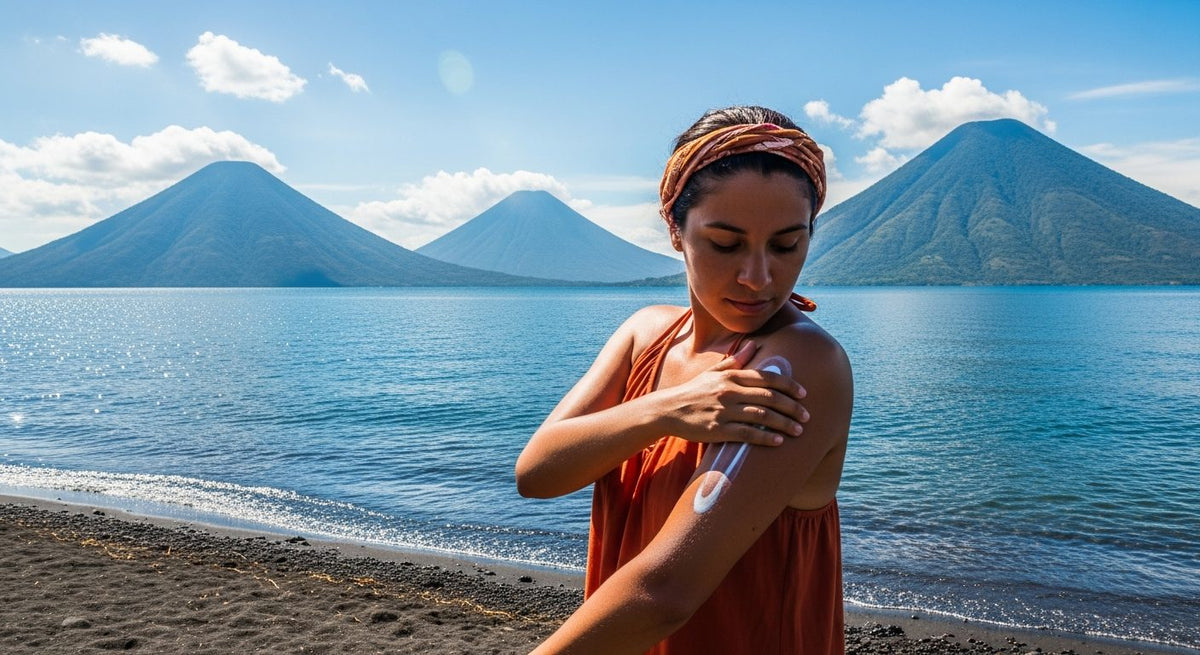
Lake Atitlan sits at 1,560 meters above sea level, ringed by three volcanoes and twelve Maya villages — and the sun here hits harder than most travelers expect. The altitude strips away a significant portion of the atmospheric protection you count on at sea level, meaning UV radiation is roughly 20% more intense per thousand meters of elevation gain. Pair that with hours of kayaking, open-water swimming, or floating off the docks of the lake's best swimming spots, and you have a recipe for a serious burn before lunch. But protection here comes with an added responsibility: Lake Atitlan is a fragile freshwater ecosystem, already under pressure from cyanobacteria blooms and agricultural runoff. The sunscreen you choose matters — not just for your skin, but for the water you're swimming in.
Why Reef-Safe Sunscreen Matters at Lake Atitlan
The term "reef-safe" was coined for marine environments, but the science applies equally well to highland lakes. Chemical UV filters like oxybenzone and octinoxate don't disappear when they hit freshwater — they accumulate in sediment, disrupt aquatic microorganisms, and have been linked to accelerating harmful algal blooms. Lake Atitlan already deals with cyanobacteria pressure during the rainy season (May through October), and adding chemical sunscreen to the water column is the last thing this lake needs. Mineral sunscreens using zinc oxide and titanium dioxide sit on top of the skin rather than absorbing into it, and they are significantly more inert in aquatic environments. When you swim at Atitlan, go mineral. Full stop.
How to Choose the Best Sunscreen for Lake Swimming
Not all mineral sunscreens are created equal, and a few criteria separate the genuinely useful ones from the chalky white paste that makes you look like a mime at the dock.
SPF rating: At Atitlan's altitude, SPF 50 is the minimum. SPF 30 filters about 97% of UVB rays; SPF 50 filters 98%. That 1% difference sounds small until you're spending six hours on the water. Go to SPF 50 or higher, especially if you have fair or sensitive skin.
Water resistance: Look for the "80-minute water resistant" label, which is the maximum rating the FDA allows in the US. This means the SPF holds for 80 continuous minutes of swimming before you need to reapply. Anything labeled "40 minutes" is fine for casual splashing but will require more frequent reapplication during serious swims.
Broad spectrum: This label means the formula protects against both UVA (aging, deeper tissue damage) and UVB (burning) rays. Non-broad-spectrum products exist but shouldn't — avoid them.
Formula type: Sticks and lotions both work; sticks are less messy for travel and easier to apply around the eyes. Sprays are convenient but easy to under-apply and tricky to use in wind — not ideal on a lake dock.
White cast: Pure zinc oxide formulas tend to leave a white cast, particularly on darker skin tones. Tinted formulas and nano zinc blends reduce this significantly. If white cast is a deal-breaker, look for "tinted" or "sheer" mineral options.
Best Reef-Safe Sunscreens for Swimming at Lake Atitlan
After spending multiple seasons testing sunscreens at altitude — kayaking from San Pedro to Santiago, swimming off the docks in Santa Cruz, and hiking to the crater lakes above Volcan Toliman — these are the formulas that consistently delivered real protection without leaving the water worse than we found it.
The options we recommend cover the full range of traveler needs: from the no-compromise athlete doing long open-water crossings who needs maximum staying power, to the budget-conscious backpacker who still wants a clean formula, to the family applying sunscreen to squirming kids on a boat. Each product in our selection uses zinc oxide as its active ingredient, carries at least SPF 50, and is labeled 80-minute water resistant where possible.
Key things we looked at during testing: actual burn protection after two hours of swimming in midday sun (roughly 11 AM to 1 PM at Atitlan, when UV index routinely hits 11-13); ease of application over damp skin; how quickly the white cast faded; and whether the formula stung eyes during open-water swimming. Products that failed on any of these in field conditions were cut from consideration regardless of how they performed in controlled settings.
Application Tips for Lake Swimming at High Altitude
Even the best sunscreen fails with poor application. A few habits that make a real difference at altitude:
Apply 20 minutes before sun exposure — mineral formulas work immediately on contact, but giving them time to settle into the skin means they won't rub off as easily when you hit the water. Use more than you think you need. Studies consistently show people apply 25-50% of the recommended amount. For your face and neck, that's about a teaspoon. For full body, about a shot glass. Don't skip the ears, back of the neck, and tops of feet — the spots that get cooked while you're looking at the scenery. Atitlan's shoreline has a way of distracting you from reapplication reminders. Set a phone alarm for the two-hour mark. And reapply immediately after toweling off regardless of the timer — towels strip mineral sunscreen efficiently.
A wide-brim hat and UV-rated swim shirt extend your window between reapplications significantly. If you're spending a full day on the water — whether you're swimming, paddling, or riding the lancha between villages — physical coverage is your first line of defense and sunscreen is the backup.
Packing Sunscreen for Guatemala: Practical Notes
Finding quality reef-safe mineral sunscreen in Guatemala is possible but inconsistent. Larger pharmacies in Antigua and Guatemala City stock name-brand options, but once you're in Panajachel or the smaller lakeside villages, selection is limited and markup is high. Bring enough from home to cover your full trip, adding 20% more than you think you'll use. For a two-week lake trip with daily swimming, four 3-oz tubes per person is a reasonable baseline.
If you're flying carry-on only, sunscreen counts toward your liquids limit. Sticks are TSA-friendly and don't count as liquids in most interpretations — a useful workaround if you're tight on liquid allowance. Most mineral sticks in the 0.5-1 oz range will cover face and ears comfortably for a week of daily use.
Protecting the Lake While You Enjoy It
The communities around Lake Atitlan depend on this ecosystem for drinking water, fishing, and tourism income. The cyanobacteria blooms that occasionally close swimming areas are a real and growing problem. Choosing mineral sunscreen is a small but meaningful decision — one of the easiest ways to reduce your footprint on a place this beautiful. Pair it with responsible waste disposal (don't rinse sunscreen-covered gear into the lake), and you're leaving the water in the same condition you found it for the next swimmer. That's the baseline expectation for anyone spending time here.
For more on swimming safely at Atitlan — including which months to avoid and which beaches have the clearest water — see our full guide to swimming in Lake Atitlan.
Best Reef-Safe Sunscreens for Lake Swimming
We tested these sunscreens specifically for freshwater lake swimming — waterproof performance, skin feel after long swims, and reef-safe certification that protects Lake Atitlan's ecosystem:
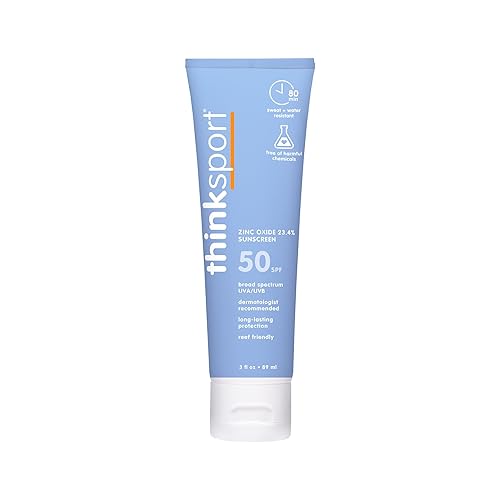
Thinksport SPF 50 Mineral Sunscreen – Safe, Natural Sunscreen for Sports & Active Use
$11.99
Check Price on Amazon →
Badger SPF 30 Active Mineral Sunscreen + SPF 30 Daily Mineral Sunscreen
$41.99
Check Price on Amazon →
Raw Elements Face and Body Mineral Sunscreen SPF 30 Tube, Reef Safe, Water Resistant, 3 oz
$17.99
Check Price on Amazon →
Coppertone SPORT Sunscreen Lotion Broad Spectrum SPF 50 (3 Fluid Ounce)
$4.73
Check Price on Amazon →
Blue Lizard Sensitive Mineral SPF 50 Sunscreen Lotion, 100% Mineral, UVA/UVB Protection, 5 fl oz
$15.94
Check Price on Amazon →Frequently Asked Questions
Why use reef-safe sunscreen at Lake Atitlan?
Lake Atitlan is a fragile freshwater ecosystem already stressed by cyanobacteria blooms. Chemical sunscreen ingredients like oxybenzone and octinoxate can disrupt aquatic microorganisms and contribute to algal blooms. Reef-safe (mineral) sunscreens using zinc oxide and titanium dioxide are water-safe and don't harm the lake's biology.
What SPF is best for swimming in Lake Atitlan?
At 1,560m altitude, UV radiation is significantly stronger than at sea level — roughly 20% more intense per 1,000m gain. SPF 50 minimum is recommended, with reapplication every 2 hours or after toweling off. Water-resistant formulas (80 min rating) perform best for long lake swims.
Does sunscreen wash off in freshwater lakes?
Yes, all sunscreens wash off eventually. Water-resistant formulas (labeled 40 or 80 minutes) hold up longer. Reapply every 2 hours when swimming, and immediately after toweling. Mineral sunscreens (zinc oxide) tend to be more stable in water than chemical formulas.
Is it safe to swim in Lake Atitlan year-round?
Swimming is generally safe from November to April (dry season). During May-October, cyanobacteria blooms can appear — the local authorities issue alerts when this happens. Always check for posted signs at swimming areas and avoid swimming when the water looks blue-green or murky.
This article contains affiliate links. As an Amazon Associate, we earn from qualifying purchases at no extra cost to you.