Thermal Base Layer for the Guatemalan Highlands: The One Piece That Changes Everything
09 July 2026 · Shopify API
Add us as a preferred source on Google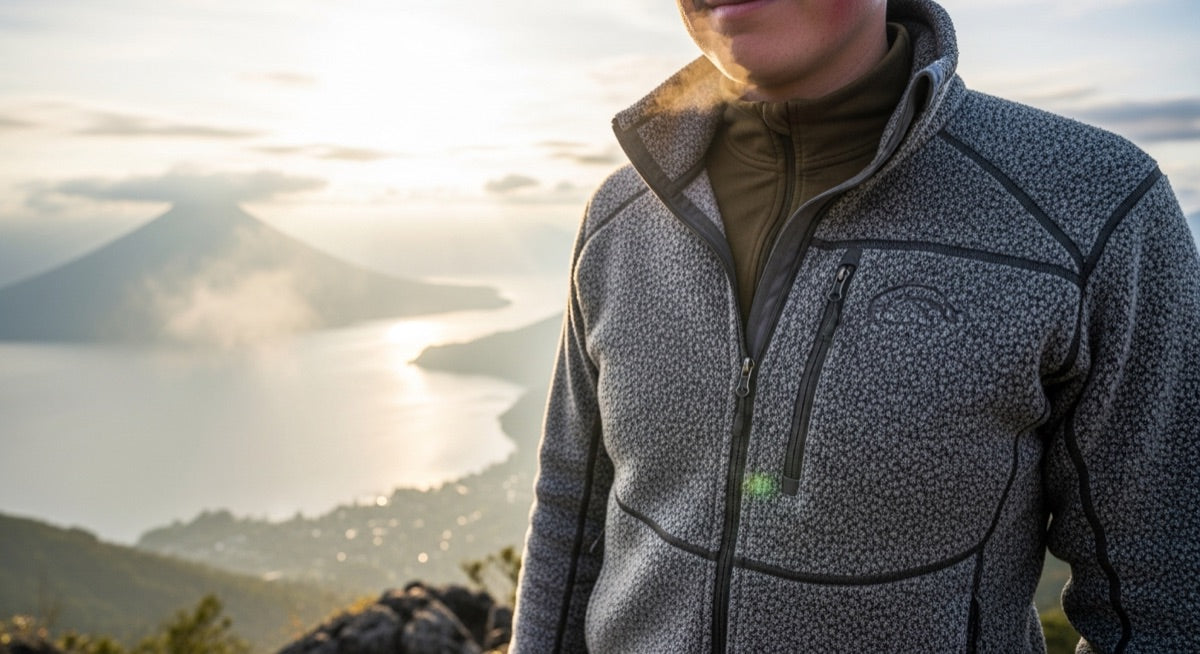
Almost no one arrives in the Guatemalan highlands ready for the cold. The mental postcard of Guatemala is jungle, heat and humidity, so travelers pack for the tropics and land in a different world. At Lake Atitlan, 1,560 meters above sea level, the nights drop hard the moment the sun disappears. In Quetzaltenango (Xela), at 2,330 meters, the pre-dawn air bites. And if your plan includes camping at a lookout or climbing a volcano to catch the sunrise, we are talking about near-freezing temperatures with wind. The classic mistake isn't failing to bring a jacket: it's bringing the wrong jacket and forgetting the piece that truly decides whether you spend the night shivering or sleeping soundly. That piece is the thermal base layer.
Why the highlands fool the unprepared traveler
Guatemala sits in the tropics, yes, but altitude rewrites the rules. For every thousand meters you climb, the temperature drops noticeably, and the western highlands spend almost the entire year above 1,500 meters. During the day the sun warms things up and creates the false impression that a light sweater will do. The trouble comes when the sun sets: with no humidity to hold the heat, the temperature plummets within an hour. At Atitlan it's not unusual to go from a pleasant afternoon to a night of 8 or 10 degrees. In Xela, San Marcos or the villages of Totonicapán, the pre-dawn hours of the dry season (November to February) can approach freezing.
This hits light-packing travelers especially hard. The highland hostels and family homestays rarely have heating, and the adobe or cinder-block walls trap the cold. That's why the clothes you sleep in matter as much as the blankets. This is where a good base layer turns a miserable night into a comfortable one.
The three-layer system, explained without the jargon
Mountaineers don't improvise: they dress in layers, and each one has a job. Understanding the system saves you weight, money and cold.
- Base layer: sits against the skin. Its job is to manage sweat and keep you dry. It's the thermal layer this guide is about, and the most underrated one.
- Mid layer (insulation): retains your body heat. A fleece or a light down jacket does the job here.
- Outer layer (shell): protects you from wind and rain. It's your waterproof jacket.
The magic is in combining them for the moment. To walk through the villages by day, you may only need the base and the mid layer. For the freezing dawn atop a volcano, you'll wear all three. And to sleep, a dry, warm base layer is your best mountain pajamas. This guide focuses on that first layer; if you already have the outer layer sorted, check out our guide to mountain cold-weather clothing in Guatemala to complete the system.
Merino wool vs. synthetic: the key decision
This is where the quality of your base layer is decided. There are two big families, and neither is "better" in the abstract: it depends on your use.
Merino wool. It's the queen for travel and mountains. Merino is a fine wool that doesn't itch, regulates temperature almost magically (warm when it's cold, breathable when you move) and, its great advantage, resists odor for days. You can wear the same merino shirt for three or four days of trekking without it smelling — unthinkable with other fibers. For anyone traveling light across the highlands and chaining villages together, this is gold: less clothing in the pack. Its weak point is that it dries more slowly than synthetic and usually costs more.
Synthetic (polyester, polypropylene). Cheaper, very durable and dries incredibly fast. It's ideal for intense activity where you'll sweat a lot and need the garment to dry in minutes, like a demanding climb. Its known downside: it holds onto odors, so it won't survive several days of use without a wash.
The practical recommendation: if you're only going to buy one base layer for your highland trip, choose lightweight or midweight merino. It's the most versatile: good for sleeping, for walking around Panajachel on a cool afternoon and for sunrise on the volcano. If you do a lot of high-intensity sport or you're watching your budget, a quality synthetic is a perfectly valid alternative.
Weight matters: light, mid or heavy
Base layers are graded by weight (grams per square meter). For the Guatemalan highlands, a light (150 g/m²) to mid (250 g/m²) weight covers almost every scenario. The lightweight is perfect as a daily T-shirt and for climates where the cold is moderate, like Atitlan for most of the year. The midweight is your ally for Xela nights, for camping and for volcano summits, where the mercury nears zero. Heavyweight (thick) is rarely necessary in Guatemala and ends up being too warm the moment you start walking.
A mountaineer's trick: a midweight base layer plus a good insulator on top beats a single thick garment. Layers give you options; a thick garment locks you into one temperature.
For camping vs. for daily use in the villages
Not every traveler needs the same thing. It's worth separating two profiles.
If you're going to camp or climb volcanoes: prioritize a full base-layer set — long-sleeve shirt and leggings or thermal bottoms, both in midweight merino. The reason is simple: on the summit of a volcano like San Pedro, Atitlan or Acatenango, waiting motionless for sunrise in the wind, your legs suffer as much as your torso. Also carry a dry base layer set aside just for sleeping; never sleep in the day's sweaty clothes, because the moisture will steal your warmth all night. If your plan is the volcano trek, round it out with our guide to hiking gear for the San Pedro volcano.
If your trip is more relaxed, village to village: one or two lightweight merino base shirts are plenty. You wear them under your sweater on the cool nights of Atitlan, San Marcos or Xela, and you wash them every few days without any fuss thanks to merino's odor resistance. They take up very little space in the pack, something anyone who packs light appreciates. To build the complete list, lean on our guide to what to pack for Lake Atitlan in cold, high-altitude weather.
Mistake number one: cotton
If you take a single tip from this guide, let it be this: avoid cotton as a base layer. Among mountaineers there's a saying, "cotton kills," and it's no exaggeration. Cotton absorbs moisture, takes forever to dry and, when wet, completely loses its ability to keep you warm. A sweat-soaked cotton shirt stuck to your skin atop a volcano at dawn is a direct recipe for hypothermia. The same applies to sleeping: if you sweat in a cotton tee, you'll spend the night cold and damp. Save cotton for sunny afternoons in the city and let merino or synthetic do the serious work against the cold.
How to choose your base layer without going wrong
To sum up what matters: look for lightweight to midweight merino if you want versatility and light travel; go for synthetic if you prioritize budget or intense sport. Make sure it fits snug but comfortable, because a loose base layer loses efficiency. And never, under any circumstances, rely on cotton for the highland cold. With a good base layer in your pack, the nights of Atitlan, the pre-dawn hours of Xela and the freezing sunrises on the summit stop being an ordeal and become what you came for.

Merino.tech Merino Wool Base Layer Men Set - Thermal Long Underwear Top, Bottom & Neck Gaiter
$70.99
Check price on Amazon →
Iguana Men 100% Merino Wool Base Layer Set, Lightweight Thermal Underwear
$79.99
Check price on Amazon →
Men's 100% Merino Wool Base Layer Set, Lightweight Active Thermal Layer
$79.00
Check price on Amazon →
Merino.tech Merino Wool Base Layer Men Set - Midweight Thermal Underwear
$84.99
Check price on Amazon →
Merino.tech Merino Wool Base Layer Men Set - Heavyweight Thermal Underwear
$99.99
Check price on Amazon →Frequently asked questions
Is it really cold at Lake Atitlan?
Yes, especially at night. At 1,560 meters of altitude, the afternoons are pleasant but temperatures drop fast once the sun sets, reaching 8-10 degrees before dawn. The lodgings rarely have heating, so a thermal base layer makes a big difference for sleeping comfortably.
Merino wool or synthetic for the Guatemalan highlands?
For most travelers, lightweight to midweight merino wool is the best option: it's versatile, regulates temperature and resists odor over days of use, ideal for traveling light. Synthetic makes sense if your budget is tight or if you'll do very intense activity where you need ultra-fast drying.
What base-layer weight do I need to climb a volcano in Atitlan?
A midweight (around 250 g/m²) is what's recommended for the summits, where you wait motionless for the sunrise in the wind at near-freezing temperatures. Combine it with an insulator and an outer jacket, and carry a spare dry base layer so accumulated sweat doesn't leave you cold.
Why can't I use a cotton T-shirt as a thermal layer?
Because cotton absorbs moisture, dries very slowly and, when wet, stops keeping you warm entirely. Sweating in cotton at altitude or while sleeping keeps you cold and damp, raising the risk of hypothermia. That's why mountaineers always choose merino wool or synthetic fibers for the base layer.
This article contains affiliate links. As an Amazon Associate, we earn from qualifying purchases at no extra cost to you.