Best travel tripods for photographing Lake Atitlan
09 July 2026 · Diego Monzón
Add us as a preferred source on Google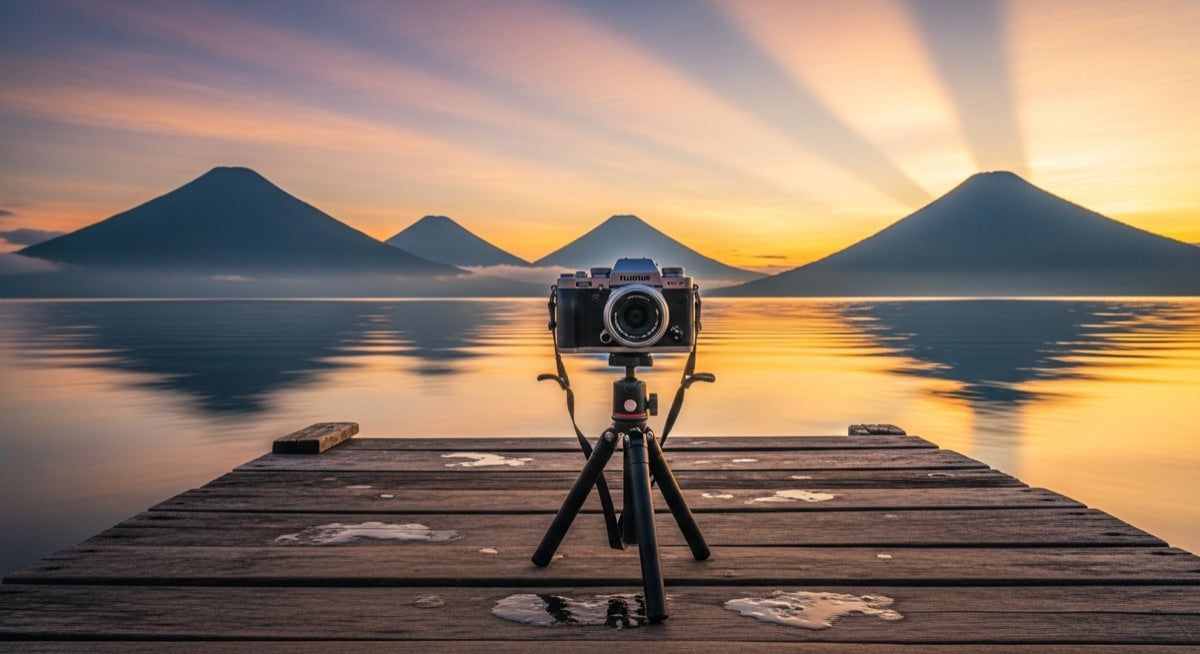
You can have the best camera in the world, but if the tripod shakes, your photos of Lake Atitlan will come out blurry. And here the enemy has a name: the Xocomil, that afternoon wind that drops down between the volcanoes and whips up waves on the lake. At five in the morning, when you're waiting for the sun to burst over the Tolimán volcano with a long exposure, any gust ruins the shot if your support is flimsy. This article isn't about which camera to buy (we have another guide for that), but about what almost no one plans well: stabilization. Tripods, mini-tripods, gimbals, remote triggers and the balance between height and weight so you carry little and shoot steady.
Why the lake wind changes the whole equation
Lake Atitlan sits more than 1,500 meters above sea level, ringed by three volcanoes that act as an air funnel. In the morning the water is like a mirror; from midday on, the Xocomil pushes hard. That means two things for your photography. First, your best light windows (sunrise and sunset) coincide with low-light conditions that demand long exposures, and there a steady tripod is a must. Second, even if you head out early, docks like those in San Pedro, Santa Cruz or Jaibalito get a constant breeze. A lightweight plastic tripod vibrates with every gust and passes that micro-movement to the sensor. The rule is simple: prioritize rigidity and weight at the base, not just lightness for your backpack.
Lightweight aluminum tripod: the workhorse
For anyone traveling with a DSLR or mirrorless camera, a folding aluminum travel tripod is still the most sensible option for value and stability. Aluminum weighs a bit more than carbon fiber, but it absorbs vibration well and takes knocks on the dirt trails up to the viewpoints. Look for three features. One: four- or five-section legs that fold under 45 cm so they fit in your carry-on. Two: a counterweight hook under the center column, where you can hang your backpack to add extra weight against the wind. Three: a ball head with a level, so you can recompose quickly when the sunrise light changes in seconds.
Carbon fiber is the premium evolution: the same rigidity with less weight, ideal if you're going to climb to the Maya Face viewpoint or Cerro Tzankujil carrying gear. It costs more, but if you hike with a camera, your shoulders will thank you.

MOFT Phone Tripod Stand & Selfie Stick, Lightweight Portable Phone Holder
$33.99
Check price on Amazon →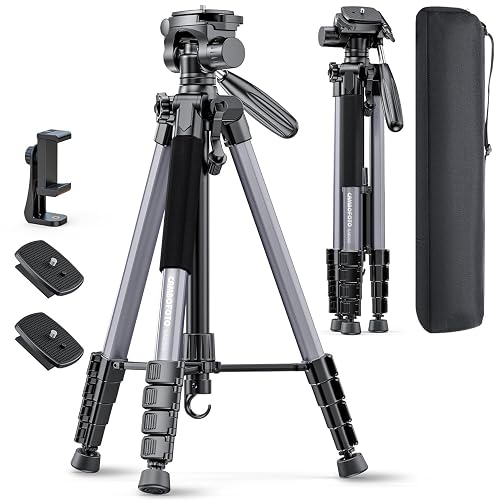
CAMBOFOTO 74 inch Aluminum Camera Tripod for DSLR & Mirrorless Cameras
$34.99
Check price on Amazon →

Vimose Phone Tripod & Selfie Stick with Remote, Portable for Vlog Travel
$17.98
Check price on Amazon →
Phone mini-tripod: lightweight but with a trick
More and more travelers photograph Atitlan with just their phone, and there the flexible mini-tripod with adjustable legs is the king of practicality. You wrap it around a boat railing, rest it on a dock rock or wedge it between stones for a night shot. The trick: almost all modern phones have night mode and astro mode that need several seconds of stillness. Without a support, those Milky Way photos over the lake simply don't happen. A mini-tripod with a ball head and a universal phone adapter turns your phone into a long-exposure tool for a fraction of the cost of a camera.
That said, the mini-tripod has one clear limit: height. It gives you ground-level or propped-up shots, not eye-level framing. That's why many people combine a mini-tripod for the phone with a column tripod for the camera. If you're only going to carry one, decide based on your dream photo: a wide landscape from a viewpoint, or detail and video in the villages?
Gimbal for video: when the lake moves with you
If your plan is to record vlogs, reels or walkthroughs of Panajachel and the villages, a tripod falls short because you're the one moving. That's where the stabilizing gimbal comes in. A three-axis gimbal for phone or camera compensates for the sway of walking, climbing steps or filming from a boat bouncing on the waves. The difference between a nauseating video and a cinematic one of the Xocomil moving the water is, literally, the gimbal. Current smartphone models fold up, weigh little and many include a built-in tripod in the base, so they cover two jobs: stabilization on the move and a fixed support for a sunset timelapse.
For those who film with a mirrorless, there are more robust gimbals, but they're heavy and require balancing the gear. For most travelers, a phone gimbal is the sweet spot between quality and portability.
Remote and shutter release: the detail that saves sharpness
This is the cheapest accessory and the most forgotten. When you press your camera button or tap the phone screen, you transmit a tiny vibration that, in an exposure of several seconds, turns into blurred stars or smeared reflections. A Bluetooth remote or a cable release eliminates that contact. On the phone it also solves the classic solo-traveler problem: you step away from the phone to appear in the photo yourself in front of the lake, without relying on rushed timers. For selfies and vlogs, a remote turns any tripod into your personal photographer.
Height versus weight: how to decide without regret
The whole choice comes down to this balance. A tall tripod (reaching your eye level, ~150 cm or more) gives you comfortable compositions and clean framing over railings or crowds, but it's heavy and bulky. A compact tripod travels easily but forces you to crouch or look for something to prop it on. My recommendation for Atitlan: if your focus is landscapes and sunrises, prioritize height and stability with a counterweight. If your focus is content, mobility and villages, prioritize lightness, a gimbal and a remote. And a golden rule: a tripod you don't use because it's heavy is worse than a modest one you always carry with you.
Before choosing a camera and accessories, it's worth reading our guide to the best camera for photographing Atitlan, and if you're getting up early, check out the best spots for sunrise over the lake. And since everything here is water, it doesn't hurt to know the best waterproof cameras for lake travel.
My recommended combo for the Atitlan traveler
If I had to put together a single kit that survives the Xocomil and fits in a backpack: an aluminum or carbon travel tripod with a counterweight hook for the camera and the sunrises, a flexible mini-tripod for the phone on boats and rocks, a smartphone gimbal for the village reels, and a Bluetooth remote for all three. With that you cover landscape photography, astrophotography, stabilized video and selfies, without carrying extra. Stability isn't glamorous, but it's the difference between bringing home memories and bringing home postcards.
Frequently asked questions
Do I need a tripod if I only shoot with my phone?
Yes, if you want sunrise, sunset or night shots. The night mode and astro mode on phones need several seconds of total stillness, impossible to hold by hand. A flexible mini-tripod with a phone adapter is cheap and fits in any pocket.
Aluminum or carbon fiber for Lake Atitlan?
Aluminum offers a better price and good vibration absorption; carbon fiber weighs less with the same rigidity, ideal if you'll hike to the viewpoints. Both work; choose carbon only if the weight on your walks is a real priority.
How do I keep the wind from knocking over my tripod?
Use a tripod with a counterweight hook and hang your backpack from it to lower the center of gravity. Spread the legs fully, retract the center column and place one leg into the wind. Shoot with a remote so you don't add vibration by touching the gear.
Can a gimbal also work as a fixed tripod?
Many smartphone gimbals include a small built-in tripod in the base, so you can stand them up for a timelapse or a still photo. However, they don't give you the height or wind stability of a dedicated tripod, so they're a complement, not a full replacement.
This article contains affiliate links. As an Amazon Associate, we earn from qualifying purchases at no extra cost to you.