Best Trekking Poles for Steep Volcano Terrain (2026)
21 June 2026 · Diego Monzón
Add us as a preferred source on Google
Volcanic hiking in Guatemala is nothing like a casual nature walk. Whether you're summiting Volcan Toliman from the shores of Lake Atitlan, pushing through the pine forests of Volcan San Pedro, or taking on the punishing ascent of Acatenango, your legs and knees take a serious beating. Loose volcanic scree, exposed roots, and grades that hit 40-50% on the final push to the summit demand more than just good boots. A quality pair of trekking poles can mean the difference between summiting with confidence and hobbling back to your hostel for three days. After extensive research and feedback from guides who work these volcanoes daily, we've put together this guide to the best trekking poles for 2026 — chosen specifically for steep, technical volcano terrain.
Why Trekking Poles Matter on Guatemala's Volcanoes
Guatemala's volcanic peaks sit in a unique geographic context. Surrounding Lake Atitlan, volcanoes like San Pedro (3,020m), Toliman (3,158m), and Atitlan (3,537m) rise steeply from the lake's edge, meaning you gain enormous elevation in very short horizontal distances. The terrain shifts rapidly from cobblestone village paths to dense subtropical forest, then to exposed volcanic rock and loose cinder near the summit. In wet season (May through October), trail surfaces become slippery mud over hardened lava, which is where most injuries happen.
Trekking poles distribute effort across your upper and lower body, reduce cumulative joint stress on multi-hour descents, and provide critical stability when crossing eroded gullies or navigating boulder fields. Local guide cooperatives in San Pedro La Laguna consistently report that the majority of guided hiker incidents involve ankle rolls or knee pain on the descent — the exact scenarios where poles are most protective.
What to Look for When Buying Trekking Poles for Volcano Hiking
Not all trekking poles are built for the demands of volcanic terrain. Here's what separates a great volcano pole from an average hiking stick:
Adjustability: On volcano hikes you will constantly alternate between steep uphill (where shorter poles help) and steep downhill (where longer poles protect your knees). Telescopic or three-section folding poles with quick-lock mechanisms are non-negotiable. Avoid fixed-length poles for this terrain.
Grip material: Cork grips are the gold standard for multi-hour sweaty ascents — they mold to your hand and resist moisture better than foam or rubber. Extended EVA foam grips below the main handle let you choke up on the pole for steep traverses without stopping to adjust length.
Tip and basket system: Carbide tips bite into hard volcanic rock and compacted dirt. Interchangeable baskets matter: small trekking baskets work on most terrain, but mud baskets (wider diameter) prevent poles from sinking into soft post-rain volcanic soil, which can be several inches deep on popular trails.
Weight: On a 6-8 hour summit day, pole weight accumulates. Carbon fiber poles (240-280g per pole) are significantly lighter than aluminum (450-550g per pole) but cost more and can fracture under sudden lateral stress — relevant if you're using poles aggressively on technical sections. For most Guatemala volcano hikers, mid-weight aluminum alloys strike the best balance.
Shock absorption: Anti-shock systems (internal spring mechanisms) reduce vibration transmission to wrists and elbows on descents. Useful on repetitive rocky terrain, though they add slight weight and complexity. A worthwhile feature for hikers with joint sensitivities.
Wrist strap quality: Padded, adjustable straps that allow proper pole technique (letting the strap bear weight on uphill, releasing grip on downhill to prevent wrist injury in a fall) are important. Cheap straps cause blisters and encourage bad technique.
Top Picks for Steep Volcano Terrain
Our selections below prioritize the specific demands of Central American volcano hiking: durability in humid conditions, reliable locking mechanisms under load, grip performance during sweaty multi-hour ascents, and price points that make sense for travelers who may only hike volcanoes a few times per trip.
Best for Most Hikers: Mid-Range Aluminum Poles
For the majority of travelers heading up Volcan San Pedro or Toliman, a well-built aluminum telescoping pole in the 450-500g range delivers the best combination of durability, adjustability, and value. Look for twist-lock or lever-lock mechanisms (lever-locks are easier to operate with gloves or sweaty hands), cork or foam grips with extended lower grip sections, and included tip protectors for travel. These poles handle the full range of Guatemala volcano conditions — from the muddy lower forest to exposed summit rock — without risk of catastrophic failure on technical moves.
Best Lightweight Option: Carbon Fiber Folding Poles
If you're tackling multi-day routes, plan to hike several volcanoes back to back, or simply want the least fatigue on a long summit push, carbon fiber folding poles are worth the premium. Their vibration-damping properties are notably better on rocky volcanic surfaces than aluminum, and the weight savings are genuinely felt after hour four. The tradeoff is brittleness: avoid using them as levers to pry yourself over boulders or wedging them sideways in rock crevices under load. For straightforward trail use, they excel.
Best Budget Option: Entry-Level Aluminum for Occasional Hikers
Not every traveler at Lake Atitlan is a seasoned trekker — some visitors tackle Volcan San Pedro as a once-in-a-trip experience. For this group, basic aluminum twist-lock poles under $40 USD provide enough function to make a real difference on the descent without requiring a significant equipment investment. Prioritize ergonomic grip padding and reliable locks over brand prestige at this price point. Alternatively, guide operators in San Pedro La Laguna and Panajachel rent poles for Q20-30/day, which may be the most practical option for carry-on-only travelers.
Caring for Your Poles in Guatemala's Climate
Lake Atitlan's highland climate is humid, and volcanic soil contains minerals that accelerate metal corrosion. After each use, rinse pole shafts with fresh water, dry the lock mechanisms before collapsing for storage, and inspect tip carbide inserts regularly — they wear faster on hard volcanic rock than on softer trail surfaces. Store poles extended if possible to prevent moisture trapping inside the collapsed sections. A small drop of silicone lubricant on the locking mechanisms every few trips keeps adjustment smooth in humid conditions.
Top Trekking Poles for Guatemala's Volcanic Trails
The steep descents on Volcan San Pedro, Toliman and Atitlan put serious strain on knees. Trekking poles reduce knee impact by 25-40% on descents. Here's what holds up on volcanic terrain:

BLACK DIAMOND Trail Back Trekking Poles (Pair) | Durable Aluminum | FlickLock Adjustability | Comfortable Grips for Hiking & Backpacking
$74.88
Check Price on Amazon →
LEKI Cressida FX Carbon Collapsible Lightweight Walking Poles for Trekking & Hiking
$172.07
Check Price on Amazon →
Cascade Mountain Tech Trekking Poles - Carbon Fiber Walking or Hiking Sticks with Quick Adjustable Locks (Set of 2)
$64.99
Check Price on Amazon →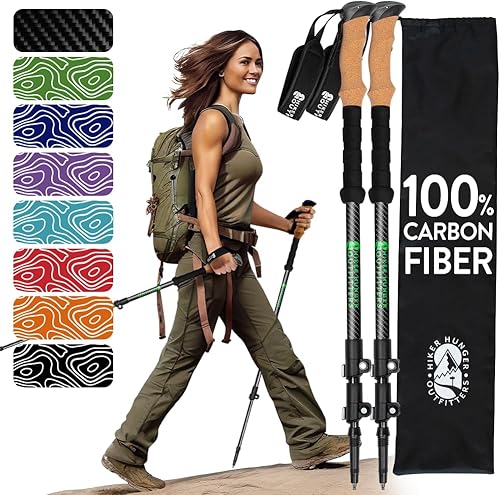
100% Carbon Fiber Trekking Poles by USA Brand - Ultra Strong Lightweight Collapsible Hiking Poles with Cork and EVA Foam Grips & Quick Adjustable Flip Locks
$59.97
Check Price on Amazon →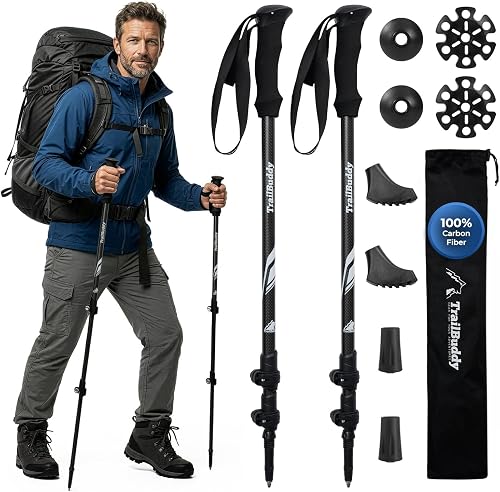
TrailBuddy 3K Carbon Fiber Hiking Poles - Collapsible Lightweight Trekking Poles for Hiking - Adjustable Walking Sticks for Women, Men, Seniors
$48.45
Check Price on Amazon →Frequently Asked Questions
Do I need trekking poles for Guatemala volcanoes?
Strongly recommended, especially for descent. Volcanic terrain involves steep grades, loose scree and root-covered forest paths where poles provide crucial balance. Studies show trekking poles reduce knee load by 25-40% on steep descents. Most guides on Volcan San Pedro and Toliman use poles personally.
Carbon vs aluminum trekking poles for volcano hiking?
Carbon is lighter (240-280g per pair vs 450-550g for aluminum) and absorbs vibration better on rocky terrain — great for long summit days. Aluminum is cheaper and more durable — won't shatter if you fall or wedge them in rocks. For Guatemala volcano hiking, aluminum is the practical choice for most hikers. Carbon makes sense if you do multiple days of technical trekking.
What length trekking poles for volcano hiking?
For uphill: set poles 5-10cm shorter than flat-ground length (elbow at 90° is baseline). For steep downhill on volcanoes: extend 10-15cm longer than your flat-ground setting. Adjustable poles (telescopic or folding) are essential for Guatemala's volcanoes where you're constantly alternating steep up and steep down.
Are trekking poles allowed on planes?
No, trekking poles must go in checked baggage — they are not allowed in carry-on luggage. If you're doing a carry-on only trip to Guatemala and want poles, rent them locally from guide operators in San Pedro La Laguna or Panajachel (Q20-30/day) rather than checking a bag.
This article contains affiliate links. As an Amazon Associate, we earn from qualifying purchases at no extra cost to you.