Holy Week in Lake Atitlán: Complete Guide
21 June 2026 · Diego Monzón
Add us as a preferred source on Google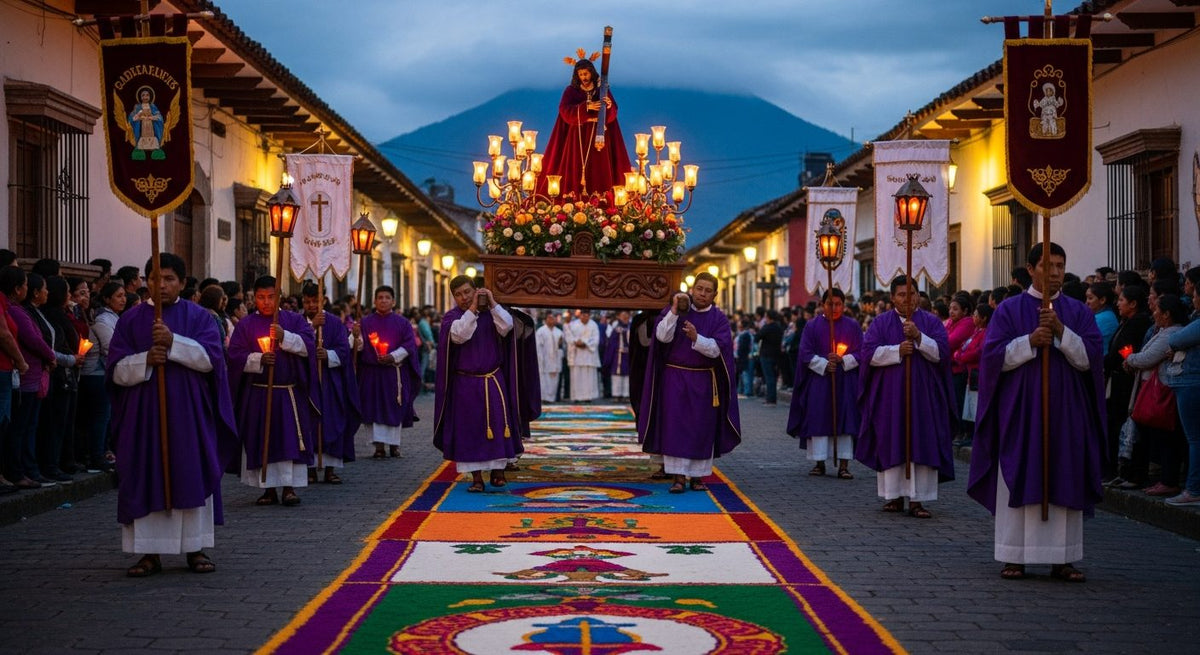
Lake Atitlán during Holy Week is one of Guatemala's most impressive experiences. The lake basin, surrounded by volcanoes and inhabited by Tz'utujil and Kaqchikel Mayan communities, transforms its streets into scenes of devotion, color, and tradition during Easter. If you're planning to visit Atitlán during this time, this guide will help you make the most of each day.
Why Holy Week in Atitlán is unique in Guatemala
While cities like Antigua Guatemala gain international fame for their processions, Lake Atitlán holds a different, more intimate Holy Week, deeply rooted in Mayan identity. Here, the celebration is not just Catholic: it is a centuries-old fusion of the spiritual traditions of the Tz'utujil and Kaqchikel peoples and the Catholicism brought by Franciscan and Dominican missionaries in the 16th century.
The result is a week where elaborate float processions, sawdust carpets, prayers in indigenous languages, and the presence of syncretic figures like Maximón coexist. No other region in Guatemala offers this combination in such an authentic and accessible way for travelers.
Santiago Atitlán: the heart of Holy Week on the lake
Santiago Atitlán is, without a doubt, the town where Holy Week reaches its maximum expression throughout the lake basin. The cofradías—religious organizations of Mayan origin that keep traditions alive—prepare for weeks the elements that will make these days memorable.
The processions of Santiago
The Holy Thursday and Good Friday processions in Santiago Atitlán are the largest and most significant on the lake. The floats, carried by dozens of cucuruchos dressed in purple, wind through narrow streets amidst clouds of incense and the sound of funeral marches. The weight of each float can exceed 3,000 kilograms, and watching it move through the crowd is an unforgettable sight.
Maximón during Holy Week
One of Santiago Atitlán's most unique attractions is Maximón, the syncretic Tz'utujil deity. During Holy Week, Maximón plays a leading role in his own ritual: on Holy Wednesday, he is taken from the cofradía house that guards him that year and paraded through the streets. His encounter with the image of Jesus on Good Friday is one of the most powerful and unique moments of Guatemalan Holy Week. To attend, ask in the town where the cofradía guarding Maximón that year is located—it changes annually.
Sawdust carpets in Santiago
Families and cofradías work from dawn on Good Friday to create carpets of dyed sawdust that cover the streets where the processions will pass. The designs blend religious motifs with Mayan symbols. If you want to see them intact and untouched, arrive before 6 AM—the processions destroy them as they pass, and that is also part of the ephemeral beauty of the tradition.
San Pedro La Laguna: nocturnal processions that will leave you speechless
San Pedro La Laguna has a Holy Week with its own character. The town, known for its bohemian atmosphere and its community of artists and travelers, becomes deeply devout during these days. The night processions on Holy Thursday and Good Friday are the most emotional: held with torches and candles, amidst the silence of the night and the reflection of the lake, they create an atmosphere that many visitors describe as one of the most impactful experiences they have ever had.
In San Pedro, sawdust carpets are also made, although on a smaller scale than in Santiago. The combination of the religious celebration with the relaxed atmosphere of the town makes it an excellent option for travelers who want to participate in the tradition without the crowds of other destinations.
Panajachel: the perfect logistical base to explore the lake
Panajachel is the entry point to the lake for most tourists and an ideal logistical base during Holy Week. Although its celebrations are less traditional than those of Santiago or San Pedro—given that it is the town with the largest presence of tourists and foreign residents—it has its own processions and a wide range of accommodation, restaurants, and services.
From Panajachel, boats depart to all the lake towns with high frequency during Holy Week, making it easy to take day trips to Santiago Atitlán, San Pedro La Laguna, San Marcos La Laguna, or any other town. If you plan to move around a lot, staying in Panajachel may be the most practical option.
The Holy Week calendar: what to see each day
Not all Holy Week days are equal in intensity. These are the most important days to plan your visit:
Holy Wednesday
In Santiago Atitlán, Holy Wednesday is the day of the Maximón ritual, when the image is taken out in procession. Preparations for the carpets also begin in several towns around the lake.
Holy Thursday
This is one of the most active days. Holy Thursday processions are long and cover the entire town. In San Pedro La Laguna, the nocturnal procession on this day is especially emotional. In Santiago Atitlán, religious activity is intense from the morning.
Good Friday
The most solemn day. In Santiago Atitlán, the encounter between Maximón and the image of Christ is the culminating moment. Sawdust carpets cover the streets before dawn. It is the day with the largest concentration of people in all the lake towns—arrive early and with patience.
Easter Sunday
The tone changes completely: there is celebration, music, and a festive atmosphere. Families gather, there are activities in the squares, and the towns return to their usual rhythm. It's a good day to stroll peacefully and enjoy the lake in all its splendor.
Other lake towns with Holy Week celebrations
Beyond Santiago Atitlán and San Pedro La Laguna, other towns have their own traditions during Easter:
- San Marcos La Laguna: More intimate processions in a town known for its spiritual atmosphere and nature. Ideal for those seeking tranquility.
- San Juan La Laguna: Active cofradías, modest carpets, and an artisan community that keeps its traditions alive. Ten minutes by boat from San Pedro.
- San Lucas Tolimán: On the southern shore of the lake, this town has long and well-organized processions, with fewer tourists than in the more visited towns.
- Santa Cruz La Laguna and San Antonio Palopó: Smaller but authentic celebrations, in towns accessible primarily by boat from Panajachel.
Prices, accommodation, and how to get there: what you need to know before you go
Prices during Holy Week
During Holy Week, accommodation prices throughout the lake basin increase by 50% to 100% compared to the normal season. A hotel that costs Q300 per night in January can reach Q500–Q600 on Good Friday. Booking 2 to 3 months in advance is not an exaggeration—the most sought-after accommodations, especially in Santiago Atitlán and San Pedro La Laguna, sell out quickly.
How to get to the lake
From Guatemala City or Antigua, the most common way is to take a shuttle to Panajachel (2–3 hours from Antigua, 3–4 from the capital) and from there take boats to the other towns. During Holy Week, more boats are available at the docks in Panajachel, San Pedro, and Santiago, but there is also more demand—expect lines and some waiting on peak days like Holy Thursday and Good Friday.
What to bring
For the processions, dress discreetly: religious events in indigenous towns deserve respect. Avoid very short or flashy clothing. Bring insect repellent, especially if you plan to attend nocturnal processions. A small flashlight, warm clothes for the evenings (the lake can be cool), and comfortable shoes for walking on cobblestones and uneven streets are essential. If you go to Good Friday pre-dawn to see carpets, consider bringing a light rain jacket in case of rain.
Photograph the Perfect Holy Week
Holy Week processions and sawdust carpets offer unique photographic opportunities. To capture them, we recommend this equipment:

Sony Alpha ZV-E10 APS-C Interchangeable Lens Mirrorless Vlog Camera - Black
$615.00
View price on Amazon →


SanDisk 128GB Extreme PRO SDXC UHS-I Memory Card - C10, U3, V30, 4K UHD
$45.97
View price on Amazon →
K&F CONCEPT Camera Backpack Hardshell Photography DSLR Camera Bag 15.6 Laptop
$50.30
View price on Amazon →Frequently Asked Questions
When is Holy Week in Lake Atitlán?
Holy Week varies each year according to the liturgical calendar (between March and April). Key dates are Holy Thursday, Good Friday, and Easter Sunday. In 2027, it falls from March 25 to 31. Book your hotel 2-3 months in advance—accommodations sell out throughout the lake basin.
Which lake town has the best Holy Week?
Santiago Atitlán has the most authentic and significant processions: a blend of Tz'utujil Mayan tradition with Catholicism. The painted sawdust carpets that cover the streets and the processions with enormous floats are unique. San Pedro La Laguna has emotional night processions on Holy Thursday and Good Friday. Panajachel has more activities but less local tradition.
How much more expensive is it to visit Atitlán during Holy Week?
Accommodation prices increase by 50% to 100% compared to the normal season. A hotel that normally costs Q300/night can reach Q500-Q600 during Holy Week. Shuttles and tours also have higher prices. To save money, book in advance—prices go up closer to the date.
Can you see the sawdust carpets during Holy Week in Atitlán?
Yes. In Santiago Atitlán and San Pedro La Laguna, cofradías and families prepare dyed sawdust carpets with religious and Mayan images on the streets where the processions will pass. They are made in the early morning of Good Friday and Holy Saturday. To see them intact, be in town before 6 AM—the processions destroy them as they pass.
This article may contain affiliate links. If you make a purchase through them, we might receive a commission at no additional cost to you.