How Many Volcanoes Does Lake Atitlán Have? The Three Giants
16 July 2026 · Diego Monzón
Add us as a preferred source on Google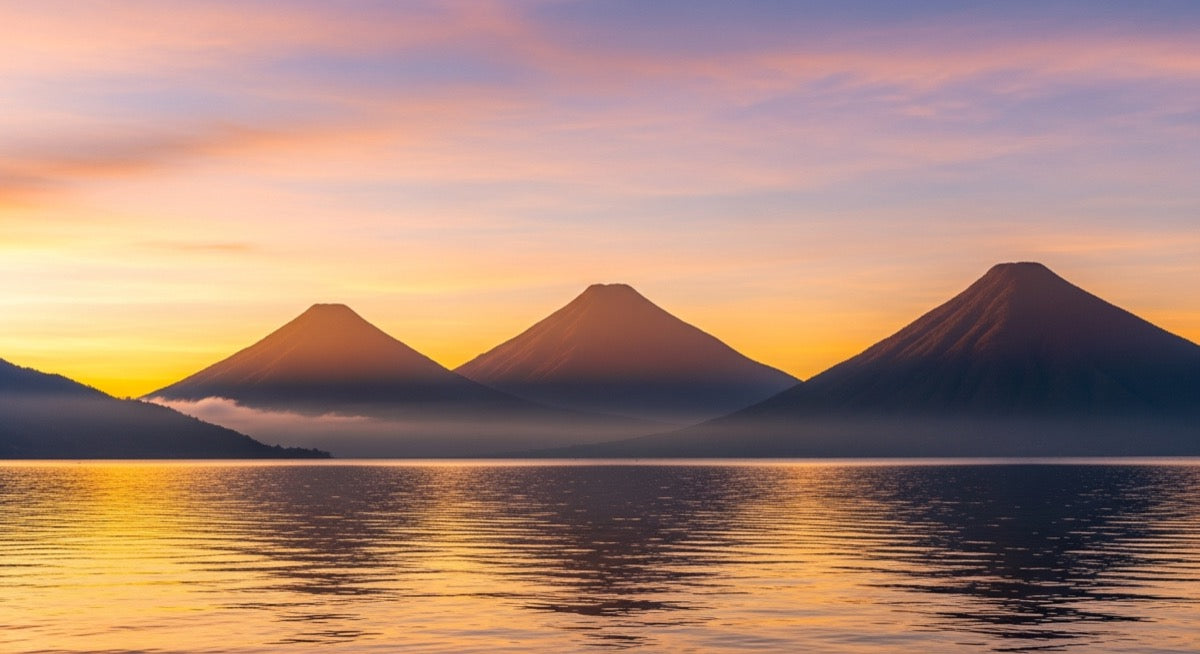
Few landscapes in Guatemala are as striking as Lake Atitlán, in the department of Sololá. And much of that postcard is owed to the three giants that guard it from the south. If you are planning your trip and wondering how many volcanoes ring the lake, what they are called and which one you might climb, this guide gives you the clear answer and everything essential to get your bearings.
How many volcanoes surround Lake Atitlán?
Lake Atitlán is surrounded by three volcanoes: Atitlán Volcano (3,537 m), Tolimán Volcano (3,158 m) and San Pedro Volcano (3,020 m). All three rise above the southern shore and form the silhouette you will recognize in any photo of the region. They are no accident of scenery: the lake itself was born from a giant volcanic caldera, the result of the super-eruption known as "Los Chocoyos" some 84,000 years ago.
The three giants at a glance
Each volcano has its own character, height and level of difficulty. This table sums up what you need to know before deciding which one to admire, photograph or climb:
| Volcano | Height | Location | Can you climb it? |
|---|---|---|---|
| Atitlán | 3,537 m | South of the lake, beside Tolimán | Yes, demanding — for experienced hikers |
| Tolimán | 3,158 m | South of the lake, above Santiago Atitlán | Yes, technical and less travelled |
| San Pedro | 3,020 m | Southwest, above San Pedro La Laguna | Yes, the most accessible for beginners |
Atitlán Volcano: the tallest
At 3,537 metres, Atitlán Volcano is the highest of the three and the one that gives the lake its name. It is a symmetrical cone still considered active, though without significant recent eruptions. The climb is long and demanding, with steep gradients and sharp temperature swings, so it is recommended only for hikers in good shape and, almost always, with a local guide. If the full challenge appeals to you, check our guide to climbing Atitlán Volcano before setting off.
Tolimán Volcano: the twin neighbour
Tolimán Volcano (3,158 m) rises right beside Atitlán — so close that from many points on the lake they look like a single massif. Cloaked in cloud forest, it is the least travelled of the three and its route is more technical and solitary, ideal for those seeking pure nature away from the crowds. It is best to go with a guide who knows the trails; you can start with our guide on how to climb Tolimán Volcano.
San Pedro Volcano: the easiest to climb
If this is your first time facing a volcano, San Pedro (3,020 m) is the best choice. It is the lowest of the three and the one with the best-marked, best-organized trail, inside a municipal park above the town of San Pedro La Laguna. The ascent takes a good part of the day, but it is doable for a healthy person at a steady pace, and the panoramic view of the lake and its two bigger siblings from the summit is simply unforgettable.
Are these volcanoes active?
Atitlán and Tolimán are classed as potentially active, while San Pedro is considered dormant (no known eruptive activity in recent times). None erupt frequently today, and the lake area is travelled with complete normality year-round. Even so, for any ascent the sensible thing is to hire a local guide and check current conditions.
Frequently asked questions
How many volcanoes does Lake Atitlán have?
Lake Atitlán is surrounded by three volcanoes: Atitlán, Tolimán and San Pedro. All three sit along the southern shore of the lake, in the department of Sololá.
What are the names of Atitlán's volcanoes?
They are Atitlán Volcano, Tolimán Volcano and San Pedro Volcano. Together they form the distinctive skyline you see from Panajachel and the other lakeside towns.
Which is the tallest volcano at Atitlán?
The tallest is Atitlán Volcano at 3,537 metres above sea level, followed by Tolimán at 3,158 m and San Pedro at 3,020 m.
Which Atitlán volcano is easiest to climb?
San Pedro Volcano (3,020 m) is the most accessible for beginners thanks to its organized, well-marked trail. Atitlán and Tolimán are tougher and best for experienced hikers.
Are the volcanoes at Lake Atitlán active?
Atitlán and Tolimán are considered potentially active, while San Pedro is dormant. None erupt frequently and the region is visited normally; for any climb, always go with a local guide.