Importance and Benefits of Lake Atitlán
16 July 2026 · Diego Monzón
Add us as a preferred source on Google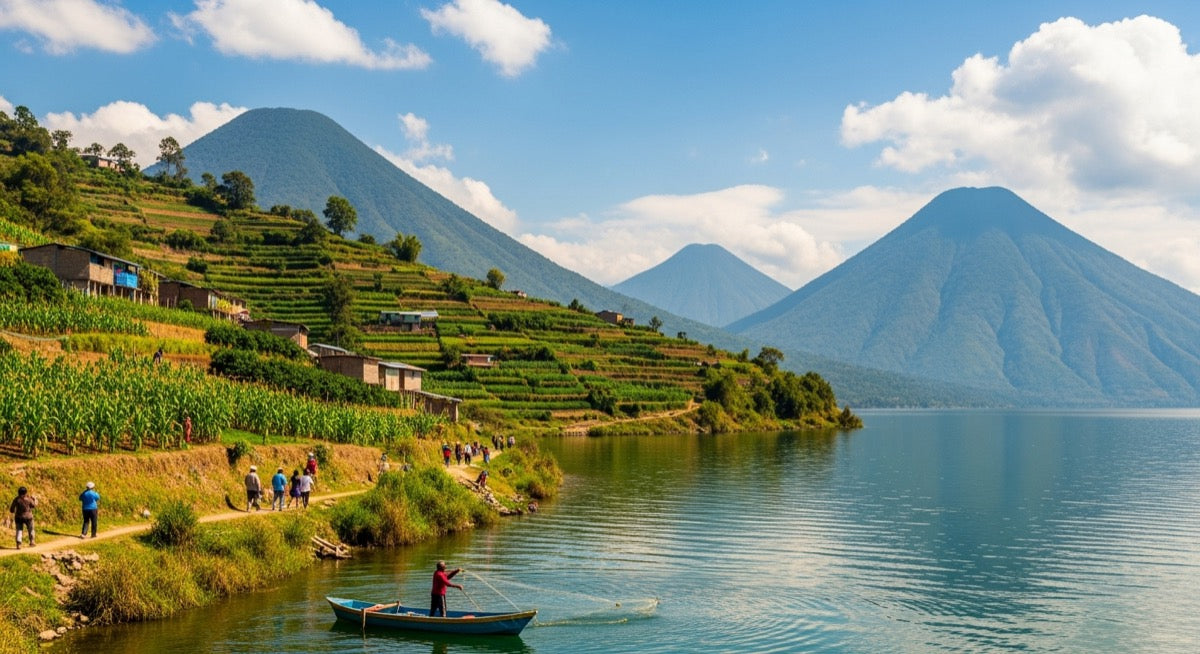
Lake Atitlán is not just one of Guatemala's most beautiful landscapes: it is the beating heart of the department of Sololá, in the western highlands. For thousands of years its deep blue waters have sustained the towns around it, fed the farms on its slopes and drawn travelers from all over the world. Understanding why it matters so much helps us value it and, above all, protect it.
Why is Lake Atitlán so important?
Lake Atitlán is important because it combines ecological, economic, cultural and touristic value found nowhere else in Central America. At roughly 340 meters at its deepest point it is the deepest lake in the region, and it acts as a huge natural freshwater reserve for the communities of Sololá. It was born from a volcanic caldera formed after the "Los Chocoyos" super-eruption some 84,000 years ago, and today it is framed by three imposing volcanoes: Atitlán (3,537 m), Tolimán (3,158 m) and San Pedro (3,020 m). Its name, from the Nahuatl atitlan, means "between the waters" or "place where water abounds," and perfectly captures its role in the region's life.
Ecological importance: water reserve and biodiversity
At about 1,562 meters above sea level, with a surface area of nearly 130 km², the lake is a high-altitude ecosystem that regulates the local climate —an eternal spring of 15 to 25 °C— and holds an enormous volume of freshwater. Its slopes and microclimates shelter birds, plants and aquatic life that are part of Guatemala's natural heritage. Protecting the quality of that water is key: in recent years cyanobacteria episodes linked to pollution have appeared, a reminder that such a valuable resource needs responsible management. The good news is that communities, cooperatives and authorities are working on sanitation and environmental education to conserve it.
Economic importance: tourism, fishing, coffee and farming
The lake is the economic engine of Sololá. Tourism creates jobs in hotels, restaurants, boat transport and local guiding; many families make a living welcoming the visitors who arrive in the different towns. Artisanal fishing provides food and livelihood for lakeside communities. On the fertile volcanic slopes, highland coffee, corn, avocado, onion and other products are grown and sold in the region's markets. Add to this the textile crafts: in towns such as San Juan La Laguna, women's cooperatives weave and dye with natural processes, and getting to know the culture of San Juan La Laguna is one of the most authentic experiences on the lake.
Cultural importance: living Maya towns
Around the lake live Maya communities that preserve their languages, dress and traditions. The main languages spoken are Kaqchikel, Tz'utujil and K'iche', and each town —Santiago Atitlán, San Pedro, San Marcos, San Juan, Panajachel, Santa Cruz, San Antonio Palopó and others— has its own identity, markets, brotherhoods and art. This living cultural richness makes the lake a place where travelers not only admire a landscape but come close to a civilization thousands of years old.
The lake as a world-class attraction
Writers and travelers have described Atitlán as one of the most beautiful lakes on the planet, and it is no exaggeration. Its blend of water, volcanoes and culture makes it ideal for hiking, kayaking, artisan towns, wellness and photography. The best time to visit is the dry season, from November to April, and especially between November and February. You reach it by shuttle from Antigua (about 3 hours) or Guatemala City (about 3.5 hours), and you travel between towns on public boats for Q10 to Q25. If you plan to stay several days, the ideal thing is to visit and stay at the lake and enjoy it at a relaxed pace.
Frequently asked questions
Why is Lake Atitlán important?
Because it is a large freshwater reserve and a unique volcanic ecosystem, as well as the economic engine of Sololá (tourism, fishing, coffee and farming) and home to Maya peoples who keep their languages and traditions alive. It brings together ecological, economic, cultural and touristic value in one place.
What benefits does Lake Atitlán offer?
It offers water, food through fishing, fertile land for highland farming, income from tourism and crafts, and a natural setting that regulates the local climate. For visitors, it provides landscapes, culture and outdoor activities all year round.
What economic activities depend on the lake?
Mainly tourism (hotels, restaurants, boat transport and guides), artisanal fishing, highland coffee and other crops grown on the slopes, and the production of textiles and crafts in local cooperatives.
Which towns live around Lake Atitlán?
The main ones include Panajachel, Santiago Atitlán, San Pedro, San Marcos, San Juan, Santa Cruz, San Antonio Palopó, Santa Catarina Palopó, Jaibalito and Tzununá, home to Kaqchikel, Tz'utujil and K'iche' communities.
Is Lake Atitlán under threat?
The lake faces conservation challenges, such as cyanobacteria episodes linked to pollution. Even so, communities, cooperatives and authorities work on sanitation and environmental education to protect its water quality, and visiting responsibly helps care for it.