Lake Atitlán Wildlife: Animals and Nature
21 June 2026 · Diego Monzón
Add us as a preferred source on Google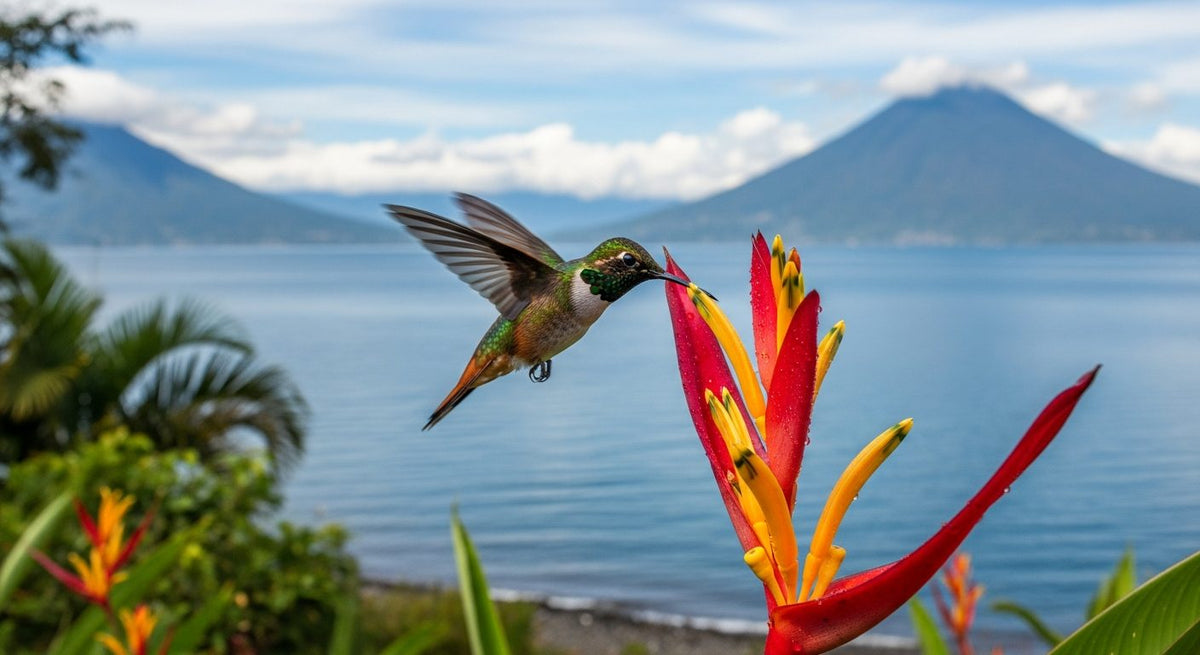
Lake Atitlán is much more than a postcard landscape: it is one of the most complex lacustrine ecosystems in Central America, nestled among three volcanoes and surrounded by cloud forests that host extraordinary biodiversity. From the heron-filled shores to the peaks where the quetzal nests, Atitlán's wildlife tells a story of beauty, loss, and resilience. This guide takes you through the species that inhabit the lake, its volcanoes, and its forests — including the tragedy of the poc, the duck the lake lost forever.
The Poc: The Story of the Duck the Lake Lost
No story about Atitlán's wildlife can begin without mentioning the poc, the name by which the K'iche' and Tz'utujil Maya peoples knew Podilymbus gigas, the giant Atitlán grebe. It was an absolutely endemic species: it existed nowhere else on the planet. Large, awkward to fly, perfectly adapted to diving in the lake's waters in search of fish, the poc was for centuries part of the landscape and indigenous imagination of the lakeside communities.
Its extinction, confirmed around 1989, was the result of a combination of human factors that accumulated over decades. In the 1950s, the Guatemalan government introduced the American black bass (Micropterus salmoides) to promote sport fishing. What seemed like an innocuous decision turned out to be catastrophic: the bass ate the small fish and crabs that were the poc's main food source, leaving it without sustenance. Poaching, increasing shoreline pollution, and the 1976 earthquake — which altered the tule reeds where the poc nested — sealed its fate. Today, its image appears in murals in Panajachel and in the weaves of San Juan La Laguna as a reminder of what was lost by not caring for what was had.
Waterfowl: The Ones That Remain in the Lake
Despite the loss of the poc, the lake's shores remain a rich setting for waterfowl. At dawn, when the mist still covers the water and the volcanoes are barely silhouetted, it is possible to observe several active species on the banks and surface of the lake.
Herons, Cormorants, and Gallinules
The great egret (Ardea alba) and the little blue heron (Egretta caerulea) are constant presences on the piers and at river mouths. The neotropic cormorant (Phalacrocorax brasilianus) can be seen perched with wings spread in the sun, drying off after diving. The common gallinule (Gallinula galeata) is more discreet but common among the shoreline vegetation.
The Kingfisher
The belted kingfisher (Megaceryle alcyon) and its smaller relative, the green kingfisher (Chloroceryle americana), are two of the most rewarding birds to observe in Atitlán. They dive from branches over the water with surgical precision. Cerro Tzankujil, in San Marcos La Laguna, is one of the best spots to see them from just a few meters away.
Hummingbirds: The Treasure of San Juan La Laguna
San Juan La Laguna has become the Guatemalan capital of hummingbird birdwatching. The town, in addition to being known for its weaving cooperatives and naive paintings, hosts over seven species of hummingbirds that regularly visit the gardens and hillside vegetation. Among the most common are the rufous-tailed hummingbird (Amazilia rutila), the fork-tailed emerald (Chlorostilbon canivetii), and the stunning stripe-tailed hummingbird (Eupherusa eximia).
Several local guides offer sunrise birdwatching tours. The combination of gardens with native flowers, flowering coffee plantations, and trails through orchards makes San Juan a must-visit destination for any bird enthusiast. If you visit the lake with an interest in wildlife, this town deserves at least a full morning.
Quetzals and Cloud Forest Birds in the Volcanoes
The quetzal (Pharomachrus mocinno), Guatemala's national bird, does not live on the lake's shores — but it does inhabit the cloud forests on the slopes of the surrounding volcanoes, especially above 1,800-2,000 meters above sea level. Volcanes San Pedro, Tolimán, and Atitlán have cloud forest ecosystems where the quetzal nests between February and April, its breeding season.
The trails of Volcán San Pedro are one of the most used access points to attempt a sighting. It is essential to go with a certified local guide, who knows the aguacatillo trees (Persea spp.) where the quetzal feeds and the usual perching spots. Patience and silence are the best equipment.
Raptors over the Lake
Over the lake's waters and wooded slopes, hawks and falcons are frequently seen in flight. Cooper's hawk (Accipiter cooperii), Swainson's hawk (Buteo swainsoni) — visible during migration season — and the osprey (Pandion haliaetus) often appear soaring over the water's surface. The thermal currents generated by the volcanoes create ideal conditions for raptors.
Lake Fish: Native and Invasive
The mojarra (Cichlasoma spp.) is the best-known native fish of the lake and the one that has historically sustained the artisanal fishing of the lakeside communities. It is found in the markets of Panajachel and Santiago Atitlán fresh or dried, and is a staple ingredient in local cuisine.
The black bass (Micropterus salmoides), introduced in the 1950s, completely transformed the aquatic ecosystem. In addition to contributing to the extinction of the poc by competing for food, the bass altered the lake's food chains. Paradoxically, today it is the most sought-after fish by sport fishermen visiting Atitlán, which has created a recreational fishing industry deeply rooted in some of the lake's docks. It is an uncomfortable reminder of how a management decision can have irreversible ecological consequences.
Terrestrial Fauna: Volcanoes and Wooded Slopes
The pine-oak forests and scrub areas of the volcanic slopes host a varied, though discreet, terrestrial fauna. Most of these animals are nocturnal or very elusive, so sightings are less frequent than those of birds.
Mammals of the Slopes
The coyote (Canis latrans) is the most representative terrestrial mammal of the high areas around the lake. Adaptable and omnivorous, it frequents the edges of crops and pastures in the upper parts. The common opossum (Didelphis marsupialis) is abundant and nocturnal; it is not uncommon to see it crossing rural roads at dusk. The armadillo (Dasypus novemcinctus) inhabits the soft soils of the wooded slopes, where it digs in search of insects and larvae.
Reptiles: Lizards and Snakes
The spiny lizards of the genus Sceloporus are ubiquitous on stone walls, village walls, and sunny rocks on the banks. Geckos appear at night on the walls of lodgings. As for snakes, most of the species present in the lake basin are not dangerous; the rat snake (Senticolis triaspis) is common in rural areas. However, in the warmer lower parts, the fer-de-lance or yellowbeard (Bothrops asper) may be present, which is venomous — all the more reason to wear boots and not put your hands under rocks or branches on trails.
Associated Flora: The Environment That Makes This Fauna Possible
The vegetation around the lake is inseparable from its fauna. Weeping willows (Salix babylonica) line many of the shores and are used as perches by herons and kingfishers. Jacarandas (Jacaranda mimosifolia), which turn the villages purple in February and March, are visited by hummingbirds and butterflies. Cypress trees (Cupressus lusitanica) dominate the hills and slopes, and are the habitat of numerous insectivorous birds.
Along some stretches of the lake's shores, tule (Schoenoplectus californicus) persists, the aquatic bulrush that was the poc's nesting habitat and still provides refuge for gallinules and other wetland birds today. Its conservation is essential to maintain what remains of the original aquatic ecosystem.
Birdwatching in Lake Atitlán: Spots and Tips
Atitlán is an increasingly recognized birdwatching destination on the Central American birdwatcher's route. Here are the recommended spots and practices:
Best Observation Spots
- San Juan La Laguna: essential for hummingbirds. The village's central gardens and trails to coffee farms are the best settings. Some local operators offer specialized early morning tours.
- Cerro Tzankujil (San Marcos La Laguna): private nature reserve with trails over the lake. Ideal for kingfishers, herons, cormorants, and riparian forest birds. Access has a minimal entrance fee that helps with maintenance.
- Volcán San Pedro Trails: for cloud forest birds, including the quetzal in season. It is recommended to go before dawn with a local guide.
- Panajachel Shores at dawn: the pier and the mouth of the Panajachel River are good spots for waterfowl before boat traffic arrives.
- Santiago Atitlán and surroundings: the wetlands south of the lake have populations of wetland birds worth exploring with a guide.
How Not to Impact the Ecosystem
Observing wildlife without harming it requires awareness and some basic habits: do not feed wild animals (it alters their natural behavior and makes them dependent), maintain distance from nests, do not tear up riparian vegetation, do not litter in the lake or on the trails, and choose tour operators that work under principles of minimal impact. The lake has already paid a very high price for human negligence — the poc is proof of that. What remains deserves active protection.
Recommended Gear for Wildlife Observation in Atitlán
To make the most of bird and wildlife observation in Lake Atitlán, these are the most useful accessories:

Bushnell H2O 10x42mm Binoculars, Waterproof and Fogproof for Boating, Hiking
$94.59
View price on Amazon →
Birds of Central America: Belize, Guatemala, Honduras, El Salvador, Nicaragua
$32.02
View price on Amazon →
GardePro E5S Trail Camera 64MP 1296P HD Video 0.1s Trigger No-Glow Night Vision
$68.96
View price on Amazon →
Repel 100 Insect Repellent 4 Ounces 98% DEET 10-Hour Protection Aerosol Spray
$18.11
View price on Amazon →
Rite In The Rain Weatherproof Side Spiral Notebook 4.625x7 Green Cover
$11.25
View price on Amazon →Frequently Asked Questions
What animals live in Lake Atitlán?
The lake is home to several fish species (mojarra, carp, black bass), waterfowl such as the common gallinule, the neotropic cormorant, and the kingfisher. Herons and egrets are found on the shores. The cloud forests on the volcanic slopes harbor hummingbirds, raptors, quetzals (at altitudes above 1,800 msnm), coyotes, and bats.
Does the quetzal live near Lake Atitlán?
The quetzal lives in the cloud forests on the slopes of the volcanoes, especially above 1,800-2,000 msnm. It is not seen directly on the lake's shores. To spot it, climb Volcán San Pedro or Tolimán during the dry season (February-April, nesting season). Local hiking guides know the sighting spots.
What happened to the Atitlán grebe?
The poc or Atitlán grebe (Podilymbus gigas) was exclusively endemic to the lake and became extinct around 1989. The combined causes were: the introduction of the American black bass in the 1950s (which preyed on the small fish the poc ate), hunting, pollution, and the 1976 earthquake that altered its habitat. It is one of the best-known examples of extinction in Central America.
Where to go birdwatching in Lake Atitlán?
The best spots are: Cerro Tzankujil in San Marcos La Laguna (riparian forest, kingfishers, herons), San Juan La Laguna (hummingbird capital — 7+ species), the Volcán San Pedro trails (cloud forest birds), and the shores of Panajachel at dawn (waterfowl). Dawn is always the best time.
This article may contain affiliate links. If you make a purchase through them, we may receive a commission at no additional cost to you.