Mount Tolimán: Complete Hiking Guide
21 June 2026 · Diego Monzón
Add us as a preferred source on Google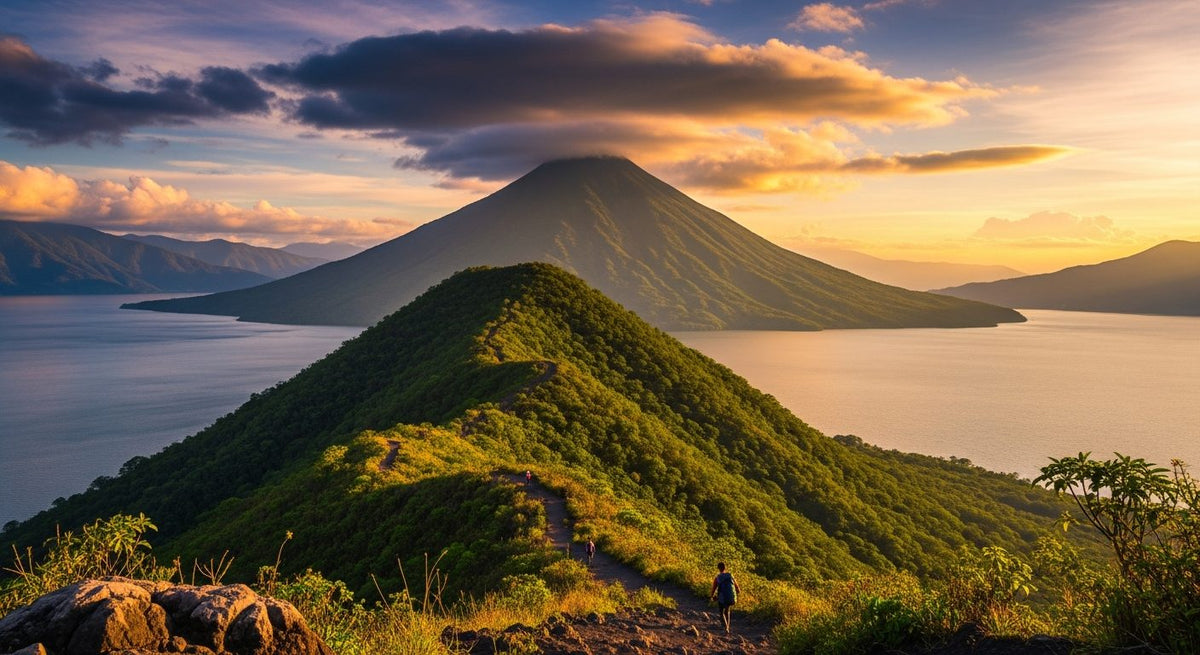
Volcán Tolimán is one of the greatest hiking challenges in Guatemala. At 3,158 meters above sea level, this twin volcano of Atitlán rises directly from the shores of Lake Atitlán, offering one of the most rewarding ascents in all of Central America. Those who reach its summit are greeted with panoramic views that few mountains in the world can match: the shimmering lake below, the imposing Atitlán volcano nearby, and the San Pedro volcano at the other end. This guide gives you everything you need to plan your ascent safely and without surprises.
Location and How to Get to Volcán Tolimán
Volcán Tolimán is located in the department of Sololá, in the western highlands of Guatemala, flanking the southern side of Lake Atitlán alongside its larger sibling, Volcán Atitlán. The two most common starting points for the ascent are Santiago Atitlán and San Lucas Tolimán, both municipalities with access to trails that climb the volcano's slopes.
From Panajachel, you can reach Santiago Atitlán by public boat (approximately 45 minutes, Q25-Q35 per person) or San Lucas Tolimán by bus or pickup truck, driving around the lake (approximately 1 hour). If you're coming from San Pedro La Laguna, the boat to Santiago Atitlán takes less than 20 minutes. Once in either of these towns, local guides will take you to the trailhead, which is usually a 15-30 minute walk from the town center.
Difficulty Level and Ascent Time
The ascent of Volcán Tolimán is classified as moderate-difficult. It is not a volcano for absolute beginners, but it also doesn't require technical climbing equipment. The route profile gains approximately 1,500 meters of elevation from the base (around 1,600 masl at lake level) to the summit at 3,158 masl. The terrain combines compacted dirt trails, exposed roots, sections of volcanic rock, and steep slopes that demand good knees and trained lungs.
- Ascent time: 4 to 6 hours depending on pace and physical condition
- Descent time: 3 to 4 hours
- Total elevation gained: approximately 1,500 meters
- Type of terrain: forest trail, volcanic soil, loose rock in upper sections
Previous experience in mountain hiking is recommended. If you have never climbed a volcano in Guatemala, you can start with Volcán San Pedro (2,995 masl), which is somewhat more accessible, before attempting Tolimán.
Best Time of Year to Climb
The ideal season to ascend Volcán Tolimán is from November to April, during the dry season in the Guatemalan highlands. During these months, mornings are usually clear, with exceptional visibility from the summit towards the lake, the volcanoes, and on very clear days, even the Pacific. The recommendation is to start the hike before 5:00 or 5:30 AM to reach the summit before the afternoon clouds obscure visibility.
During the rainy season (May to October), the volcano is often covered in clouds, and the trail becomes slippery and dangerous. It's not impossible to climb during that time, but the probability of not seeing anything from the summit is high. If your visit to the lake falls during the wet season, consult with your guide about the conditions the day before and make your decision with fresh information.
What to Bring: Essential Equipment for the Climb
Good preparation makes the difference between a memorable experience and an ordeal. Here's what you can't do without:
Clothing and Footwear
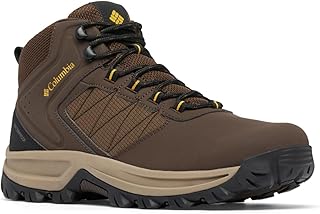
- Trekking boots with good grip: essential. Sneakers are not sufficient on wet or rocky volcanic terrain.
- Waterproof or windproof layer: even if you start with sun, the temperature drops at the summit and it can rain suddenly even in the dry season.
- Layered clothing: you start the ascent in warm-temperate weather and end up in cold. A fleece or mid-layer is essential.
- Hat or cap for sun protection in exposed sections.
Hydration and Food
- Water: minimum 2 liters per person. There are no reliable water sources on the route.
- Energy snacks: bars, fruits, nuts, sandwiches. The climb burns a lot of energy, and there are no vending points along the way.
Accessories
- Headlamp with charged batteries: if you leave before dawn (highly recommended), you will need light during the first section of the ascent.
- Sunscreen and insect repellent
- Trekking poles (optional but very useful on the descent)
- 20-30 liter backpack with hip straps
The Guide: Price, Where to Hire, and Why It's Necessary
Climbing Volcán Tolimán without a guide is not recommended under any circumstances. The trails are not marked and branch off at multiple points where it is very easy to get lost, especially in the dark or in the cloud forest mist. Local guides know the terrain by heart, can read weather changes, and can alert you if conditions are not safe to continue.
You can hire certified guides in:
- Santiago Atitlán: at the INGUAT office or through your accommodation in town
- San Lucas Tolimán: at the municipal tourism office or with local operators
The cost is approximately Q150 to Q200 per person, depending on access and the number of people in the group. Some guides charge a fixed amount per group (more economical if you go as a couple or small group). Confirm the price and what it includes (trail access, community fees) before setting off.
Flora and Fauna on the Way to Volcán Tolimán
One of the great pleasures of this ascent is passing through different life zones as you gain altitude. In the lower sections, you will find cornfields and cultivated vegetation that quickly gives way to pine and cypress forest. As you climb, the forest becomes denser and wetter until it turns into an authentic cloud forest, with trees covered in moss and bromeliads, giant ferns, and wild orchids hanging from the branches.
Featured Flora
- Orchids: Guatemala is the country of the national orchid (the Monja Blanca), and the cloud forest of Tolimán is home to dozens of species.
- Bromeliads and lichens covering the trunks of older trees
- Tree ferns in the wetter sections
Fauna
- Quetzal: Guatemala's national bird has a documented presence in the Tolimán cloud forest. Leaving very early increases the chances of sighting.
- Toucans and parrots in the intermediate sections of the forest
- Hummingbirds feeding on forest flowers
- Small mammals such as squirrels and occasionally coyotes in the upper sections
The Views from the Summit of Volcán Tolimán
The summit of Tolimán (3,158 masl) rewards every step of the effort. On a clear day, the panorama is simply out of this world. Lake Atitlán appears below like a blue mirror surrounded by villages that look like miniatures from above: Panajachel, San Pedro La Laguna, Santiago Atitlán, San Marcos La Laguna. Volcán Atitlán (3,537 masl) rises imposingly right next to it to the south, so close it seems you could touch it. To the northwest, the profile of Volcán San Pedro (2,995 masl) stands out. On days of exceptional visibility, you can see the volcanic chain that runs through the entire Guatemalan highlands and even the shimmer of the Pacific Ocean on the horizon.
Take your time at the summit. Have breakfast, breathe, and absorb the perspective. Few experiences in Guatemala equal that moment of absolute silence with the lake at your feet.
Practical Tips Before Your Ascent
- Leave before dawn: between 4:00 and 5:30 AM is ideal to reach the summit before clouds obscure visibility.
- Book your guide a day in advance so you don't lose time on the morning of departure.
- Check the weather: ask your accommodation or guide about the conditions the day before. A volcano covered in clouds at 6 PM will likely still be so at 11 AM the next day.
- Do not carry unnecessary valuables. Leave what you don't need at your accommodation.
- Inform someone of your itinerary: note down what time you leave and what time you expect to return.
- Respect the environment: do not leave trash on the trail, do not pick orchids or plants, do not stray from the path marked by the guide.
Essential Gear for Climbing Volcán Tolimán
Having the right equipment can make the difference between a safe and a dangerous experience. These are the most recommended products for climbing Volcán Tolimán:

TrailBuddy Trekking Poles Lightweight 7075 Aluminum Hiking Poles for Women Men
$39.27
View price on Amazon →
RealCool 30L Lightweight Hiking Backpack Waterproof Daypack for Camping
$33.49
View price on Amazon →
LHKNL Headlamp Flashlight Ultra-Light Bright LED Rechargeable Headlight 2-Pack
$19.67
View price on Amazon →
Winter Gloves Men Women 3M Thinsulate Lightweight Thermal Water Resistant Hiking
$12.78
View price on Amazon →Frequently Asked Questions
What is the difficulty of climbing Volcán Tolimán?
Volcán Tolimán has moderate-difficult difficulty. The ascent gains approximately 1,500 meters of elevation from the base (around 1,600 masl) to the summit (3,158 masl). The journey takes 4-6 hours to ascend and 3-4 hours to descend. Good physical condition and basic hiking experience are required.
Can you climb Volcán Tolimán without a guide?
It is not recommended. The trails of Volcán Tolimán are not well-marked, and the terrain changes rapidly. Local guides from Santiago Atitlán or San Lucas Tolimán know the routes, weather changes, and points of interest. The cost is approximately Q150-Q200 per person.
What is the best month to climb Volcán Tolimán?
The best months are from November to April (dry season). Mornings are clear with excellent visibility towards the lake and surrounding volcanoes. During the rainy season (May-October), the volcano is often covered in clouds, and the trail becomes slippery.
Do you have to pay to climb Volcán Tolimán?
Yes. In addition to the guide's cost (Q150-Q200), there may be a community access fee of Q20-Q50 depending on the access point you use. Departures are from Santiago Atitlán or San Lucas Tolimán — check with the local tourism office for updated fees.
This article may contain affiliate links. If you make a purchase through them, we may receive a commission at no additional cost to you.