San Juan La Laguna: Complete Guide to the Town of Painters
21 June 2026 · Diego Monzón
Add us as a preferred source on Google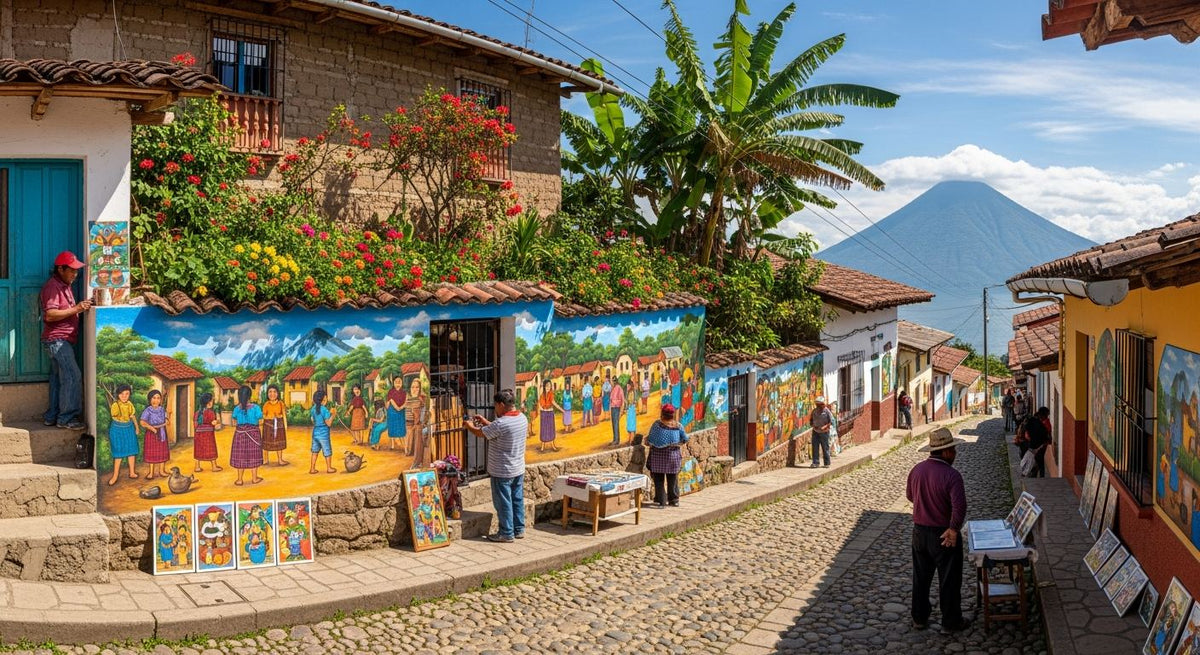
San Juan La Laguna is one of those towns that stick in your memory not for its conventional tourist attractions, but for the authenticity of its people and the vibrancy of its colors. Located on the shores of Lake Atitlán, this small Tz'utujil Maya town of just 10,000 inhabitants has built a unique identity around art, ancestral weaving, and organic coffee. If San Pedro La Laguna is the destination for backpackers and parties, San Juan is its quiet, contemplative counterpart, where every mural on the wall tells a story and every brushstroke preserves centuries of culture.
What Makes San Juan La Laguna Special?
San Juan La Laguna is not a destination that screams for attention. On the contrary, it is discovered slowly, by walking its cobblestone streets and stopping at each gallery, each cooperative, and each mural that decorates the facades of its houses. What distinguishes it from the other towns on the lake is a combination difficult to replicate: a school of naive painting founded in the 70s that today produces internationally recognized artists, women's cooperatives that keep alive the weaving techniques with natural dyes, and organic high-altitude coffee plantations that produce some of Guatemala's most prized beans.
While other towns on the lake have ceded ground to mass tourism, San Juan has opted for a community model where visitors are welcome, but the local pace of life dictates. This philosophy makes it one of the most authentic destinations on Lake Atitlán.
Naive Painters and Art Galleries
The history of art in San Juan La Laguna begins in the 1970s, when a group of local artists developed their own style inspired by daily Maya life, volcanoes, the lake, and traditional ceremonies. This movement, known as naive painting, is characterized by its vibrant colors, expressive forms, and its non-academic perspective, which is paradoxically deeply sophisticated.
Today, the town has more than a dozen galleries and workshops open to the public, most with free admission. Walking along the main street is like strolling through a living museum: each gallery has its own master, its own style, and its own stories to tell. Artists like Diego Chavajay have brought San Juan's art to international exhibitions, but most prefer to stay in the town, teaching new generations and selling directly to visitors.
How to Make the Most of the Painters' Tour
The best way to experience San Juan's art world is to arrive without haste or a map. Enter the galleries, chat with the artists if possible, and ask about the process of each work. Many painters welcome visitors to their workshops and offer short classes where you can take your own creation home. These workshops cost between Q50 and Q150 per person and include materials. The galleries themselves are free to enter, and painting prices range from Q50 for a small piece to Q2,000 for large-format works.
Women's Cooperatives: Lema and Flor de Mayo
Two women's cooperatives are the social and economic heart of San Juan La Laguna: Lema and Flor de Mayo. Both work with the backstrap loom, the ancestral technique of the highland Maya peoples, but have innovated in the use of natural dyes extracted from local plants, minerals, and seeds.
In Lema, you will find textiles dyed with indigo, avocado, chipilín, and flower petals. The cooperative members proudly explain the extraction process of each color, from the yellow of pericón to the deep black of fermented añil. At Flor de Mayo, the focus is similar, with an emphasis on traditional Tz'utujil designs that narrate Maya cosmology through symbols woven into the huipil and corte.
Visiting these cooperatives is much more than a purchase: it's a conversation about cultural resistance, community economics, and the role of indigenous women in preserving ancestral knowledge. It is recommended to arrive in the morning when the weavers are most active and willing to share their process.
Organic High-Altitude Coffee: Coffee Plantation Tour
At 1,600 meters above sea level, with volcanic soils and regular rainfall, the slopes surrounding San Juan La Laguna produce specialty coffee that rivals the best in Guatemala. Several families and small cooperatives offer tours of their coffee plantations where visitors can see firsthand the complete process: from the flowering plant to the roasted bean ready to be ground.
Coffee tours usually include an explanation of the wet and dry processing methods, a guided tasting, and the option to buy ground or whole bean coffee directly from the producer. It is one of the most comprehensive experiences in the town and an opportunity to take home a souvenir that can be enjoyed every morning. San Juan coffee is sold in 250g to 500g bags for very reasonable prices, and its quality far surpasses the commercial coffee found in city supermarkets.
What to Do in San Juan La Laguna
Beyond the galleries and cooperatives, San Juan offers an agenda of activities that can fill anywhere from half a day to a complete stay.
Kayaking and Swimming in the Lake
San Juan's shore is quiet and less crowded than that of Panajachel or San Pedro, making it an ideal spot for kayaking or simply swimming in the lake's waters. Some accommodations and local operators rent kayaks by the hour. Sunrise from San Juan's dock, with the Atitlán, Tolimán, and San Pedro volcanoes as a backdrop, is an experience worth getting up early for.
Hiking to Indian's Nose
From San Juan, trails lead to natural viewpoints with panoramic views of the lake. One of the most popular is the path to the rock formation known as Indian's Nose, visible from the water and from various points around the lake. The trail is moderate and can be done without a guide, although hiring a local one always enriches the experience.
Traditional Weaving Workshop
In addition to buying textiles, it is possible to participate in short workshops at the cooperatives where you will learn the fundamentals of the backstrap loom. In a one to two-hour session, you can weave a small sample using the techniques that the women of San Juan have inherited for generations. It is a family activity and highly recommended for travelers who want to go beyond a souvenir photo.
What to Buy in San Juan La Laguna
San Juan is probably the best place on the lake to buy quality handicrafts directly from the producers. This eliminates intermediaries, guarantees better prices, and ensures that the money reaches the community. Among the highlights:
- Original paintings: from Q50 (small format) to Q2,000 (large works signed by recognized artists). Do not buy reproductions if you want genuine art.
- Textiles with natural dyes: table runners, huipiles, bags, and shawls produced in the Lema and Flor de Mayo cooperatives. Prices vary according to size and design complexity.
- Ground or whole bean coffee: buy directly from the coffee plantations or community stores. A 250g bag costs between Q25 and Q50 depending on the process and variety.
- Natural soaps and cosmetics: some local initiatives produce artisanal soaps with ingredients from the lake and mountains.
Where to Eat in San Juan La Laguna
San Juan's culinary offerings are simple but satisfying. The town has no chain restaurants or menus for demanding tourists, which is precisely its charm. Most local eateries serve typical Guatemalan dishes at prices ranging from Q30 to Q80 per dish.
Look for the eateries near the central park where women prepare pepián, jocón, and black beans with freshly made tortillas. Some hostels have cafeterias where they serve breakfasts with eggs, fried plantains, and local coffee for Q35-Q50. For something more elaborate, some visitor-oriented restaurants offer vegetarian options and international dishes without straying too far from the town's accessible prices.
How to Get to San Juan La Laguna
The most common way to arrive is by public boat from Panajachel, with a journey of approximately 30 minutes and a cost of Q15 to Q25 per person. Boats depart every 30 to 60 minutes depending on demand, with higher frequency in the morning. From San Pedro La Laguna the journey is even shorter, just 10 minutes and Q10, making it possible to combine both towns in a single day.
There is also the option of walking from San Pedro along a scenic trail of about 45 minutes that skirts the lake and offers spectacular views. This path is mostly flat and can be done without a guide by following the shore. For those coming by vehicle from Guatemala City or Antigua, San Juan is about 20 kilometers from Panajachel by road, although the road is winding and has steep slopes.
How Much Time to Dedicate to San Juan La Laguna
San Juan can be visited in half a day if the goal is to tour galleries and buy handicrafts, but a full day allows you to experience the town calmly: start at the coffee plantations at dawn, continue with the cooperatives in the morning, have lunch at a local eatery, visit the painting workshops in the afternoon, and end at the dock watching the sun set over the lake. For those who want to disconnect from the main tourist circuit, staying overnight completely transforms the experience.
What You Can Take Home from San Juan La Laguna
In addition to original artworks, you can replicate the creative experience of San Juan at home with these materials, or enjoy the region's high-altitude coffee:

ARTISTRO 100 Color Watercolor Paint Set - Portable Paint Art Kit with Palette and Brush Pens
$19.67
View price on Amazon →
14 Packs Stretched Canvases for Painting Multi Pack 11x14 9x12 8x10 5x7 4x4 Round Canvas
$25.57
View price on Amazon →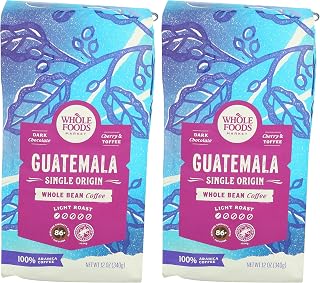

VeraMia Canvas Grocery Bag 3pc XL Set with Real Pockets, Long Shoulder Strap - Heavy Duty Tote
$27.53
View price on Amazon →
Mont Marte Acrylic Colour Paint Set Signature 24pc x 36ml, Acrylic Paint Kit for Canvas Wood Clay
$23.61
View price on Amazon →Frequently Asked Questions
Why is San Juan La Laguna famous?
San Juan La Laguna is famous for its naive painting school, founded in the 1970s. Local artists paint scenes of Maya life, the lake, and volcanoes with vibrant colors and unique techniques. It also stands out for its women's weaving cooperatives and its high-altitude organic coffee, cultivated at 1,600 meters above sea level.
How to get to San Juan La Laguna?
By public boat from Panajachel (30 min, Q15-25) or from San Pedro La Laguna (10 min, Q10). Boats depart every 30-60 minutes depending on demand. It is also possible to walk from San Pedro along a scenic 45-minute trail with lake views.
How much does a painters' tour cost in San Juan?
Painting workshops with local artists cost Q50-Q150 per person and include materials and a finished piece. Galleries are free to enter. Buying an original painting directly from the artist costs from Q50 (small) to Q2,000 (large work).
Is it worth staying overnight in San Juan La Laguna?
San Juan has basic but charming accommodation options (Q80-Q200/night). Staying allows you to experience the tranquility of the town at dawn and dusk, when day tourists have left. Ideal for those seeking a complete disconnection from the main tourist circuit.
This article may contain affiliate links. If you make a purchase through them, we may receive a commission at no additional cost to you.