Santiago Atitlán: Complete Guide to the Tz'utujil Village
21 June 2026 · Diego Monzón
Add us as a preferred source on Google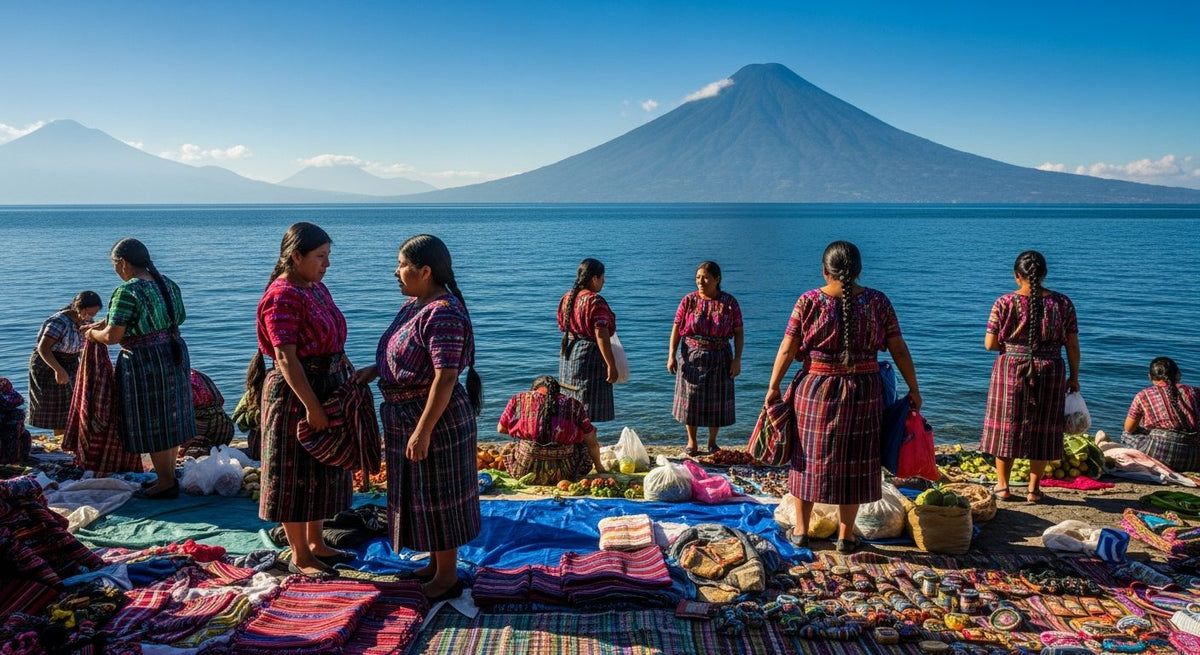
Santiago Atitlán is one of the most authentic and culturally rich destinations in all of Guatemala. Located on the shores of Lake Atitlán, this town is the heart of the Tz'utujil Maya people, one of the indigenous communities that has most faithfully preserved its language, clothing, rituals, and worldview. Visiting Santiago Atitlán is not just about exploring a beautiful lakeside town — it's about delving into centuries of living history, deep spirituality, and a collective identity that resisted conquest, time, and armed conflict.
What to Bring to Santiago Atitlán
If you want to delve deeper into the Tz'utujil culture or make the most of your market visit, these items are ideal to bring from Santiago Atitlán:


Lonely Planet Central America: Plan the Trip of a Lifetime Travel Guide
$20.68
View price on Amazon →
8K Underwater Camera WiFi 33FT 70MP Waterproof Camera for Snorkeling 64GB
$108.37
View price on Amazon →
Leather Journal Refillable Notebook Travel Diary Handmade Passport Travelers
$24.62
View price on Amazon →Tz'utujil History and Culture: Enduring Roots
The Tz'utujil people have a history that dates back centuries before the Spanish arrival. During the pre-Hispanic era, the Tz'utujil dominated the southern region of Lake Atitlán, with their capital in Chuitinamit, a fortress-city located on the slopes of the San Pedro volcano. With the conquest in 1524, led by Pedro de Alvarado, the culture was subjugated but never completely destroyed.
Today, with over 35,000 inhabitants, Santiago Atitlán is the largest Tz'utujil town on the lake. The Tz'utujil language remains the mother tongue of most of its inhabitants. Traditional clothing is one of the most visible elements of this identity: women wear elaborate huipiles woven with birds and flowers, while many older men still wear the black and white striped trousers characteristic of the community.
During Guatemala's internal armed conflict (1960-1996), Santiago Atitlán suffered particularly. In 1990, the community managed to expel the army from its territory after a massacre that claimed the lives of 13 civilians — an unprecedented act of resistance that is now part of the town's collective memory.
What to See in Santiago Atitlán
The 16th-Century Colonial Church
In the heart of the town stands the Church of Santiago Apóstol, built by Franciscan friars around 1547. Its white facade with carved decorations contrasts with the green backdrop of the Tolimán and Atitlán volcanoes. The interior is equally impressive: a wide nave with carved altars and a historic baptismal font. Pay attention to the details — in many of the carvings, you can see Maya elements integrated into the Catholic iconography, evidence of the syncretism that defines the region's spirituality.
Maximón: The Lake's Most Famous Deity
No visit to Santiago Atitlán is complete without meeting Maximón, also known as Rilaj Mam (the Venerated Grandfather). This figure is perhaps the best-known expression of Maya-Catholic religious syncretism in all of Guatemala. He is depicted as a seated man with a hat, a cigar in his mouth, and a scarf, adorned with dozens of colorful ribbons. Devotees offer him aguardiente, tobacco, flowers, and candles to ask for favors, health, love, or protection in business.
What makes Santiago Atitlán's tradition unique is that Maximón changes homes every year, guarded by a different cofradía (religious brotherhood). Local guides at the dock always know the exact location of his current abode. Upon arrival, a member of the cofradía will greet you, and you can observe the offerings and, if you wish, participate. The atmosphere is intimate and imbued with spirituality — approach with respect and without interrupting prayers.
The Local Market: Tuesdays and Fridays
Santiago Atitlán's market is one of the most authentic in the lake basin. The busiest days are Tuesdays and Fridays — especially Fridays, when vendors from neighboring villages arrive before dawn carrying fruits, vegetables, medicinal herbs, poultry, and textiles. Walking through its aisles is a complete sensory experience: colors of stacked fabrics, aromas of freshly prepared food, and the constant murmur of Tz'utujil as the language of exchange.
The Commemorative Mural
On one of the streets in the town center is a mural commemorating the massacre of December 2, 1990, when the army fired on a crowd peacefully approaching the military detachment. The mural is an artistic testament to Tz'utujil resistance and a point of reflection for any traveler wishing to understand Guatemala's recent history. Visiting it with awareness and silence is the best way to pay respect to the victims.
The Lake from the Dock
The Santiago Atitlán dock offers one of the most spectacular views of Lake Atitlán: in front of you stretches the deep blue water framed by the Tolimán, Atitlán, and San Pedro volcanoes. At sunset, when the colors turn golden and the boats return to port, the scene is simply memorable. From here, you can also observe the daily life of the town: fishermen leaving before dawn and women washing clothes on the lake's shores.
What to Buy in Santiago Atitlán
Santiago Atitlán is one of the best places on the lake to buy traditional textiles directly from the weavers. Huipiles are the greatest treasure: made on backstrap looms with bird, flower, and geometric designs that can take weeks to complete. Each design has a meaning, and each color an intention.
In addition to huipiles, you will find hand-woven belts, skirts (cortes) made of jaspeada fabric, bags, placemats, and fabric by the meter. Prices are more accessible than in tourist markets like Panajachel, and the quality is superior because many of the products are made locally. Haggling in moderation is accepted, but remember that behind each piece are hours of artisanal work — a fair price honors that labor.
Where to Eat in Santiago Atitlán
Santiago Atitlán's cuisine is marked by the lake and the milpa (cornfield). Restaurants around the dock offer freshly caught white fish (carp and mojarra), prepared grilled, fried, or in soup. Pepián — red mole with pumpkin seeds — is one of the most representative dishes of Tz'utujil gastronomy and worth ordering if it appears on the daily menu.
In the market on market days, you'll find eateries serving typical breakfasts: eggs with refried beans, freshly made tortillas, and atol de elote. For lunch, look for stalls selling beef or chicken soup — inexpensive, hearty, and with home-cooked flavor. There are some tourist-oriented restaurants near the dock that serve international options, but it's best to opt for local cuisine.
How to Get to Santiago Atitlán
The most common and pleasant way to arrive is by public boat from Panajachel. The journey takes approximately 45 minutes and costs between Q25 and Q35 per person, with frequent departures throughout the day from Panajachel's dock. If you are in San Pedro La Laguna, the boat takes about 30 minutes and costs around Q20.
It is also possible to arrive by land from Guatemala City by taking highway CA-2 towards San Lucas Tolimán and then a camioneta (shared minivan) to Santiago. This route is longer — about 3 to 4 hours depending on traffic — but it's an option if you're traveling with a lot of luggage or prefer to avoid the lake. Once in town, everything is easily explored on foot or by tuk-tuk.
Nearby Excursions from Santiago Atitlán
Tolimán Volcano
The ascent to Tolimán volcano (3,158 meters above sea level) is one of the most challenging and rewarding excursions in the region. The hike generally starts from Santiago Atitlán or from neighboring villages, lasts between 6 and 8 hours round trip, and requires good physical condition. From the summit, on clear days, you can see the entire lake, the Agua, Acatenango, and Fuego volcanoes. It is mandatory to hire a local guide — guide agencies at Santiago's dock can organize the excursion in advance.
Nearby Villages: Cerro de Oro and San Lucas Tolimán
A few minutes by boat or camioneta from Santiago Atitlán are small villages that offer an even more intimate glimpse into lakeside life. Cerro de Oro, for example, is a small settlement with a quiet beach and almost no tourists. San Lucas Tolimán, a little further south, is known for its fair trade projects and active community. These excursions can be combined in a single day if you leave early from Santiago.
Practical Tips for Visiting Santiago Atitlán
Arrive with enough time: if you're coming just for the day from Panajachel, take the first boat in the morning (around 6-7 am) to enjoy the market and find Maximón without crowds. Bring cash (quetzales), as ATMs are scarce and local businesses do not accept cards. Dress respectfully, especially if you enter the church or Maximón's cofradía — covered shoulders and knees are the norm.
Hiring a local guide (Q50-Q80) is one of the best investments you can make: they will take you directly to Maximón, explain the historical context of the mural, introduce you to artisans in their workshops, and act as a cultural bridge in a community where Spanish is a second language for many. Always ask permission before photographing people, especially during ceremonies or in the market.
Frequently Asked Questions
Who is Maximón and where can I find him in Santiago Atitlán?
Maximón (also called Rilaj Mam) is a deity of the Tz'utujil Maya people, a syncretism between Maya tradition and Catholicism. He is depicted as a male figure with a hat and a cigar. In Santiago Atitlán, Maximón changes host houses every year — local guides at the dock know exactly where he is. The recommended offering is Q10-Q20 or cigars and alcohol.
How to get to Santiago Atitlán?
By public boat from Panajachel (45 min, Q25-Q35) or from San Pedro La Laguna (30 min, Q20). Boats depart continuously from Panajachel's dock throughout the day. It is also possible to arrive by camioneta from Guatemala City via San Lucas Tolimán, but it is a longer journey.
When is the market in Santiago Atitlán?
The main market is held on Fridays and Tuesdays. Friday is the largest, with vendors from across the region arriving before dawn. You'll find fruits, vegetables, handicrafts, traditional textiles, and local products. For the full experience, arrive early (7-9 am).
Is Santiago Atitlán safe to visit?
Yes, Santiago Atitlán is safe for tourists. The community has a strong sense of identity and cultural pride. It is recommended to hire a local guide (Q50-Q80) to better understand Tz'utujil history and culture, and to ask permission before photographing people in the market or during ceremonies.
This article may contain affiliate links. If you make a purchase through them, we may receive a commission at no additional cost to you.