Swimming in Lake Atitlán: Best Beaches and Safe Areas
21 June 2026 · Diego Monzón
Add us as a preferred source on Google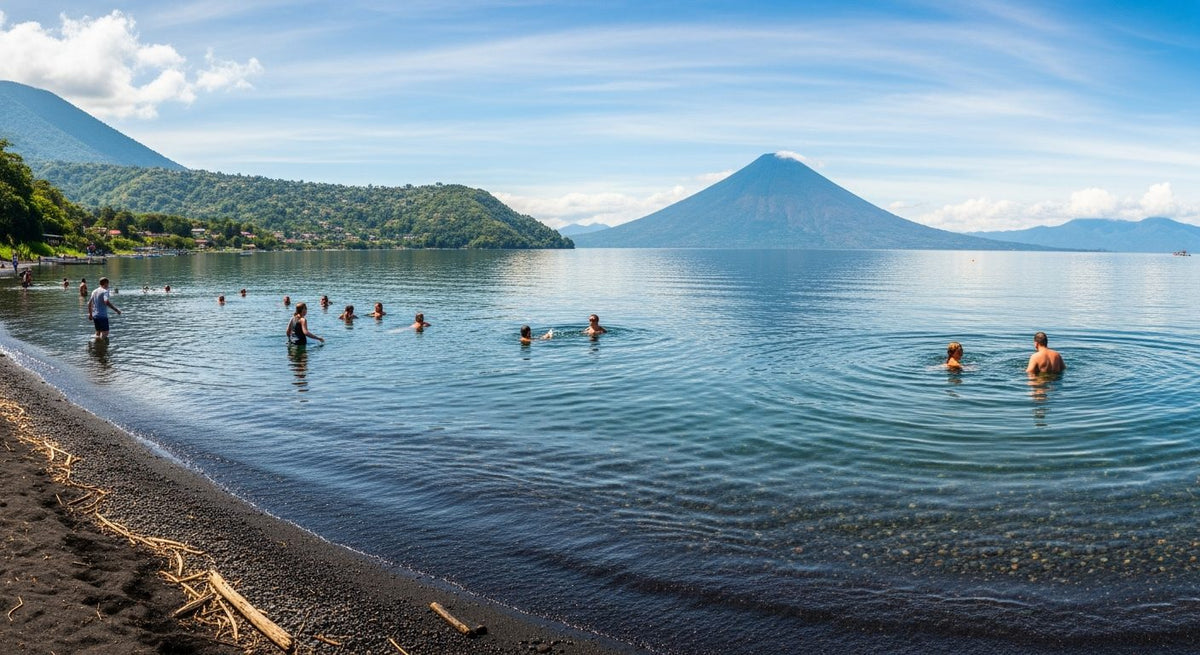
Lake Atitlán is one of Guatemala's most stunning destinations, and for many travelers, the temptation to swim in its waters nestled among volcanoes is irresistible. Swimming in this volcanic lake at over 1,500 meters (5,000 feet) above sea level is a unique experience, but like any natural body of water, it requires knowing the area well before diving in. This guide explains where to swim, when to do so, which areas to avoid, and how to enjoy the lake with complete peace of mind.
Water Quality: What You Need to Know Before Getting In
Lake Atitlán has faced environmental challenges in recent decades, primarily due to the growth of lakeside populations and the inflow of sewage. The most well-known problem is the bloom of cyanobacteria, also known as blue-green algae, which can produce harmful toxins.
These blooms primarily occur during the dry season (November to April), when rainfall decreases and water temperatures rise slightly. The southern part of the lake, especially near Panajachel and Santiago Atitlán, is the most affected. During these episodes, the water can appear greenish or cloudy, and its smell changes noticeably.
The good news: CONAP (National Council of Protected Areas) and local municipalities issue public alerts when the water is not safe for human contact. Before swimming, check the official social media channels of CONAP Guatemala or ask at your hotel or guesthouse. Outside of bloom episodes, the lake's waters are suitable for swimming in recommended areas.
Best Areas for Swimming in Lake Atitlán
Jaibalito: The Cleanest Water in the Lake
If you're looking for the purest swimming experience in the lake, Jaibalito is your destination. This small village, accessible only by boat, is the least populated and most remote on the lake. Its waters are notably clearer than anywhere else, with visibility on good days allowing you to see the bottom several meters deep. The docks of the small local hotels and lodgings offer direct access to the lake in an environment of absolute tranquility.
Santa Cruz La Laguna: Crystal Clear Docks Between Cliffs
Santa Cruz La Laguna combines crystal-clear waters with a spectacular landscape. Being off the main routes and surrounded by cliffs, access to the village limits human and boat traffic, which keeps the water in excellent condition. Hotel docks like La Iguana Perdida are popular spots for swimming, snorkeling, and freediving. It's also the lake's certified diving center, which gives an idea of the water quality in this area.
San Marcos La Laguna: Private Docks and Tranquil Atmosphere
San Marcos La Laguna is famous for its spiritual and wellness atmosphere, and its waters are among the calmest and cleanest on the north side of the lake. Most water access is through private docks of hotels and yoga retreats, which reduces traffic and better maintains conditions. The water here is usually calmer than in Panajachel, ideal for those looking to swim without waves or boat currents.
Public Beach of Panajachel: The Most Accessible
The Public Beach of Panajachel is the easiest swimming spot to reach, especially if you arrive directly at the lake's main town. Its black volcanic sand gives it a dramatic and unique appearance. It's free and open to the public, making it the busiest option. The water near the main dock can be a bit cloudier due to boat movement and nearby river flow. For a better experience, swim away from the dock towards the open beach, always before noon.
San Pedro La Laguna: Inner Lagoon and Rocky Shores
In San Pedro La Laguna there is shore access at various points, including areas near the inner lagoon, a quieter section separated from the main boat traffic. Some travelers prefer to swim from the rocky shores west of town, where the water is cleaner than on the main shore. San Pedro is also the most active backpacker town on the lake, so you'll easily find updated local information on water conditions.
Water Temperature: What to Expect?
Lake Atitlán maintains a remarkably stable water temperature thanks to its altitude and depth. On average, the water ranges between 20°C and 22°C (68°F and 72°F) throughout the year, making it cool and refreshing without being too cold for most swimmers.
In the months of November to February, the temperature can drop to 18°C or 19°C (64°F or 66°F), especially in the mornings. When getting out of the water, the cold afternoon wind can intensify the feeling of cold, so bringing a large towel is essential. You don't need a wetsuit for swimming, but many local divers use them for long snorkeling sessions. For casual swimming, a swimsuit and sunscreen are more than enough.
The Xocomil Wind and Currents: The Golden Rule of the Lake
One of the most important factors for safe swimming in Lake Atitlán is understanding the Xocomil wind. This local wind, whose name in Tz'utujil means "the one that carries away sins," almost invariably appears between noon and 2 p.m., progressively increasing in intensity until sunset.
When the Xocomil blows, the lake transforms: waves can reach between 50 centimeters and one meter (1.5 to 3 feet) in height, surface currents change direction, and visibility in the water decreases. For a swimmer, this represents a real risk. Currents can quickly pull a person away from the shore, especially in areas without docks or support points.
The golden rule: only swim in the morning, ideally before 11:00 am. Before that time, the lake is usually completely calm, with a glassy surface reflecting the volcanoes. After 12:00 pm, conditions can deteriorate rapidly. If you are in the water and notice the wind starting to pick up, get out immediately.
Water Activities in Lake Atitlán
Beyond swimming, the lake offers a variety of activities that take advantage of its waters during the calm morning hours.
Kayaking and Paddleboarding
Kayaking is one of the most popular activities on the lake. Many accommodations in Panajachel, San Marcos, and Santa Cruz offer hourly kayak rentals. Paddleboarding (SUP) is also available at various points, especially in San Marcos and Jaibalito. Both activities should be done exclusively in the morning, before the Xocomil turns the lake into a challenge even for experienced kayakers.
Snorkeling
Although the lake does not have the marine biodiversity of a coral reef, snorkeling in areas like Santa Cruz and Jaibalito allows you to observe the volcanic lakebed, local fish (including mojarra and black bass), and interesting underwater geological formations. Visibility varies by season and area, being better in the dry season in the northern part of the lake.
Organized Swimming
Some hotels and retreats organize swimming lessons and guided swimming to take advantage of the lake's best conditions. If you are a beginner swimmer or want to explore the lake safely, ask your accommodation about these options before venturing out alone.
Essential Safety Precautions
Swimming in a high-altitude volcanic lake has its peculiarities. Here are the precautions every visitor should consider:
- Time: Only swim in the morning, before 11:00 am. Never after noon.
- Quality alerts: Check for active cyanobacteria bloom alerts before entering the water. If in doubt, do not enter.
- Boats: Stay away from the routes of lanchas (boats) and water taxis. At active docks, only swim in clearly designated areas or away from the dock.
- Company: Never swim alone, especially in less frequented areas like Jaibalito or Santa Cruz.
- Lake signs: If the water changes color (greenish, cloudy) or has an unusual smell, do not enter.
- Sunscreen: The combination of altitude and water reflection intensifies UV radiation. Use water-resistant sunscreen, preferably biodegradable to avoid polluting the lake.
- Hydration: The lake's altitude (1,562 meters / 5,125 feet) can cause fatigue faster than expected. Hydrate well before and after swimming.
Best Time of Day and Year to Swim
The ideal window for swimming in Lake Atitlán is between 7:00 am and 10:30 am. At that time, the water is calm, the morning light is beautiful, and transport boats are not yet at their peak activity.
Regarding the time of year, the dry season (November to April) offers more sunny days and clear skies, although the risk of cyanobacteria blooms is higher. The rainy season (May to October) can bring cloudier water in areas near rivers, but blooms are less frequent. The months of December to February are the coldest, and the lake can be choppier due to wind, but mornings are especially calm and clear.
In general, March, October, and November tend to offer the best balance of water quality, temperature, and climatic stability.
Gear to Enjoy the Lake to the Fullest
If you plan to spend time in the water, these products will make your experience in Lake Atitlán much more comfortable and safe:

FunWater Stand Up Paddle Board Ultra-Light Inflatable Paddleboard with SUP Acces
$167.00
View price on Amazon →
INTEX Challenger Inflatable Kayak Series: Includes Deluxe 86in Kayak Paddles
$102.00
View price on Amazon →

SIMARI Water Shoes for Women Men - Barefoot Quick-Dry Aqua Socks Lightweight
$16.72
View price on Amazon →
Lamicall Waterproof Dry Bag with Phone Pouch - 5L/10L/20L/30L/40L Floating Roll
$22.62
View price on Amazon →Frequently Asked Questions
Is it safe to swim in Lake Atitlán?
Yes, but with precautions. The safest time is in the morning (before 11 am) when the lake is calm. After midday, the Xocomil wind blows, generating dangerous waves and currents. Also, check for alerts regarding cyanobacteria blooms (blue-green algae), which can appear during the dry season — CONAP and local municipalities issue alerts when the water is not suitable for swimming.
Where in the lake is the cleanest water for swimming?
The cleanest areas are Jaibalito (the most remote and least populated village), Santa Cruz La Laguna, and San Marcos La Laguna. Panajachel has the most accessible beach, but the water near the dock can be cloudier. Avoid swimming near river mouths, especially during the rainy season.
What is the water temperature of Lake Atitlán?
The water temperature ranges between 19°C and 22°C (66°F and 72°F) throughout the year — cool but not cold. In the months of November to February, it can drop to 18°C (64°F) and feel somewhat chilly, especially when getting out. A wetsuit is not necessary, but swimming trunks and sunscreen are essential.
Are there jellyfish or other dangers in the lake?
There are no jellyfish or sharks in Lake Atitlán as it is a freshwater lake. The only dangers are the currents from the Xocomil wind in the afternoon, potential cyanobacteria blooms in the dry season, and boat traffic near the docks. Always swim in designated areas or away from boat routes.
This article may contain affiliate links. If you make a purchase through them, we may receive a commission at no additional cost to you.