Weather and Best Time to Visit Lake Atitlán
16 July 2026 · Diego Monzón
Add us as a preferred source on Google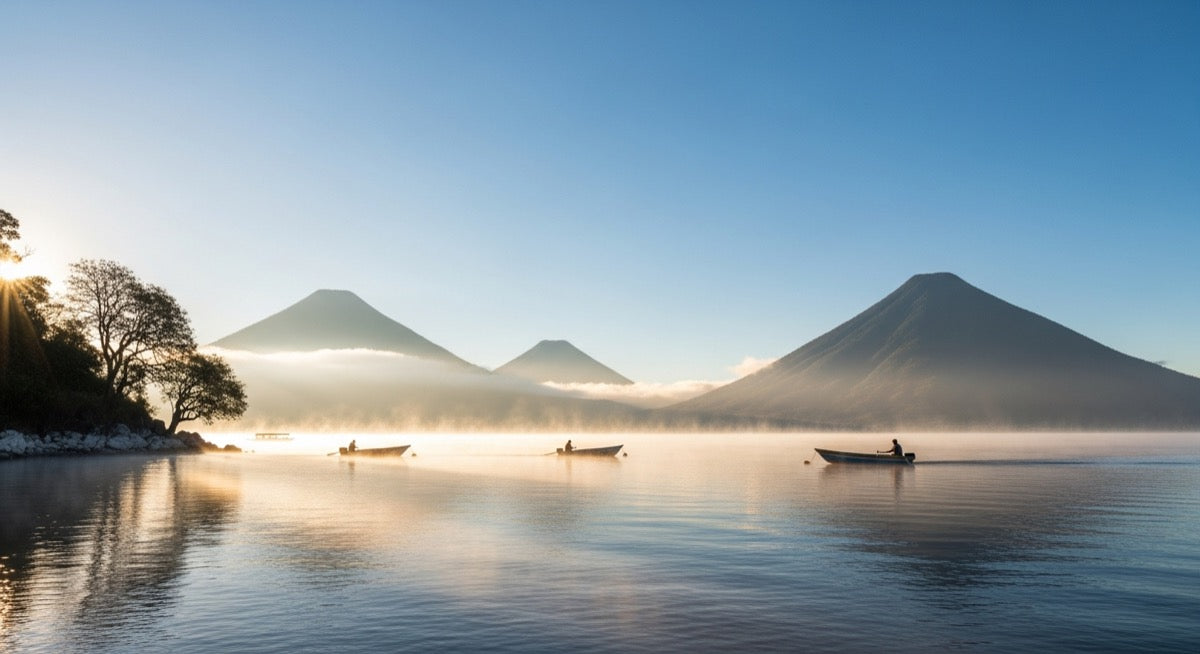
Lake Atitlán, in the department of Sololá, is one of those places where the weather is on your side almost all year. Ringed by the Atitlán, Tolimán and San Pedro volcanoes and sitting at about 1,562 metres above sea level, it enjoys an eternal-spring climate that makes it a pleasant destination in any season. Even so, knowing what to expect month by month will help you pack well and make the most of your trip.
What is the best time to visit Lake Atitlán?
The best time to visit Lake Atitlán is from November to February, in the heart of the dry season: clear skies, little rain and excellent visibility for admiring the volcanoes mirrored in the water. These are the perfect months for boat crossings, hiking and photography.
The weather at Lake Atitlán: eternal spring
Thanks to its altitude, the lake keeps mild temperatures of roughly 15 to 25 °C all year. Days are sunny and pleasant, while nights and early mornings feel cool: you will often need a light jacket at sunset, especially in the higher villages such as San Marcos or Santa Cruz. This contrast between the warm day and the cool night is one of the most defining features of the highland microclimate.
Another phenomenon typical of the lake is the Xocomil wind, which usually rises in the mid-afternoon and stirs the surface of the water. That is why locals recommend crossing the lake by boat in the morning, when the water is calmer and the ride is more comfortable and safe.
Dry season vs. rainy season
The year splits into two well-defined seasons. The dry season (November to April) offers the best skies and the most stable conditions for outdoor activities. The rainy season (May to October) brings showers that mostly fall in the afternoon or at night, leaving clear mornings and a much greener landscape. Neither season ruins the trip; each simply calls for different planning.
| Season | Months | What to expect |
|---|---|---|
| Dry (best time) | November – February | Clear skies, visible volcanoes, cool nights. Ideal for boats and hiking. |
| Warm dry | March – April | Warmer, drier days with some haze. Good weather, more visitors during Holy Week. |
| Rainy | May – October | Clear mornings and afternoon/evening rain. Very green landscape; bring a rain jacket. |
What to pack by season
Because the weather shifts between day and night, dressing in layers is best. During the day, light clothing, a cap and sunscreen are enough; for the evenings, bring a jacket or sweater. In the rainy season, add a rain jacket or poncho and quick-drying footwear. For a complete list, see our guide on what to pack for the lake's climate, written precisely for the cool highland air and the changing temperatures.
Whatever month you choose, you will find a welcoming lake and a wide range of hotels for your visit in villages such as Panajachel, San Pedro and Santa Cruz, many with direct views of the water and the volcanoes.
Frequently asked questions
What is the best time to visit Lake Atitlán?
The best time is from November to February, during the dry season, when skies are clearest, there is little rain, and all three volcanoes stand out sharply. These months are ideal for boat crossings and hiking.
What is the weather like at Lake Atitlán?
The lake enjoys an eternal-spring climate, with temperatures around 15 to 25 °C all year thanks to its altitude of roughly 1,562 m. Days are mild and sunny, while nights tend to be cool.
Is it cold at Lake Atitlán?
During the day it is rarely cold, but because of the altitude the nights and early mornings can be chilly, especially from November to February. It is worth packing a jacket or light sweater for the evenings.
When is the rainy season in Atitlán?
The rainy season runs from May to October. Rain usually falls in the afternoon or at night as short downpours, leaving clear mornings. The landscape turns greener, but bring a rain jacket and take boats early.
What is the Xocomil wind?
The Xocomil is a wind typical of Lake Atitlán that usually picks up in the mid-afternoon, stirring the surface of the water. That is why crossing the lake by boat in the morning, when the water is calmer, is recommended.