How to Avoid Motion Sickness on the Shuttles and Boats to Atitlán
09 July 2026 · Diego Monzón
Add us as a preferred source on Google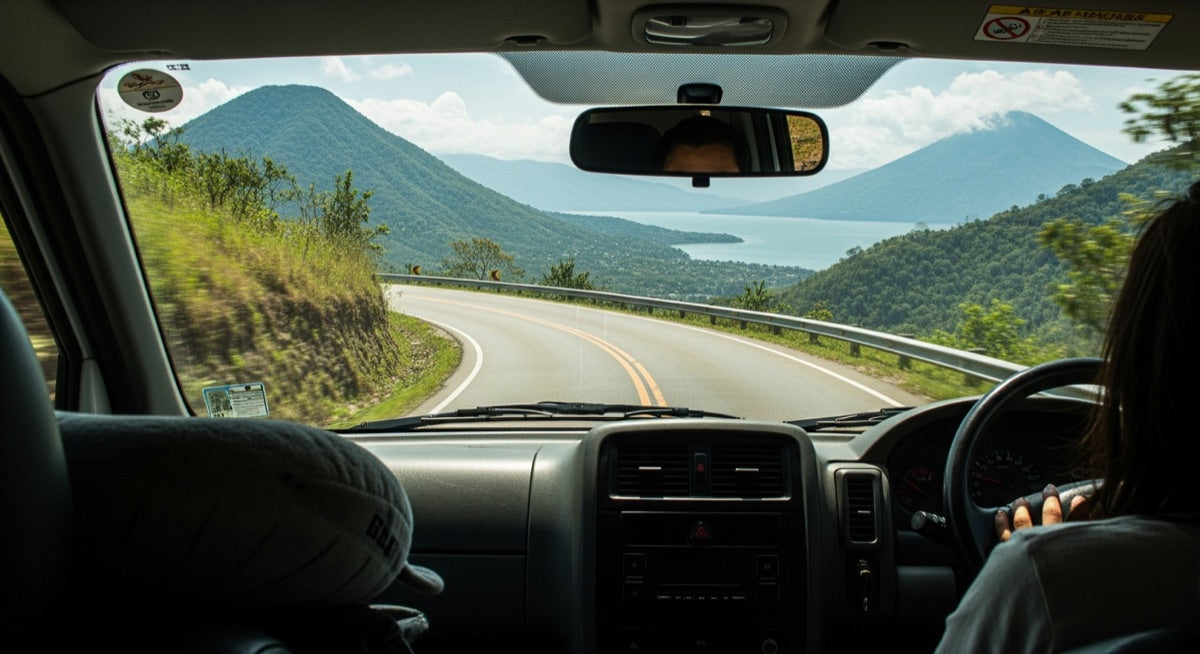
If you're planning your trip to Lake Atitlán, someone has probably already warned you: the road makes you carsick. And it's no exaggeration. The route from Guatemala City or Antigua follows the Pan-American Highway (CA-1) up to the Los Encuentros junction, and from there it drops down a winding descent full of tight curves toward Sololá and Panajachel. Add to that the fact that many shuttles and chicken buses take those curves in a hurry, then the boat crossing the lake when the Xocomil wind picks up, and you've got the perfect recipe for motion sickness on a road trip in Guatemala.
The good news: motion sickness can almost always be prevented with a little preparation. In this practical guide we'll walk you through what to pack in your anti-nausea kit, where to sit, and what to do before and during the ride so you reach Atitlán enjoying the scenery instead of with your head between your knees.
Quick disclaimer: this article is informational and does not replace the advice of a doctor or pharmacist. If you take other medications, are pregnant, or are travelling with small children, check first before using any pill or patch.
Why the road and boat to Atitlán make you so sick
Motion sickness happens when your inner ear senses movement but your eyes don't fully confirm it (or the other way around). On the stretch to Atitlán there are three factors that set it off:
- The descent from Los Encuentros to Panajachel: several kilometres of continuous downhill curves. The constant swaying from left to right is exactly what makes you the most nauseous.
- The speed of the shuttles and buses: the drivers know the route and speed up on the curves. That repeated braking-and-accelerating churns a passenger's stomach.
- The boat across the lake: the shared boats that run from Panajachel to San Pedro, San Marcos or Santa Cruz can jolt hard when the Xocomil wind kicks up in the afternoon. The pounding against the waves can make even people who never get carsick feel queasy.
Knowing this helps you get ahead of it: if you're prone to motion sickness, don't wait until you feel bad. The golden rule is to prevent it before you board, because once the nausea starts it's much harder to stop.
Get ready before you board the shuttle
A big part of your success is decided before you even set off. These habits dramatically cut the odds of getting sick:
- Don't travel on an empty or overly full stomach. Eat something light one or two hours before: bread, saltine crackers, a bit of fruit. Both hunger and overeating make motion sickness worse.
- Avoid alcohol the night before. A hangover multiplies your sensitivity to movement. A three-hour shuttle ride hungover is an avoidable ordeal.
- Stay well hydrated. Bring water and sip it along the way. Dehydration (common in Guatemala's warm climate and altitude) intensifies nausea.
- Get enough sleep. Fatigue lowers your tolerance for motion sickness. Arrive well rested on transfer day.
- Take the pill in time. If you're going to use antihistamines like dimenhydrinate, the key is to take them 30 to 60 minutes before leaving, not once you already feel sick.
If you're still fine-tuning the logistics of the transfer, our guides on how to get to Panajachel and how to get from Antigua to Lake Atitlán can help, with schedules, prices and types of transport.
Pills and patches: the pharmaceutical option
For many travellers, a motion-sickness medication is the most reliable solution. The most common options are:
- Dimenhydrinate (Dramamine and similar): the classic. It works very well, but it tends to make you drowsy, which isn't a bad thing on a long shuttle. Take it before setting off. There are "less drowsy" versions if you want to stay awake for the scenery.
- Meclizine: another antihistamine with a longer-lasting effect and, for some people, less sedation. Handy if the day involves both road and boat.
- Scopolamine patches: placed behind the ear, they release the drug over several hours. They're excellent for long journeys or for people who get sick easily, but they require a prescription in many countries and can cause dry mouth or blurred vision. Check with a professional before using them.
No pill is magic for everyone: the response varies from person to person. If it's your first time with a medication, ideally test it before the trip to see how it sits with you.
Natural remedies: ginger and acupressure bands
If you'd rather avoid drugs, or want to reinforce their effect, there are natural options that work for a lot of people:
- Ginger: it's the most studied natural remedy against nausea. You can take it in capsules, as chewable candies, in tea, or even chew a piece of crystallised ginger when your stomach turns. Start taking it a while before you leave.
- Acupressure bands (wristbands): these are bracelets with a button that presses the Nei-Kuan point on your wrist. They have no side effects and help many travellers, though the effect is subtler. They're reusable and don't cost much, so they're worth a try.
- Mint or lemon scents: smelling mint or sucking on a lemon candy can calm mild nausea. It's a simple trick to keep in your bag.
The best part of these remedies is that you can combine them with the seating and breathing tips at no risk. Many travellers put together a mixed kit: ginger + wristbands + a backup pill in case the Xocomil turns rough.
Where to sit on the shuttle and the boat
Where you sit changes everything. Practical rules:
- On the shuttle or bus, sit up front. The front seats move less and let you see the road. Looking at the horizon ahead helps your brain sync movement and vision.
- Pick a window seat and crack it open. Fresh air reduces nausea, and looking at the distant scenery (not nearby objects flying past) steadies the queasiness.
- Don't read or look at your phone on the curves. Fixing your eyes on a screen while the car moves is the perfect recipe for getting sick. Put the phone away on the descent to Panajachel.
- On the boat, sit in the centre and toward the back. The bow (front) is what slams hardest against the waves when there's Xocomil; the centre is more stable. Keep your eyes on the horizon or the volcanoes.
- Travel early. The lake is usually like a mirror in the morning and the wind picks up after midday. If you can cross earlier, the boat will jolt far less.
During the trip: tricks to cut the nausea
If despite everything you start to feel bad, act fast:
- Breathe slowly and deeply, focusing on the exhale. Controlled breathing calms the nervous system.
- Close your eyes and rest your head back if you can't see the horizon. Sometimes "switching off" your vision cuts the sensory conflict.
- Fresh air right away: ask for a window to be opened or pull over for a moment if possible.
- Sips of water and a bit of ginger. Don't drink large amounts at once; better little and often.
- Avoid strong smells like gasoline or food inside the vehicle.
And remember: the worst stretch (the winding descent) is relatively short. Once you're on the lake, the view of the three volcanoes makes all the effort worth it.
Your anti-nausea kit for Atitlán
These are the basics we recommend packing in your carry-on for the transfer and the boat crossing. With a simple kit you'll cover both the road and the lake:


Motion Sickness Patches, 36 PCS Sea Sickness Patch for Cars, Ships, Planes
$9.88
Check price on Amazon →
Dramamine Advanced Herbals Kids Gummies, Nausea Relief & Motion Sickness
$13.99
Check price on Amazon →

Build your kit based on how prone you are to motion sickness: if nothing ever makes you sick, ginger and an open window may be enough; if you're very sensitive, combine a pill, patch or wristbands and sit up front. Better to bring too much and not use it than to need it halfway down the descent to Panajachel.
Frequently asked questions
How long does the most nauseating stretch to Atitlán last?
The critical part is the winding descent from the Los Encuentros junction and Sololá down to Panajachel, which takes roughly 30 to 45 minutes. The rest of the journey along the Pan-American Highway is straighter. If you take your pill before setting off, it'll already be working by the time you reach that stretch.
Is a pill or a natural remedy better for motion sickness?
It depends on you. Pills like dimenhydrinate are more potent but tend to make you drowsy; ginger and acupressure bands have no side effects but their effect is milder. Many travellers combine both: ginger as a base and a backup pill. If you have doubts because of other medications or conditions, check with a pharmacist.
Do the boats on Lake Atitlán make you very seasick?
They can when the Xocomil wind picks up in the afternoon and the lake gets choppy. In the morning the water is usually calm. To minimise seasickness, cross early, sit in the centre of the boat and keep your eyes on the horizon or the volcanoes rather than the water nearby.
Can I give a child something for motion sickness on the shuttle?
There are dimenhydrinate formulations for children, but the dose depends on age and weight, so the right thing to do is check with a paediatrician or pharmacist before the trip. For the little ones, simple measures like sitting them by the window, ventilating, avoiding screens and bringing saltine crackers already help a lot.
This article contains affiliate links. As an Amazon Associate, we earn from qualifying purchases at no extra cost to you.