Best Guatemalan Coffee: 5 Beans from Atitlán and Antigua
20 July 2026 · Diego Monzón
Add us as a preferred source on Google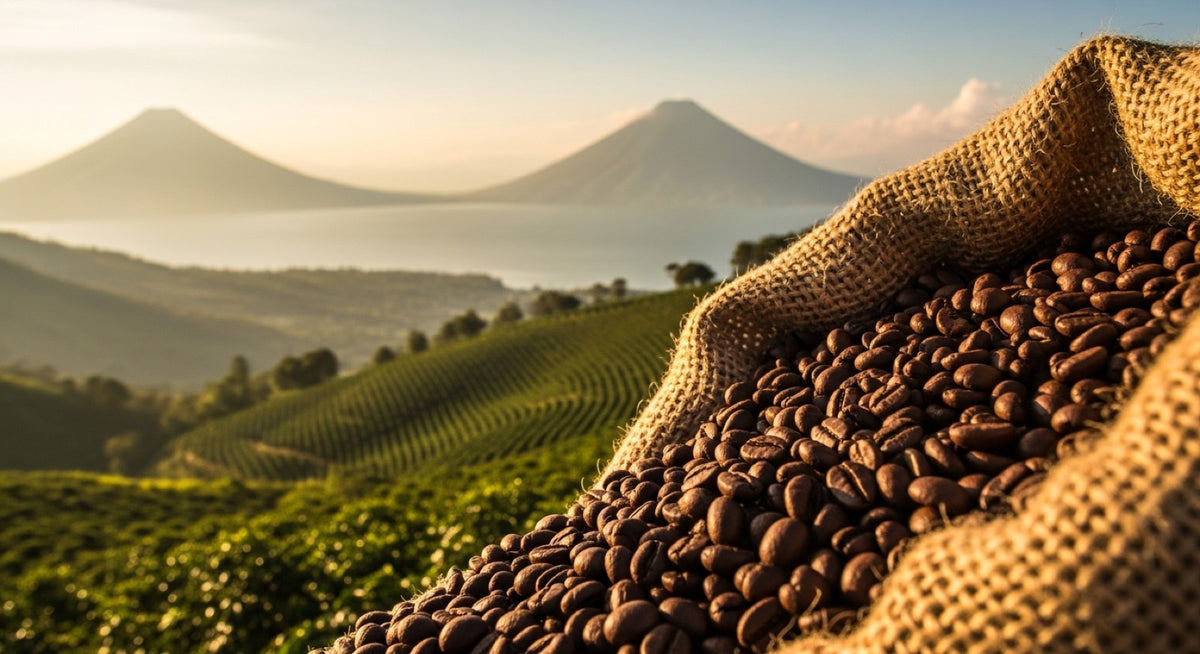
As an Amazon Associate, I earn from qualifying purchases. If you have been to Lake Atitlán, you probably remember the coffee better than half your photos. And if you have not been yet, coffee is the cheapest way to start understanding why this corner of Sololá, some 1,562 meters above sea level and ringed by three volcanoes, grows some of the most sought-after beans in the world. This guide gathers five real Guatemalan coffees you can order today, with the good parts and the things the label leaves out.
Why high-altitude Guatemalan coffee plays in another league
Three factors explain almost everything. The first is altitude. On the slopes running down to the lake — and on the flanks of the Atitlán (3,537 m), Tolimán (3,158 m) and San Pedro (3,020 m) volcanoes — coffee ripens slowly because the nights are cool. A cherry that takes longer to ripen builds up more sugars and more aroma precursors. That is why traditional Guatemalan grading rewards high-grown coffee: it is not snobbery, it is chemistry.
The second is volcanic soil: ash and weathered rock make for loose, well-draining, mineral-rich ground. The third is shade: much of Guatemala's coffee grows under trees that cool the cherry, slow ripening and keep the forest standing. Add a steady 15 to 25 °C climate and a clean split between dry season (November to April) and rains (May to October), and you have conditions the industry has spent a century trying to imitate elsewhere.
Around the lake, much of the crop comes from smallholders and cooperatives: coffee is not a tourist ornament but the economic engine of entire communities. If you want the context, we wrote separately about the lake's coffee economy and about why Atitlán coffee tastes different from its neighbors.
How we chose: the four criteria that actually matter
1. Stated origin. We prefer coffees that name their region — Atitlán, Antigua, Huehuetenango — over ones that just say "Guatemalan". A single origin lets you repeat the experience; an anonymous blend changes from harvest to harvest without telling you.
2. Whole bean by default. Ground coffee loses most of its volatile aromas within days.
3. Roast date, not expiry date. The good window is 7 to 45 days from roasting. A bag that only carries a two-year expiry date is telling you, without saying it, that freshness was not the priority.
4. Match it to your method. A light roast built for a V60 tastes sour and thin in a moka pot; a dark espresso roast tastes ashy in a slow pour-over. Choose based on how you actually brew at home.
Whole Foods Market Café de Guatemala, grano entero, 12 oz (paquete de 2)
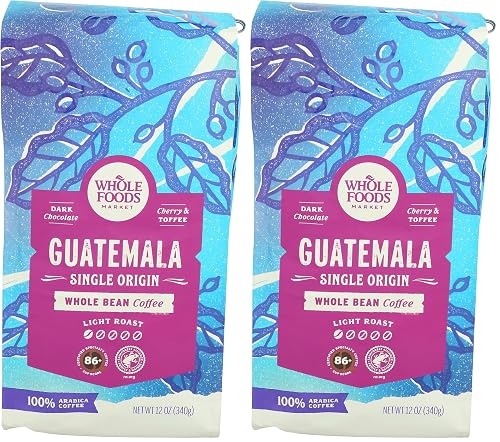
This is the honest entry point for anyone who has never had a decent Guatemalan and does not want to overspend. It comes whole bean, in two 12-ounce bags, which solves the real problem with specialty coffee: it goes stale before you finish it. Open one, leave the other sealed, and you are still drinking something fresh in month two.
Who it is for: the person who came back from Panajachel in love with the breakfast coffee and wants to recreate it at home without becoming a cupper. In the cup it is balanced, leaning chocolate and nut rather than citrus acidity; it works equally well in a drip machine or a French press.
The good: hard-to-argue value, whole bean, consistently available. What to know: it is Guatemalan coffee, but not a single origin with a named farm. As an everyday cup it delivers; as a traceable plot on a volcano slope, it does not.
Equal Exchange Café orgánico USDA, granos enteros guatemaltecos, 5 libras

Five pounds sounds excessive until you do the math: at two cups a day this bag lasts nearly two months and the cost per cup falls below almost any specialty alternative. It is USDA-certified organic and comes from cooperatives, which matters in the Guatemalan context: much of the coffee around the lake is grown on family plots, and fair trade is what holds up the lake's coffee economy when the international price collapses.
Who it is for: households that drink coffee by volume, small offices, or anyone who would rather buy every two months than every week.
The good: excellent cost per cup, organic certification, cooperative traceability. What to know: the risk with a bag this size is oxidation. Decant a pound at a time into an airtight container and keep the rest sealed somewhere cool and dark.
Volcanica Coffee Guatemala Antigua, Reserva, tostado oscuro

Now we are in a different category. This is Antigua coffee declared as such, in a reserve version with a dark roast, and it is what I would put on the table if someone said "I want to taste why people talk about Guatemalan coffee".
Who it is for: people who drink their coffee black or nearly so and enjoy a full-bodied profile. The dark roast pushes toward bitter cacao, molasses and a long finish, trading away some of the bright acidity of the region's lighter roasts. That is a style decision, not a flaw.
The good: genuine single origin, stated region, lovely in a French press or moka pot. What to know: if you love the citrusy, floral acidity of Atitlán coffee, this dark roast will taste flat by comparison. And like any dark roast it degrades quickly once opened: buy what you will drink in four to six weeks.
La Antigua Guatemala (Espresso Terreno)
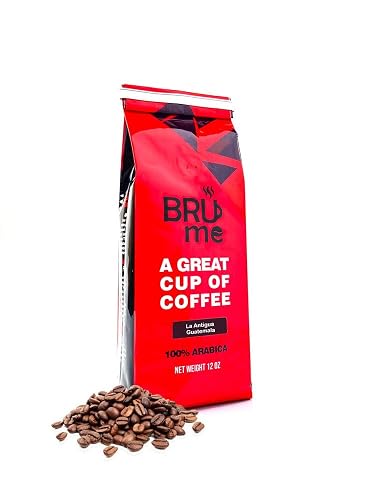
If you own an espresso machine, the usual problem with Guatemalan single origins is that many are roasted for filter and pull sour and thin as espresso. This one is built for the other job.
Who it is for: owners of espresso machines, moka pots or any pressure method. The profile aims at stable crema and body, with the cacao sweetness you expect from the Antigua area.
The good: it closes the gap between "tasty Guatemalan coffee" and "Guatemalan coffee that works as espresso". What to know: in espresso the grind is everything. Coming from drip, you will need two or three rounds to dial in the grinder; do not judge the bean on the first shot. Without a machine, there are better options on this list for filter.
Leiva's Coffee, paquete de 3 granos enteros, tuestes variados

The fastest way to find out which Guatemalan profile you like is not reading tasting notes: it is drinking three different roasts in the same week and noticing which one makes you want a second cup. This three-bag whole bean pack does exactly that.
Who it is for: beginners who do not yet know whether they prefer light or dark, and anyone looking for a gift more generous than a single bag. It also makes sense if you are heading to the lake soon and want to arrive knowing what to ask for at the farm.
The good: a range of roasts in one purchase, whole bean, ideal gift format. What to know: with three bags open the enemy is time. Stagger when you open them and write down which one you liked and why — that note is what makes the experiment worth anything.
Quick comparison of the 5 Guatemalan coffees
| Coffee | Format | Profile / roast | Best for |
|---|---|---|---|
| Whole Foods Market Guatemala | Whole bean, 2 × 12 oz | Balanced, medium | Starting without overspending |
| Equal Exchange organic | Whole bean, 5 lb | Medium, cooperative-grown | High consumption and cost per cup |
| Volcanica Antigua Reserve | Whole bean | Dark, full-bodied | Genuine Antigua single origin |
| La Antigua Guatemala (Espresso Terreno) | Espresso blend | Espresso, crema and body | Espresso machine or moka pot |
| Leiva's Coffee, 3-pack | 3 bags, whole bean | Varied roasts | Finding your profile / gifting |
How to store it (and not ruin good beans in a week)
Coffee has four enemies: oxygen, light, heat and moisture. Keep the beans in an opaque airtight container at room temperature, away from the stove and the window. Do not refrigerate: condensation ruins the bean and it absorbs odors. Grind right before brewing — a burr grinder makes more difference than switching brands.
Frequently asked questions
Why is Guatemalan coffee so good?
It comes down to a combination that is hard to repeat: altitude, volcanic soil and shade. Much of Guatemala's specialty coffee grows above 1,500 meters — Lake Atitlán sits at about 1,562 m above sea level — where cool nights make the bean ripen slowly and concentrate sugars. Volcanic soil supplies minerals and shade growing protects the cherry from direct sun. The result is a dense bean with clean acidity and body.
Which region of Guatemala has the best coffee?
There is no single answer. Antigua is the most famous region and tends to give chocolatey cups with body and a very round sweetness. Atitlán brings more acidity and citrus or floral notes thanks to the lake. Huehuetenango, grown higher, leans brighter and fruitier. The best region is the one that matches your palate: if you like coffee smooth and sweet, start with Antigua; if you want acidity and complexity, try Atitlán or Huehuetenango.
What is the difference between Atitlán and Antigua coffee?
It is down to microclimate. Antigua is a valley ringed by volcanoes, sheltered from wind, with cold nights and deep volcanic ash soil: that gives medium-to-full-bodied, sweet cups with cocoa and nut notes. Atitlán grows on the slopes falling toward the lake, where the water and the afternoon Xocomil wind regulate temperature and raise humidity. That tends to produce cups with livelier acidity, citrus notes and a slightly more floral profile. Side by side, the Antigua feels rounder and the Atitlán brighter.
Whole bean or ground for travel?
For the trip itself, ground wins on convenience: no grinder to carry. To take coffee home as a souvenir or gift, whole bean is clearly better: it holds its volatile aromas weeks longer and lets you grind to your method. If you are flying, pack it sealed — coffee is not restricted, but valve bags can swell with pressure changes. The practical move: whole bean for home and a small ground bag for the trip.
How can I tell if a Guatemalan coffee is really single origin?
Look for concrete data on the bag, not adjectives. A genuine single origin states the region (Atitlán, Antigua, Huehuetenango), ideally the farm or cooperative, the altitude, the variety, the process and — the detail that matters most — the roast date, not the expiry date. If the bag only says "Guatemalan coffee", it is almost certainly a blend of several origins. Organic or fair trade certifications are a good sign, but they do not replace the roast date.
In short
If you want a single recommendation: start with the three-roast pack to find out what you like, and once you know, move to a single origin from Antigua or Atitlán. If you already know you drink espresso, go straight to the espresso blend. And if coffee is your daily drink rather than a weekend ritual, the big organic bag is pure math in your favor. Any of the five gets you closer to that cup you drank looking out at the lake with the volcanoes still wrapped in mist — which is, in the end, the whole point.