The Best Sun Hat for Lake Atitlán (UPF 50+)
20 July 2026 · Diego Monzón
Add us as a preferred source on Google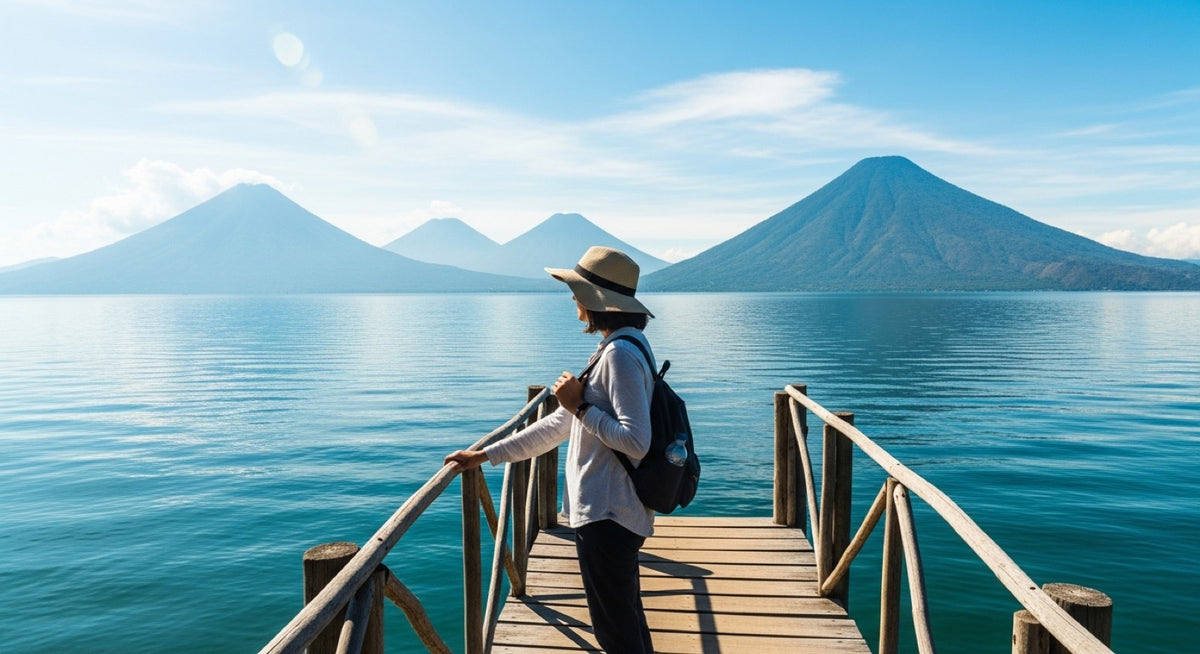
As an Amazon Associate, I earn from qualifying purchases. We wrote this guide after dozens of boat crossings between Panajachel, San Marcos and Santiago, and after watching far too many travelers step onto the dock with red ears and a burning neck. At Lake Atitlán the sun doesn't feel aggressive — the air sits at a pleasant 15 to 25 °C — but it hits with a force that has nothing to do with how warm it feels. A wide-brim hat rated UPF 50+ is, without exaggeration, the single piece of gear you'll thank yourself for most.
Below we explain why a hat beats a baseball cap at this particular destination, what the UPF 50+ label actually means, how much brim you need, and why a chin strap isn't optional here. Then we review five hats, with honest pros and cons, and close with a comparison table and the questions we get asked most.
Why the sun at Lake Atitlán hits harder than it feels
Three factors stack up in this corner of Sololá. Altitude: at roughly 1,562 metres above sea level, the atmosphere filters out less ultraviolet radiation. Tropical latitude: at midday the sun is almost directly overhead, and the high-UV window stays long all year round. And the most underrated one, reflection off the water: crossing by boat means taking radiation from above and bounced back from below at the same time, with barely a metre of shade on most public launches.
Add to that the deceptive feel: with cool morning air and an afternoon breeze, your body won't warn you that you're burning until it's too late. It's worth reading up on the weather and the Xocomil wind before you plan your itinerary, because the hour you cross changes both your comfort and your exposure.
Hat or cap: the choice that shapes your trip
A baseball cap protects your forehead and little else. It leaves your ears, the back of your neck and the sides of your throat exposed — exactly where boat travelers collect their burns. At a viewpoint in San Juan a cap is fine; on a 45-minute open crossing, it isn't. A wide-brim hat with a vented crown covers all three zones at once and keeps your head cooler. If only one piece of headwear fits in your pack, make it the hat.
What to look for before you buy
Genuine UPF 50+. UPF (Ultraviolet Protection Factor) measures how much ultraviolet radiation a fabric blocks: UPF 50 lets roughly 1/50 of the radiation through, about 2 %, and the “+” means it tested even better. It isn't the same as the SPF on a sunscreen, and unlike cream it doesn't sweat off. Thin, light-coloured cotton can score as low as UPF 5 — which is why the label matters.
A brim of at least 7.5 cm (3 inches). Any narrower and the shade won't reach your ears and neck when the sun is high. Between 7.5 and 10 cm is the sweet spot: real protection that still packs. Beyond 10 cm you get more coverage, but the hat turns into a sail in wind.
A chin strap is non-negotiable. The Xocomil, the wind that rises over the lake most afternoons, rips loose anything that isn't tied down. A hat without a cord lasts until the first real gust on board, and fishing it out of the water is rarely an option. Look for an adjustable cord with a sliding toggle, ideally removable.
Packable and vented. It will live crushed in your pack between villages, and it will get wet on the boat: one that rolls up and springs back beats one that's rigid and pretty. And mesh eyelets in the crown prevent the greenhouse effect on the climbs to the viewpoints, where you sweat even when the air is cool.
1. EINSKEY Sombrero de ala ancha UPF 50+, impermeable y plegable

It's the most versatile profile on the list: boat rides, markets, hikes and kayaking. Its strength is pairing a continuous wide brim with water-repellent fabric, which you appreciate when the launch is throwing spray into the afternoon chop. It folds without deforming, so it survives the bottom of a backpack.
Who it's for: travelers who want one hat for the whole itinerary and don't mind a classic expedition look. Pros: generous, even brim, handles spray, good protection-to-weight ratio. Cons: water-resistant fabric breathes less than mesh, so long climbs can get warm; and the wide brim catches wind if you don't cinch the cord.
2. MISSION Cooling Anywhere Boonie Hat, ala ancha unisex

The boonie cut is the best-suited shape for boats: a firm brim all the way around, a low silhouette that doesn't act as a sail, and an integrated cord. MISSION's angle is its cooling fabric, activated by wetting it — and on the lake there's always water at hand. Soaking it before a midday crossing makes a real difference.
Who it's for: anyone crossing often between villages, kayaking, or out in direct sun from 11 to 3. Pros: genuinely cools when damp, dries and reactivates, unisex styling, crushes without drama. Cons: the cooling is temporary and depends on you re-wetting it, and with the cool afternoon air it can feel too cold. The brim is adequate, not the widest out there.
3. Home Prefer UPF 50+ sombrero de sol de ala ancha

This is the most purely functional design of the group: thorough coverage of neck and ears over long days outdoors, built on fishing- and safari-hat logic. If you burn easily or travel with someone very fair-skinned, the extra coverage outweighs any styling concern.
Who it's for: sensitive skin, full days of exposure, coverage over style. Pros: broad, consistent protection, lightweight, comfortable to wear for hours on end. Cons: the look is decidedly utilitarian and won't suit a night out in Panajachel; the light material creases and needs reshaping out of the pack.
4. FURTALK sombrero tipo bucket UPF 80+ de ala ancha

The bucket format is the easiest of the five to pack: roll it, slip it into a side pocket, and it springs back. Its rating above UPF 50+ signals an especially tight weave — less light sneaking through, above all in the crown, where the sun beats down most vertically at midday.
Who it's for: light packers, people who hate carrying rigid hats, and anyone after an urban-casual profile that works in the Sololá market as well as on the dock. Pros: excellent packability, dense fabric, reasonably wide brim for the format. Cons: a bucket brim is usually shorter than a boonie's, so it protects less with a low sun; check that your version includes a cord, because without a chin strap it won't survive the Xocomil.
5. huablo UPF 50+ sombrero de sol para mujer con protección UV

Cut and styled for women, it's the pick for anyone who wants serious protection without giving up a hat that looks good on the San Marcos dock or on a terrace facing the Atitlán, Tolimán and San Pedro volcanoes. It delivers UPF 50+ and a wide brim, with a more refined finish than the technical models.
Who it's for: travelers who want an everyday hat, elegant, that still works on the boat. Pros: good looks, generous brim, comfortable all day. Cons: more fashion-oriented finishes tolerate repeated crushing in a pack less well; and if it doesn't ship with a chin strap, add a simple cord before you board.
Comparison table
| Hat | Format | Best for | Packable |
|---|---|---|---|
| EINSKEY wide-brim UPF 50+ | Safari / wide brim | The whole itinerary, spray included | Yes |
| MISSION Cooling Anywhere Boonie | Boonie | Boats and kayaking at midday | Yes |
| Home Prefer UPF 50+ | Wide brim with neck coverage | Sensitive skin, full days out | Yes |
| FURTALK bucket UPF 80+ | Bucket | Minimal packing, urban use | Yes, excellent |
| huablo UPF 50+ women's | Women's wide brim | Everyday wear with good looks | Partly |
How to use it well on the lake
A hat doesn't replace sunscreen, it complements it: keep applying it to your face, neck and hands, and add UV-filtering sunglasses, because glare off the water punishes your eyes too. Cinch the chin strap before you board. In the dry season (November to April) skies are clear almost every day; in the rains (May to October) mornings tend to be bright and clouds roll in by afternoon, but UV cuts straight through light cloud, so the rule doesn't change.
If you're putting together the full kit — layers for cool mornings at 1,562 metres, footwear for the trails, a windbreaker for the boat — also check the packing list.
Frequently asked questions
What does UPF 50+ mean on a hat?
UPF is the fabric's Ultraviolet Protection Factor: UPF 50 means roughly 1/50 of UV radiation gets through, about 2 %, and the “+” indicates even stronger blocking. Unlike the SPF on sunscreen, it's a property of the cloth: it doesn't sweat off and never needs reapplying. A tight synthetic weave usually scores high; thin, pale cotton scores very low.
Hat or cap for Lake Atitlán?
A hat, no question. A cap leaves ears, the back of the neck and the sides of the throat exposed — exactly the areas that burn on boat crossings, where there's almost never shade and glare off the water adds radiation from below. A wide brim with UPF 50+ covers all three zones at once and keeps your head cooler.
Why do I need a chin strap on the boat?
Because the Xocomil rises most afternoons and the boat itself generates apparent wind. A wide-brim hat without a cord flies off at the first gust, and mid-crossing nobody is turning around to retrieve it. Use an adjustable cord with a sliding toggle and cinch it before you board.
How wide does the brim really need to be?
The useful minimum is about 7.5 cm (3 inches) measured out from the crown; below that, the shade won't cover ears and neck with the sun high. From 7.5 to 10 cm is the ideal travel balance. Wider protects more but gets awkward on board and demands a firm chin strap. The brim must run all the way around, not just at the front.
Can the hat be folded into a backpack?
It depends on the model, which is why we treat it as a criterion. Bucket and boonie shapes with a flexible brim roll up and spring back; rigid or fashion-finished hats tolerate repeated crushing less well. If you're moving between Panajachel, San Pedro, San Juan and Santiago with your pack on, pick one the maker explicitly calls foldable or packable.
Conclusion
If you just want a recommendation so you can get back to packing: for the mixed use of a typical Lake Atitlán trip, the EINSKEY covers nearly every scenario; if you'll spend hours on boats or a kayak at midday, the MISSION boonie is the most comfortable; and if you pack minimal, the FURTALK bucket takes up the least room. Any of the five beats the cap you were planning to bring.