The Best Water Filter Bottles for Traveling Through Central America (Backpacker's Guide)
01 July 2026 · Diego Monzón
Add us as a preferred source on Google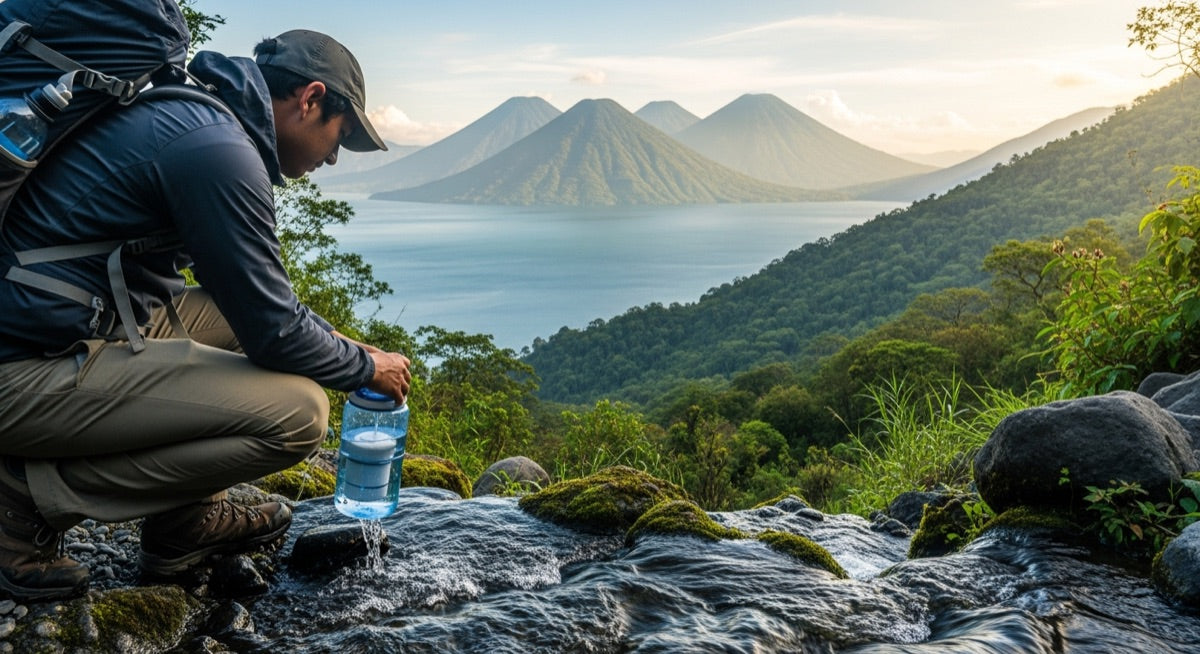
If there's one question every traveler asks before landing in Guatemala, it's this one: can I drink the water? The short answer is no. Tap water isn't safe to drink practically anywhere in the country, including the Lake Atitlán villages like Panajachel, San Pedro or San Marcos. And the usual solution — buying plastic bottle after plastic bottle — gets expensive, weighs down your pack and leaves a mountain of plastic around a lake that's already fighting pollution.
A water filter bottle for travel solves all three problems at once: you drink safely from almost any source, you save hundreds of quetzales a month, and you stop producing plastic waste. In this guide I'll explain why it's the single most important item in your Central America backpack, what types of filters exist, how to choose the right one for your travel style, and how to use it day to day at the lake, in hostels and on volcano trails.
Why you need a water filter bottle in Guatemala
Guatemala's drinking water system doesn't guarantee consistent disinfection. Even when tap water runs clear, it can carry bacteria like E. coli, protozoa like Giardia and other pathogens that barely affect locals but can knock a foreign stomach out for two or three days. The famous "Montezuma's revenge" is no myth: gastrointestinal infections are the number one cause of lost travel days in Central America.
The traditional alternatives have serious problems:
- Bottled water: costs Q5–15 per bottle. Drinking the 3 daily liters that the heat and altitude demand, you'll spend Q450–900 a month on water alone. On a long backpacking route, that's several days' worth of hostel budget.
- Single-use plastic: many villages around Atitlán have no formal waste management. Part of that plastic ends up in ravines, gullies and, with the rains, in the lake itself.
- Boiling water: it works, but you need a kitchen, time and fuel. Nobody boils water before hitting a trail at 4 a.m.
A filter bottle removes the friction: you fill up from the hostel tap, a public spout or even a mountain stream, and drink right away. Plus, at the lake you'll need to hydrate more than usual: you're at 1,560 meters of altitude and the sun hits hard even when the air feels cool. If you're putting your packing list together, also check our guide on what to pack for Lake Atitlán and its chilly highland climate, because the filter bottle is just one piece of the puzzle.
Types of travel filter bottles: hollow fiber, purifier and UV
Not all filters are equal, and the difference matters a lot when the source water is questionable. These are the three systems you'll come across:
Hollow fiber filter (0.1–0.2 micron membrane)
This is the technology behind the classic backpacker bottles. A bundle of hollow micro-tubes lets water through while physically blocking bacteria, protozoa and microplastics. Its advantages: no chemicals, no batteries, a lifespan of 1,000–4,000 liters and a decent flow rate. Its limit: it doesn't remove viruses (they're smaller than the pores) and it doesn't improve taste on its own, although many models add an activated carbon stage that removes chlorine, bad odors and off-flavors. For Guatemala and Central America, where the dominant risks are bacteria and parasites, it's the option with the best protection-to-price-to-weight ratio.
Purifier bottle (0.02 micron or ion exchange)
Purifiers go one step further: they also remove viruses, either with ultra-fine membranes or electroadsorptive media. They're the pick if you'll be drinking from genuinely compromised sources — surface water near villages, rural areas without sanitation — or if you're traveling afterwards through regions where waterborne viruses are a bigger problem (South Asia, for example). The trade-off: they cost more, the flow rate is usually lower (you have to suck or press harder) and the cartridges last fewer liters.
UV purification
Bottles with a UV-C lamp (or wand-style purifiers) destroy the DNA of bacteria, viruses and protozoa in 60–90 seconds. They're convenient and effective against everything, but with three conditions: the water must be clear (turbidity blocks the light), they depend on a rechargeable battery, and they don't remove sediment or improve taste. They work very well as a complement in hostels (clear tap water) and less well on trails with murky water. If your plan includes pre-dawn volcano climbs, check our guide to hiking gear for San Pedro volcano, where hollow fiber wins for not depending on a charge.
How to choose your water filter bottle for travel
With the types clear, the decision comes down to four variables. Here's how I prioritize them after years of hauling filters around Central America:
- Protection level for your route. Just Guatemala, Mexico and Costa Rica, drinking from taps and spouts? A 0.1 micron hollow fiber filter is enough. Sketchy surface sources or long routes through Asia afterwards? Invest in a purifier with virus protection.
- Flow rate (how easily the water comes out). It seems like a detail until you're dehydrated on a trail, sucking like your life depends on it. Look for models that state a flow rate of at least 1–2 liters per minute or that let you squeeze the bottle to force the flow.
- Lifespan and replacement cost. A 1,000+ liter filter covers months of travel. Make sure replacement cartridges are easy to find (or carry one): in Guatemala you won't find spares for obscure brands outside the capital.
- Weight and format. For backpackers, 100–250 grams including the bottle is the reasonable range. Soft flasks roll up when empty and fit in any backpack pocket; rigid bottles handle knocks and the years better.
One buying tip: don't obsess over container capacity. A 650 ml bottle with a good flow rate that you refill often beats a 1.5 liter tank that's heavy and gets in the way. Around the lake there's always somewhere to refill.

GRAYL GeoPress 24 oz Water Purifier Bottle - Filter for Hiking, Camping, Survival, Travel
$99.95
Check price on Amazon →
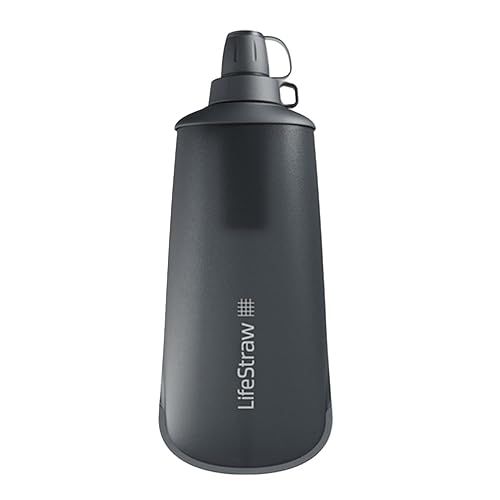
LifeStraw Peak Series Collapsible Squeeze Bottle Water Filter System 650 ml
$37.50
Check price on Amazon →
LifeStraw Go Series Water Filter Bottle - BPA-Free, Removes Bacteria, Parasites, Microplastics
$44.95
Check price on Amazon →
Tips for using your filter bottle at the lake, in hostels and on trails
Having the filter is half the job; using it well is the other half:
- In hostels: fill straight from the bathroom or kitchen tap. Many hostels in Panajachel and San Pedro offer purified water jugs for free or for Q2–5 per refill; use them when they exist and save your filter's lifespan for when they don't.
- On the boats and in the villages: always carry the bottle full. Between the boat ride, the walk to your accommodation and the heat, you'll want a drink sooner than you think, and there isn't always a store at hand.
- On trails and volcanoes: if you refill from streams, take running water (not standing), upstream of any village or pasture. Pre-filter with a bandana if the water carries sediment: you'll extend the membrane's life enormously.
- Watch out for lake water: Atitlán suffers cyanobacteria episodes, and the toxins they produce are not removed by hollow fiber filters. Don't use the lake as a drinking water source, no matter how good your filter is. To find out where you can safely get in the water, read our guide on swimming in Lake Atitlán: beaches and safe areas.
- Maintenance: after each day, expel the residual water from the filter and let it air out. Never let a wet membrane freeze (careful on volcano summits before dawn: it does drop below 0 °C), because the micro-tubes crack and the filter becomes useless without warning.
- Back home: flush the filter with clean water, dry it for several days and store it uncapped. A well-cared-for cartridge will serve you on your next trip.
With these habits, a single filter bottle will carry you across all of Central America: from the Guatemalan highlands to the beaches of El Salvador, the coffee farms of Nicaragua and the jungle of Costa Rica, drinking safely without buying a single plastic bottle.
Frequently asked questions about water filter bottles for travel
Can I filter tap water in Guatemala with a filter bottle?
Yes, as long as the bottle has a hollow fiber filter of 0.1 microns or better, which removes bacteria and protozoa like Giardia and E. coli. Tap water in Guatemala isn't potable, but with a good filter you can drink it safely in most Lake Atitlán villages. If the water comes from very questionable sources, combine the filter with chemical or UV purification to cover viruses too.
How long does the filter in a water filter bottle last?
It depends on the technology: hollow fiber filters typically last between 1,000 and 4,000 liters, activated carbon cartridges between 100 and 150 liters, and UV lamps several thousand cycles. For a one-month trip through Central America drinking 3 liters a day you need about 90 liters of capacity, so almost any new filter is more than enough; the key is to carry a spare if your trip is long.
Does a filter bottle remove viruses from water?
Most 0.1 micron hollow fiber filters don't remove viruses, only bacteria and protozoa. For traveling through Guatemala that's usually enough, because the main risk is bacteria and parasites. If you want full protection against viruses, look for a certified purifier bottle (0.02 microns or ion exchange technology) or complement it with UV light or purification tablets.
Is a filter bottle worth it instead of buying bottled water?
Yes. In Guatemala a bottle of purified water costs between Q5 and Q15; drinking 3 liters a day you'd spend between Q450 and Q900 a month, more than a good filter bottle costs. You also avoid generating dozens of plastic bottles that in many lakeside villages end up in improvised dumps or in Atitlán itself. The filter pays for itself in two or three weeks of travel.
This article contains affiliate links. As an Amazon Associate, we earn from qualifying purchases at no extra cost to you.