Lake Atitlán Facts: Depth, Size and Altitude
16 July 2026 · Diego Monzón
Add us as a preferred source on Google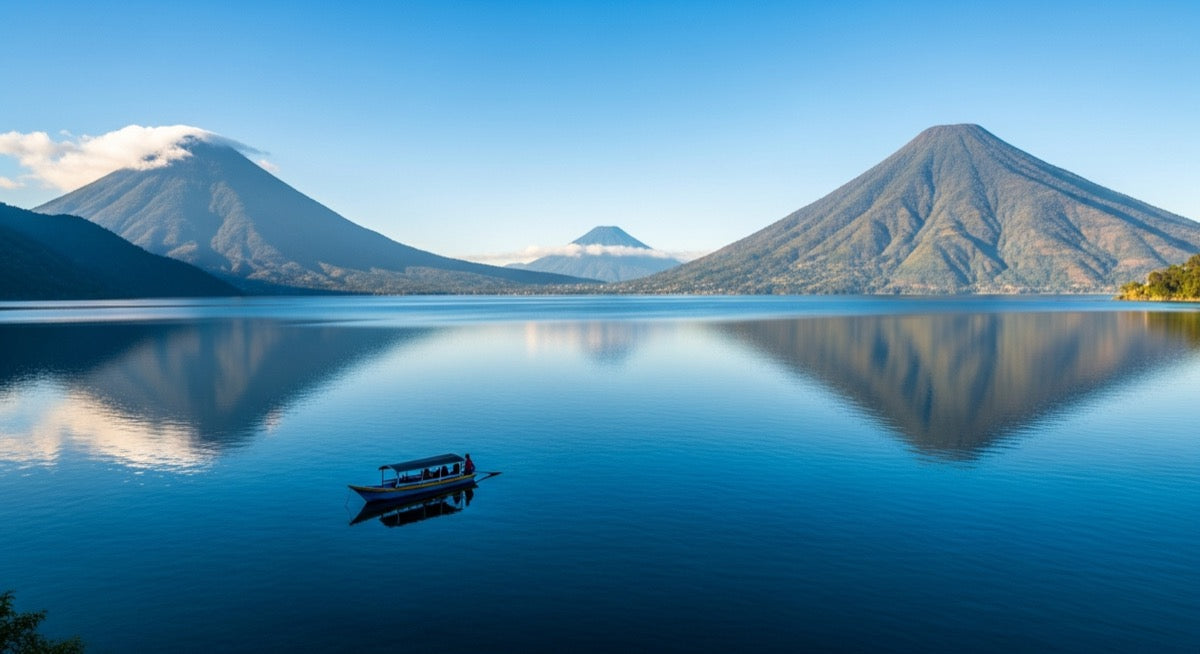
Ringed by three volcanoes and cradled in the highlands of Sololá, Lake Atitlán is one of the most breathtaking natural wonders in Guatemala. Before visiting, many travelers want to know the numbers that make it so special: how deep it is, how big it is and how high it sits. Here we gather all the key facts in one clear, straightforward guide.
How deep is Lake Atitlán?
Lake Atitlán reaches a maximum depth of around 340 meters, which makes it the deepest lake in Central America. This enormous depth is explained by its origin: it is not an ordinary valley lake but a volcanic caldera whose walls plunge almost vertically beneath the surface of the water.
Key facts about Lake Atitlán
For those who want the figures at a glance, this table sums up the lake's main features:
| Fact | Approximate figure |
|---|---|
| Maximum depth | ~340 m (deepest in Central America) |
| Surface area | ~130 km² |
| Altitude | ~1,562 m above sea level (5,125 ft) |
| Length | ~18 km |
| Width | ~8 km |
| Department | Sololá, western highlands of Guatemala |
| Origin | Volcanic caldera ("Los Chocoyos" super-eruption) |
A lake inside a volcanic caldera
Lake Atitlán was not carved out by a river or by melting glaciers, but by one of the most colossal eruptions in the region's geological history. About 84,000 years ago, the super-eruption known as "Los Chocoyos" emptied a gigantic magma chamber. Losing that support, the surface collapsed and created an enormous circular depression: a caldera. Over the millennia, that cavity filled with rain and spring water until it formed the lake we see today.
That origin explains both its extraordinary depth and the landscape that surrounds it. Along the southern shore rise the volcanoes that surround the lake, three imposing cones — Atitlán (3,537 m), Tolimán (3,158 m) and San Pedro (3,020 m) — that frame the water and give the place its unmistakable profile.
Altitude and climate: the eternal spring
At about 1,562 meters above sea level, the lake enjoys a mild climate almost all year round, with temperatures ranging from 15 to 25 °C. That is why Guatemala boasts of its "eternal spring." The dry season runs from November to April and the rains arrive from May to October; the months of November to February usually offer the clearest skies to admire the volcanoes reflected in the water.
More than numbers: a lake with history
The name "Atitlán" comes from the Nahuatl atitlan, meaning "between the waters" or "place where water abounds." Along its shores live villages where Mayan languages such as Kaqchikel, Tz'utujil and K'iche' are spoken, and each town has its own character. If you plan to stay several days to explore them, it is worth booking one of the hotels on the lakeshore, many with direct views of the water and the volcanoes.
Frequently asked questions
How deep is Lake Atitlán?
Lake Atitlán reaches a maximum depth of around 340 meters (1,115 ft), making it the deepest lake in Central America. Because it sits inside a volcanic caldera, its walls drop off steeply, so the water becomes very deep just a few meters from shore.
What is the surface area of Lake Atitlán?
The lake covers roughly 130 km², measuring about 18 km long and 8 km wide. It is one of the largest bodies of water in the Guatemalan highlands.
What altitude is Lake Atitlán at?
Lake Atitlán sits at about 1,562 meters above sea level (5,125 ft), in the department of Sololá. This altitude gives it a mild "eternal spring" climate, with temperatures of 15 to 25 °C for much of the year.
How was Lake Atitlán formed?
The lake fills a huge volcanic caldera created after the super-eruption known as "Los Chocoyos," about 84,000 years ago. When the magma chamber emptied, the ground collapsed and left a vast depression that gradually filled with water.
Is Lake Atitlán the deepest lake in Central America?
Yes. With a maximum depth close to 340 meters, Lake Atitlán is considered the deepest lake in Central America, deeper than other bodies of water in the region.