Water Shoes for Lake Atitlan: The Complete Guide to Swimming Without Cutting Your Feet
01 July 2026 · Diego Monzón
Add us as a preferred source on Google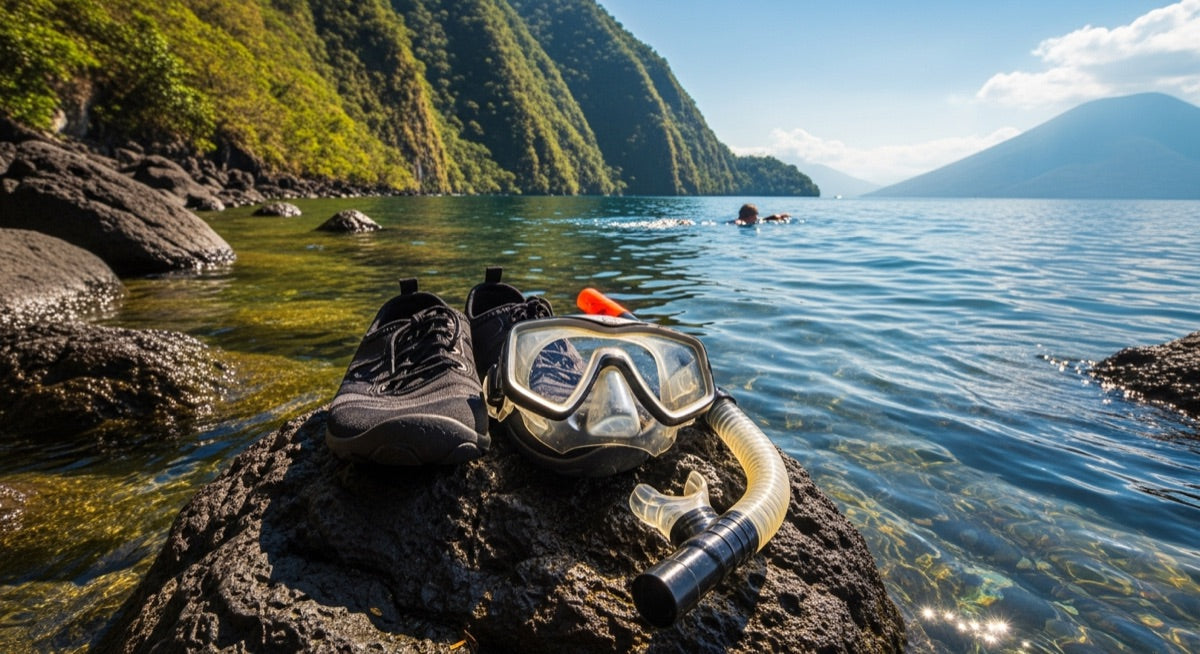
If there's one thing those of us who live on Lake Atitlan learn fast, it's that nobody swims here barefoot twice. The lake bed is sharp volcanic rock — lava remnants time hasn't finished polishing — plus wooden docks coated in slippery algae and loose stones that shift under your feet. That's why a good pair of water shoes for the lake isn't overcautious tourist gear: they're the difference between enjoying the lake and spending the afternoon patching up a cut heel.
In this guide we'll share, from local experience, which water shoes work best at Atitlan, when a hiking sandal or a neoprene bootie makes more sense, and what other gear is worth packing: a snorkel mask, a dry bag for your phone, and a microfiber towel.
Why you need water shoes at Lake Atitlan
Atitlan is a volcanic lake ringed by the San Pedro, Toliman and Atitlan volcanoes. That makes it spectacular, but it also explains the lake bed: along most shores there's no soft sand — there's jagged basalt and stones of every size. In villages like San Marcos La Laguna, Santa Cruz or Jaibalito, you enter the water straight over rock or from docks.
The docks are the second silent enemy: wood that spends half the year wet grows a layer of algae that turns every step into an ice rink. A rubber sole with good grip solves 90% of that problem.
And there's a third reason: water shoes aren't just for swimming. If you kayak or paddleboard (rentals are available in almost every village), you'll be pushing off from the stony shore; if you get around by public boat, you'll board from wet docks. In all of those moments, the same pair protects your feet and keeps you stable.
Water shoes vs hiking sandals vs neoprene booties: which is right for you
Not all water footwear is created equal, and at Atitlan each type has its place. Here's the honest comparison:
Water shoes (aqua shoes)
The most versatile option for the lake. They cover the whole foot, have a non-slip rubber sole and mesh that drains water in seconds. They protect your toes from the rocks (something no sandal manages), grip well on slippery docks and are light enough to swim in. If you plan to swim, kayak and ride the boats, this is the right buy. Look for a firm sole and skip the ultra-thin sock-style versions: you'll feel volcanic rock right through a soft sole.
Hiking sandals (Teva or Chaco style)
Excellent out of the water: walking between villages, dusty trails, and they can get soaked without being ruined. Their advantage is all-day wear, from trail to dock to café. Their weakness is in the water: they leave your toes exposed to knocks against the rocks, and when you swim they drag or come loose. If your plan is more hiking than swimming and you enter the water from docks with ladders, Tevas or Chacos will do; if you'll be swimming from rocky shores, stick with water shoes.
Neoprene booties
Warm and protective: the choice of divers and people who spend hours in the water. The lake sits at about 1,560 meters (5,100 feet) of altitude and the water hovers around 20-22 °C (68-72 °F) — brisk, but not cold enough to demand neoprene for a quick dip. Their sole also tends to be softer than a water shoe's, and you feel it on sharp rock. Recommended only for long open-water swims or diving.
Local verdict: water shoes as your main gear, hiking sandals if you'll also walk a lot, booties only for distance swimmers or divers.
What to look for in water shoes for the lake
- A thick, treaded sole: at least 3-4 mm of real rubber. The test is simple: if you can fold the shoe in half like a sock, volcanic rock will cut right through it.
- Fast drainage: holes in the sole or mesh that sheds water as you step out. A shoe that holds water is heavy and gives you blisters.
- A snug heel: when you swim or climb into the boat, a loose shoe ends up on the lake bottom. An elastic lace with a toggle is ideal.
- A reinforced toe cap: stubbing a toe on a submerged rock is the most common injury here. A rubber toe cap prevents it.
- Quick-dry materials: synthetics only, no cotton. In the rainy season, what doesn't dry fast doesn't dry at all.
These are the models and accessories we recommend, available on Amazon:
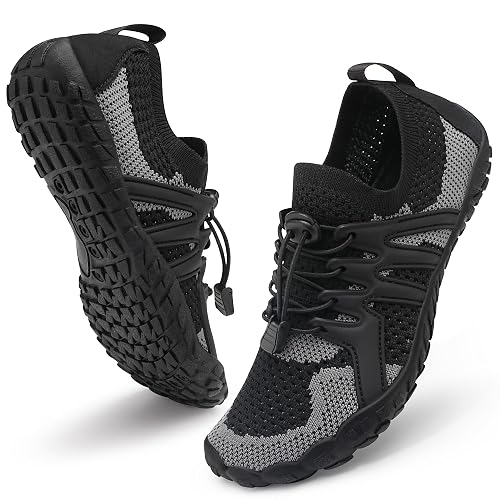
Stelle Water Shoes Quick-Dry Barefoot Aqua Shoes for Beach, Swim, Pool, Boating
$16.99
Check price on Amazon →
Water Shoes Barefoot Quick-Dry Aqua Sock for Kayaking, Boating, Hiking
$19.99
Check price on Amazon →

SEEKWAY Water Shoes Quick-Dry Aqua Sock for Beach Swim River Lake Kayaking
$19.14
Check price on Amazon →
A snorkel mask for the clear-water spots
It surprises a lot of people, but yes — there is snorkeling at Atitlan. The classic spot is the Cerro Tzankujil nature reserve in San Marcos La Laguna, with its famous jumping platform and turquoise water where visibility improves dramatically in the dry season (November to April). Down there you'll see volcanic rock formations, small fish and, with luck, freshwater crabs among the stones.
A basic mask-and-snorkel set with a good seal is enough. Test it before your trip and pick one with an adjustable strap, because rentals at the lake are scarce and hit-or-miss. Pair it with your water shoes to get in and out over the rocks without drama, and if you want to capture what you see underwater, check our guide to waterproof cameras for lake travel.
A dry bag: your phone's life insurance on the boats
Atitlan's public boats are how you get between villages — and they're also where most phones die. Between the spray off the waves (especially with the afternoon Xocomil wind), wet seats and hurried boarding at the dock, your phone is constantly at risk. A 5-10 liter dry bag solves everything: phone, wallet, charger and towel go inside, and the bag floats if anything goes overboard.
For the phone itself, a waterproof neck pouch with a touch-friendly window lets you shoot photos from the boat without taking it out. That's the combo we use: pouch for the phone, dry bag for everything else. It costs little and prevents the worst possible ending to a vacation.
A microfiber towel: small, light, and dry before you are
Hotel towels travel badly: they're heavy, they take up half your backpack and they arrive damp at the next village. A quick-dry microfiber towel (around 80×160 cm) packs down to the size of a water bottle, dries in under an hour in the sun and never picks up that musty smell — key in the rainy season. You dry off in San Marcos, stash it, and it's ready again in Santa Cruz.
Local tips for swimming with your gear at Atitlan
Always walk into the water facing forward and watching the bottom, even with shoes on, because loose stones shift. Swim early in the morning, when the lake is mirror-flat; after midday the Xocomil kicks up chop. And choose your entry point wisely: not every shore is equally clean or safe — we have a full guide to the best beaches and safe swimming spots on the lake with the exact spots in each village.
One last reminder: at this altitude the sun burns more than you feel, and the water's reflection doubles your exposure. In our guide to sunscreens for swimming in the lake we explain which ones hold up in the water without harming the ecosystem.
At the end of the day, rinse your gear with fresh water and dry it in the sun: it will last you years. The lake brings the beauty; you just show up with your feet protected.
Frequently asked questions
Do I really need water shoes to swim in Lake Atitlan?
Yes — highly recommended. The lake's shores are sharp volcanic rock and loose stones, not sand, and the wooden docks get slippery with algae. Water shoes protect against cuts and stubbed toes and give you grip getting in and out of the water. They also work for kayaking, paddleboarding and boarding the boats.
What's best for Atitlan: water shoes, Teva sandals or neoprene booties?
For swimming from rocky shores, water shoes win: they cover your toes, drain fast and let you swim comfortably. Hiking sandals like Tevas or Chacos are better if your plan mixes walking with dips from the docks. Neoprene booties are only worth it for long open-water swims or diving, since they're too warm for casual use.
Where can you snorkel in Lake Atitlan?
The most popular spot is the Cerro Tzankujil reserve in San Marcos La Laguna, with clear water and visible volcanic rock formations. Visibility is best in the dry season, November to April, and in the morning before the wind kicks up chop. Bring your own mask: rentals at the lake are scarce.
How do I protect my phone on the lake boats?
Use a waterproof neck pouch with a touch window for your phone and a 5-10 liter dry bag for the rest of your things. The public boats take plenty of spray in the afternoon chop (the Xocomil wind), and wet docks make it easy for something to fall in. A dry bag floats, so even in the worst case you get your belongings back.
This article contains affiliate links. As an Amazon Associate, we earn from qualifying purchases at no extra cost to you.