The Best Polarized Sunglasses for Lake Atitlán and High Altitude
09 July 2026 · Diego Monzón
Add us as a preferred source on Google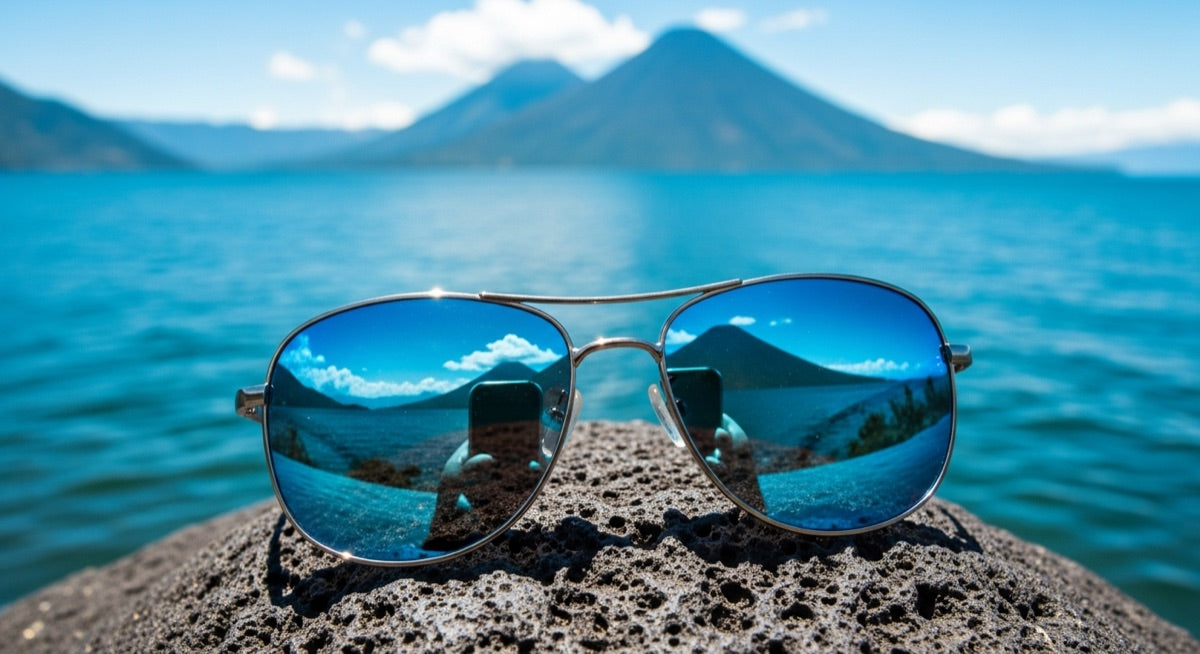
Lake Atitlán is best enjoyed with your eyes: the deep blue of the water, the three volcanoes standing against the sky, and light that shifts every hour. But that same light, at 1,560 meters above sea level, is far more intense than most travelers expect. Less atmosphere means less natural filtering of ultraviolet rays, and the surface of the lake acts like a giant mirror that multiplies the glare. The result: you squint all day, you struggle to see clearly from the boat, and your photos come out washed out. A good pair of polarized sunglasses isn't a luxury here, it's basic travel gear.
In this guide I explain why altitude and the water's reflection change the rules of the game, what the difference is between polarized and regular sunglasses, and how to choose the right pair for boats, kayaking, viewpoints, and volcano trekking without hurting your wallet or losing your glasses.
Why the sun and the lake dazzle more at 1,560 meters
Ultraviolet radiation increases by roughly 10% to 12% for every 1,000 meters of altitude. In Panajachel, San Pedro, or Santiago Atitlán you are more than a kilometer and a half up, so UV exposure is noticeably higher than at sea level, even though the weather feels cool and pleasant. The cool air is deceiving: you can burn your eyes and skin without feeling hot.
Add the water to that. The surface of the lake reflects sunlight horizontally and straight into your eyes, a phenomenon known as glare. That reflection doesn't just bother you: it reduces contrast, forces you to squint, and causes eye strain and headaches by the end of the day. On a public boat crossing to San Marcos, or paddling a kayak at dawn, the glare off the water is constant. This is where polarized lenses make a huge difference compared to regular ones.
Polarized vs. regular: the real difference
Regular sunglasses simply darken everything you see, cutting the total amount of light. They help, but they don't eliminate glare off the water or improve contrast. Polarized lenses carry a chemical filter that specifically blocks horizontally reflected light, exactly the light that bounces off the lake, wet roads, or the shiny roofs of the boats.
The effect is almost magical the first time: the glare disappears, the water turns transparent and you can see below the surface, colors become saturated, and the volcanoes gain definition. For any activity near the water, polarization is the feature you'll be most grateful for.
One important detail: polarized is not the same as UV protection. They are two different things. Polarization fights glare; UV protection safeguards the health of your eyes. You need both.
UV400: the protection you can't skip
Before you worry about style, check that the sunglasses carry the UV400 label or "100% UVA/UVB protection." UV400 means they block all ultraviolet radiation up to 400 nanometers, that is, the full spectrum that damages the eyes. Unprotected UV exposure is linked to long-term eye problems such as cataracts and retinal damage, plus the annoying surface "burn" after a long day outdoors.
Watch out for this trap: very dark lenses without a UV filter are worse than wearing nothing. As your view darkens, your pupil dilates and lets more UV rays into the eye. That's why uncertified street-market sunglasses can be counterproductive. Invest in a pair that guarantees real UV400, no matter how cheap or expensive the frame. And just as you protect your eyes, don't neglect your skin: check out our guide to the best sunscreen for swimming in the lake to complete your shield against high-altitude sun.
For water and boats: what to look for on the lake
If your plans include crossing the lake by public boat, paddleboarding or kayaking, or simply relaxing on a dock, prioritize these features:
- Polarization, no exceptions to kill the glare off the water.
- Wraparound lenses that cover the sides and block light coming in from the side over open water.
- Category 3 tint, ideal for intense sunlight and reflective surfaces.
- Tough material like polycarbonate, which doesn't chip easily and withstands splashes and knocks.
A good pair lets you see into the water, which is useful and beautiful when you get close to the swimming areas. If you're going to swim, first check our guide to beaches and safe swimming areas at Lake Atitlán to choose the right spot to get in.

JIM HALO Polarized Sport Sunglasses for Men Women, Wrap Around for Hiking Cycling
$19.99
Check price on Amazon →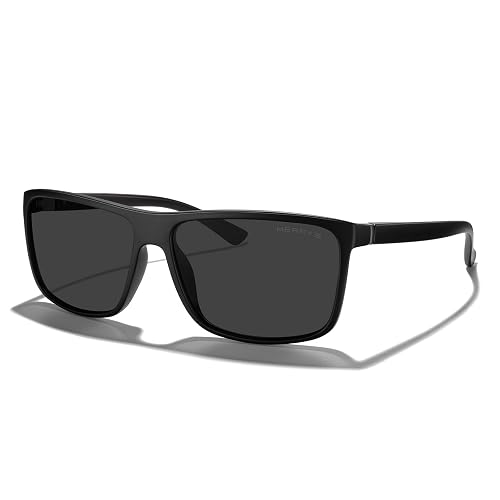
MERRY'S Rectangular Polarized Sports Sunglasses UV400 Protection S8225
$15.99
Check price on Amazon →
JULI Sports Sunglasses TR90 Rimless Frame for Running Fishing Driving MJ8009
$29.99
Check price on Amazon →
goodr Polarized Round Sunglasses, UV400 Protection, No Slip No Bounce
$25.00
Check price on Amazon →
Lamicall 24g Polarized Sports Sunglasses for Men Women, UV400 Protection
$21.99
Check price on Amazon →For volcano trekking: altitude, wind, and extreme light
Climbing San Pedro volcano or catching sunrise at Indian Nose is another story. There you gain even more altitude, the sunrise light is low and hits your eyes directly, and the wind kicks up dust. For trekking you want a pair with these qualities:
- A firm fit with grippy or rubber temples, so they don't slip off with sweat on the climb.
- Unbreakable polycarbonate lenses, because a fall on the trail can scratch or shatter a fragile lens.
- Good ventilation so they don't fog up when your heart rate rises.
- Broad coverage against wind and particles.
Remember that altitude affects more than your eyes. If you feel a headache or dizziness at the summits, check out how to prevent altitude sickness on Guatemala's volcanoes before your ascent.
Price vs. durability: how much to spend
You don't need to spend a fortune for good sunglasses, but it's worth avoiding the cheapest uncertified ones. The rule of thumb: pay for the protection (UV400 + polarization) and for the material's durability, not just for the brand.
A mid-range pair with polarized polycarbonate lenses is usually the sweet spot for a trip to Atitlán: it protects well, survives the backpacker grind, and won't wreck your budget if it ends up at the bottom of the lake. Premium models add sharper optics and lighter frames, ideal if you wear sunglasses daily, but for a one-off trip they aren't essential. If you're traveling with kids, all the more reason to look for affordable pairs with real UV400: their eyes are even more sensitive.
The risk of losing them: use a leash
Here's the tip most travelers ignore and that has sent the most sunglasses to the bottom of Atitlán: use a retainer strap or leash. Between climbing on and off rocking boats, bending over on the dock, or paddling, it's incredibly easy for your glasses to slip into the water, where they're unrecoverable. A simple floating strap costing a few quetzales turns a sure loss into a harmless scare.
Besides the strap, travel with a hard case to protect them in your backpack, and consider bringing a cheap backup pair. It's better to lose an inexpensive spare than to spend the rest of your trip squinting under the high-altitude sun.
Summary for choosing well
For Lake Atitlán, your ideal sunglasses combine polarization (against water glare), UV400 (against high-altitude radiation), polycarbonate material (durability), and a strap (anti-loss insurance). With that you'll see the volcanoes more sharply, your photos will come out with vivid colors, and your eyes will thank you at the end of each day.
Frequently asked questions
Are polarized sunglasses really necessary at Lake Atitlán?
Yes. The lake reflects sunlight like a mirror and at 1,560 meters UV radiation is more intense. Polarized sunglasses eliminate glare off the water, reduce eye strain on boats and kayaks, and greatly improve contrast for seeing and photographing the volcanoes.
What's the difference between polarized and UV400?
They are different and complementary. Polarization blocks the glare reflected off the water and improves visual comfort. UV400 blocks the ultraviolet radiation that damages the health of your eyes. Look for sunglasses that have both features, not just one.
Do the same sunglasses work for the boat and for climbing the volcano?
A good polarized pair with UV400 and polycarbonate material works for both. For the water, prioritize wraparound models that cut the glare; for trekking, prioritize a firm non-slip fit and good ventilation so they don't fog up with the effort.
How do I avoid losing my sunglasses in the lake?
Always use a retainer strap or leash, ideally a floating one. Between the rocking of the boats and the water activities it's very easy for them to fall into the water and be lost. Pair it with a hard case and, if you can, bring a cheap backup pair.
This article contains affiliate links. As an Amazon Associate, we earn from qualifying purchases at no extra cost to you.